





























Spain leads EU energy crisis spending, but Greenpeace says blanket fuel subsidies are propping up fossil fuels at the planet's expense.
Greenpeace has criticised the EU's response to the energy crisis triggered by the war on Iran as riddled with "deep structural incoherence" – warning that European governments have prioritised short-term fossil fuel subsidies over the clean energy transition.
 ADVERTISEMENT
ADVERTISEMENT
ADVERTISEMENT
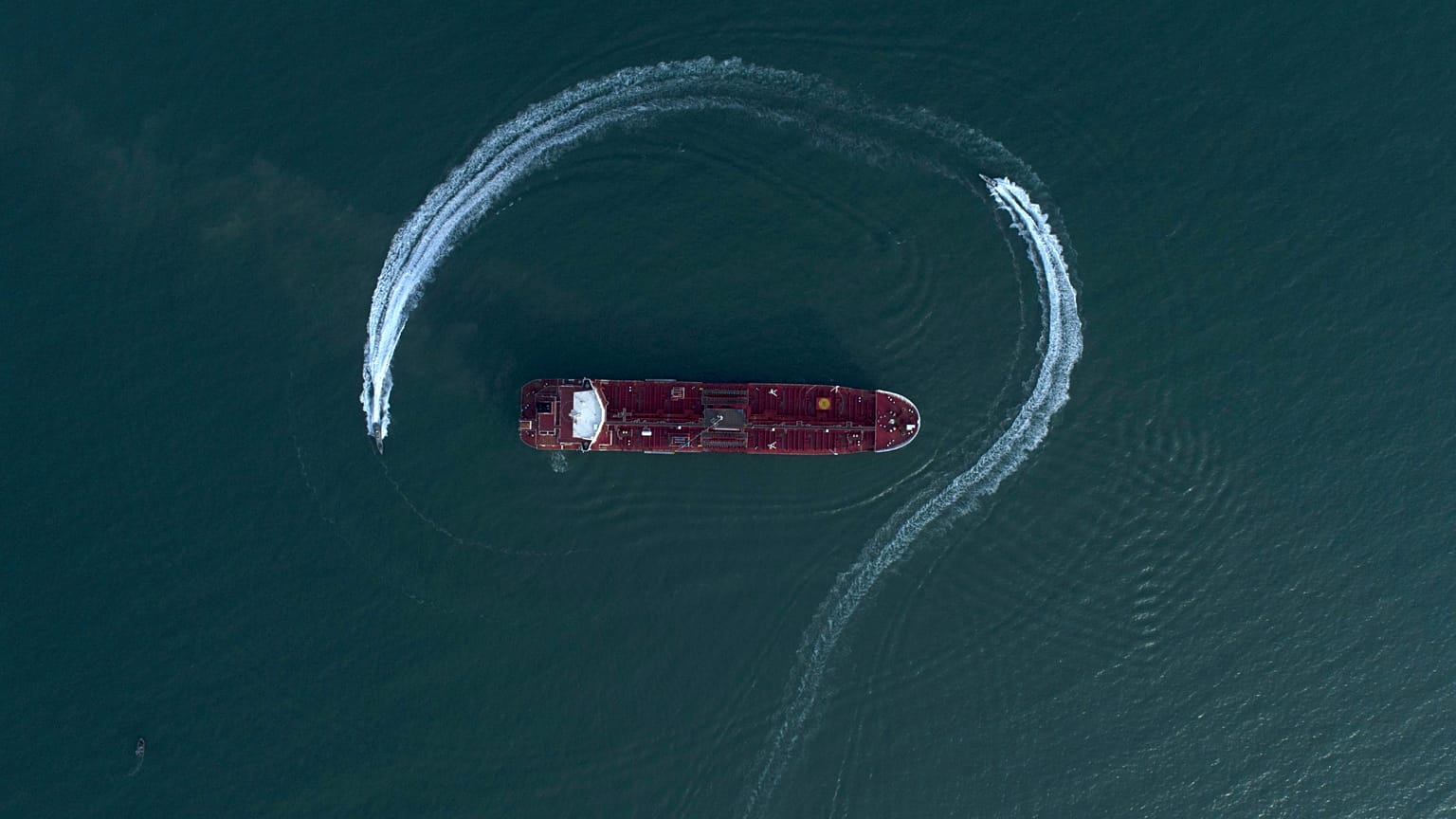
The US-Israel offensive against Iran, launched more than 100 days ago, sent shockwaves through global energy markets after Tehran closed the Strait of Hormuz. The ongoing diplomatic back-and-forth between Washington and Tehran has continued to fuel uncertainty in the sector ever since.
Fuel prices across Europe have risen sharply, with Spain seeing an increase of more than 34 per cent. In response, EU member states rushed to introduce measures to cushion the blow for households and businesses.
The environmental group has now published a report – 'Fossil bail-out or energy transition: Spain and the Strait of Hormuz crisis' – analysing the policy responses of seven EU countries: Germany, Greece, Ireland, the Netherlands, Portugal, Spain and Sweden. Its conclusion is damning.
"The methodological analysis carried out by Greenpeace reveals a deep structural incoherence in the response to the energy crisis caused by the war on Iran on the part of the EU countries examined," the report states, adding that a "unique opportunity" to accelerate the clean energy transition has been squandered. "None of the countries analysed has plans fully aligned with the [energy] transition – and on the contrary, they are allocating more resources to a fossil bail-out."
Spain leads EU spending on household support for rising energy bills
According to data from the Bruegel think tank, European governments have approved around €11.8 billion in support measures to help households cope with rising energy bills.
Spain has committed by far the largest share. Pedro Sánchez's government approved a Royal Decree-Law setting out a package worth more than €5 billion, with measures running until 30 June 2026. Germany allocated €1.62 billion; the Netherlands €970 million; Greece €800 million; Ireland €760 million; Portugal €470 million; and Sweden €430 million.
At the heart of Spain's plan is a sweeping set of tax cuts: VAT on all forms of energy – including motor fuels, electricity, natural gas and butane – was slashed from 21 per cent to 10 per cent, while butane prices were also frozen.
Greenpeace concedes that Spain's package is "without any doubt the most comprehensive and best resourced" of any EU country's response, but criticises its blanket approach, arguing that targeted income transfers to vulnerable households would have been more effective.
"Although the firm commitment to renewables in recent years has protected the country from soaring energy bills and we are better prepared than other countries around us, with 75 per cent of energy consumption still fossil-based and annual imports of around €22 billion, Spain remains trapped in volatile, polluting energy sources that harm the economy, people's pockets and the climate," says Greenpeace spokesperson Carlos García Paret.
The report acknowledges that Spain has rolled out renewable energy faster than most EU peers – particularly solar and wind – but warns that the expansion has often lacked adequate social and territorial planning, generating local conflicts and concentrating benefits among large industrial players.
Greenpeace argues the energy transition cannot simply mean replacing one energy source with another. It must also involve structural market reform, support for self-consumption, the promotion of local energy communities, and a sustained reduction in demand.
The group also finds that a preference for subsidising polluting energy is a pattern across the continent. "Virtually all countries are fully aligned in applying the three most regressive tools: across-the-board tax cuts on energy and direct subsidies for motor fuels and fertilisers."
Who foots the bill?
The crisis has reignited the issue of energy poverty in Spain, with hundreds of thousands of households forced to cut back on basic energy use – heating, cooling and lighting – because of unaffordable bills.
Institutions including Funcas, the Bank of Spain and the European Commission have all questioned the value of blanket fuel tax cuts, with the fiscal cost in Spain alone estimated at around €2.3 billion. They advocate instead for measures targeted at the most vulnerable.
While schemes such as the social electricity voucher have provided some relief, Greenpeace argues they remain too bureaucratic and poorly targeted, leaving out many vulnerable groups – including workers on precarious incomes and tenants in rented accommodation.
The report calls for a more ambitious set of long-term solutions: income protection for rural communities, expanded public transport, a faster and more inclusive building renovation programme, and support for the farming sector to reduce its dependence on fossil-derived fertilisers. It also urges greater electrification in citizens' hands and higher taxes on the companies that have polluted the most and profited most from the current crisis.