
















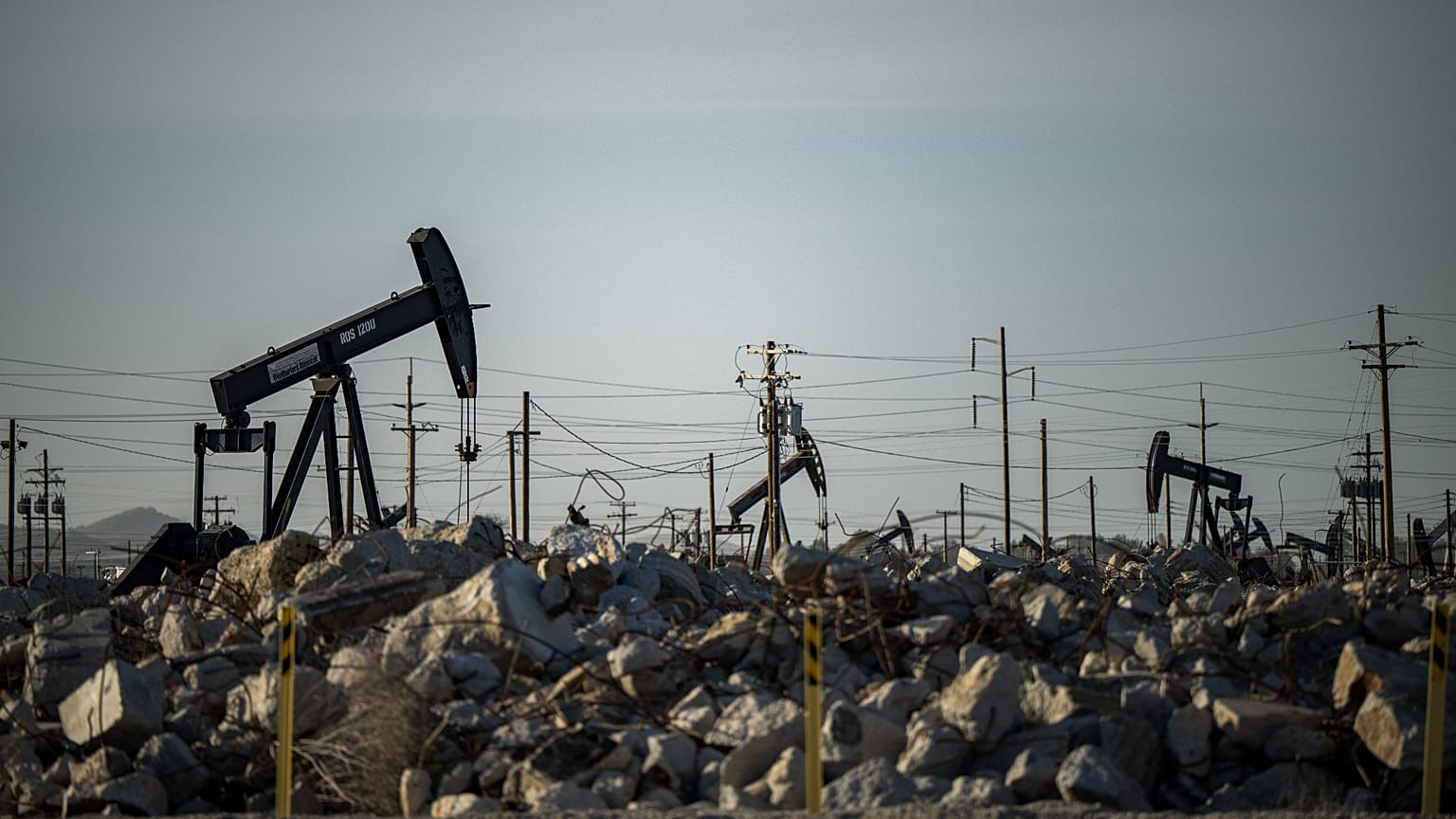













Brent crude oil prices surged to $110 a barrel after Israel attacked the largest gas plant and another oil facility in Iran. The Islamic Revolutionary Guard Corps of Iran (IRGC) reacted by announcing that some Gulf energy sites are "legitimate targets".
Brent crude oil prices reached $110 a barrel on Wednesday afternoon, after Iranian state media reported that part of the South Pars gas field, the largest plant in Iran, and the Asaluyeh oil facility were struck by Israel.
 ADVERTISEMENT
ADVERTISEMENT
ADVERTISEMENT
Moreover, the US oil benchmark WTI also rose and is trading at $98 a barrel at the time of writing.
In response to the latest Israeli attacks, the IRGC announced that some Gulf energy sites are once again "legitimate targets".
The prospect of escalation and prolongation of the conflict in the Middle East, resulting in further destruction of energy infrastructure, and consequently disruption to global markets, has sent oil prices higher once again.
The climb occurs despite other positive news that would normally have a dampening effect on energy markets.
Saudi Arabia confirmed on Wednesday that its biggest oil refinery, Ras Tanura, restarted operations on 13 March.
Additionally, the Trump administration officially announced a 60-day waiver of the Jones Act, a century-old maritime law that restricts the movement of cargo between US ports to vessels that are American-built, American-owned, American-flagged and crewed.
However, in the face of increased tensions and more attacks on oil infrastructure, these potentially mitigating developments have not had any effect in taming prices.
Trump administration confirms Jones Act waiver
The White House Press Secretary, Karoline Leavitt, confirmed the Trump administration's decision to issue a 60-day waiver of the Jones Act.
The measure lifts the restriction on the movement of cargo between US ports, allowing foreign tankers temporarily and cheaply to transport vital resources such as oil, gas and fertilisers along the US coastline.
In a post on X on Wednesday, Leavitt explained that the decision is "just another step to mitigate the short-term disruptions to the oil market as the US military continues meeting the objectives of Operation Epic Fury."
The last Jones Act waiver was issued in October 2022 for a tanker supplying Puerto Rico after Hurricane Fiona.
Before that, the Biden administration temporarily eased the law in 2021 for refiner Valero Energy, after a cyberattack crippled a major East Coast fuel pipeline.
Trump renews pressure on allies to secure the Strait of Hormuz
In a separate development, US President Donald Trump has renewed pressure on allies to join a naval escort mission in order to secure the Strait of Hormuz and normalise the circulation of vessels in the region.
In a post on Truth Social, President Trump argued that allied countries need to use the Strait of Hormuz while the US does not, and warned that they could be left managing it on their own in the aftermath of the war.
Since President Trump's original request, no firm commitments have emerged, but on Monday, the Wall Street Journal reported that the White House plans to announce as early as this week that multiple countries have agreed to join the escort mission.
The report also stated that officials are still deliberating whether such an operation would start before or after the war ends.
After meeting in Brussels, EU foreign ministers discussed extending the bloc's Aspides naval mission to the Strait of Hormuz, but ultimately declined to participate.