





























The Iran war has sent fertiliser prices soaring – but these farmers aren’t fazed.
A crisis is looming on European farms as the war on Iran threatens fertiliser supplies and sends fuel prices soaring. But some are more shielded than others.
 ADVERTISEMENT
ADVERTISEMENT
ADVERTISEMENT
Regenerative farms are less reliant on imported synthetic fertilisers than their conventional counterparts while having very similar yields at much lower costs. They improve the soil’s natural fertility with compost, animal manure, rotational grazing, and cover crops, which are planted in the off-season specifically to build healthy soil.
This not only means they’re less affected when global supply chains are disrupted – it also secures their future by reducing pollution, encouraging biodiversity and even improving public health.
Why is the Iran war impacting fertiliser?
With the vital Strait of Hormuz shipping route blocked, around a third of the world’s fertiliser trade has been put on hold.
The Strait is also key for transporting global oil exports, carrying around one-fifth of supplies. Natural gas is critical in the production of synthetic nitrogen-based fertilisers, which are widely used in Europe and beyond.
“Every fossil fuel crisis reminds us how vulnerable conventional agriculture is: farmers tied to synthetic fertilisers are exposed to price shocks they cannot control,” says Gabrielle Taus, managing director of Commonland, an international non-profit working with local people in more than 50 countries to restore degraded landscapes.
Do farms need synthetic fertiliser to thrive?
It is estimated that around half of the global population is fed with crops grown with artificial fertilisers. Although plants can grow without these fertilisers, modern industrial farming relies on them for speed and scale.
But at what cost?
Overuse of synthetic nitrogen-based fertilisers is eroding the resilience of farms by polluting the water and air, degrading the soil, and posing risks to human health.
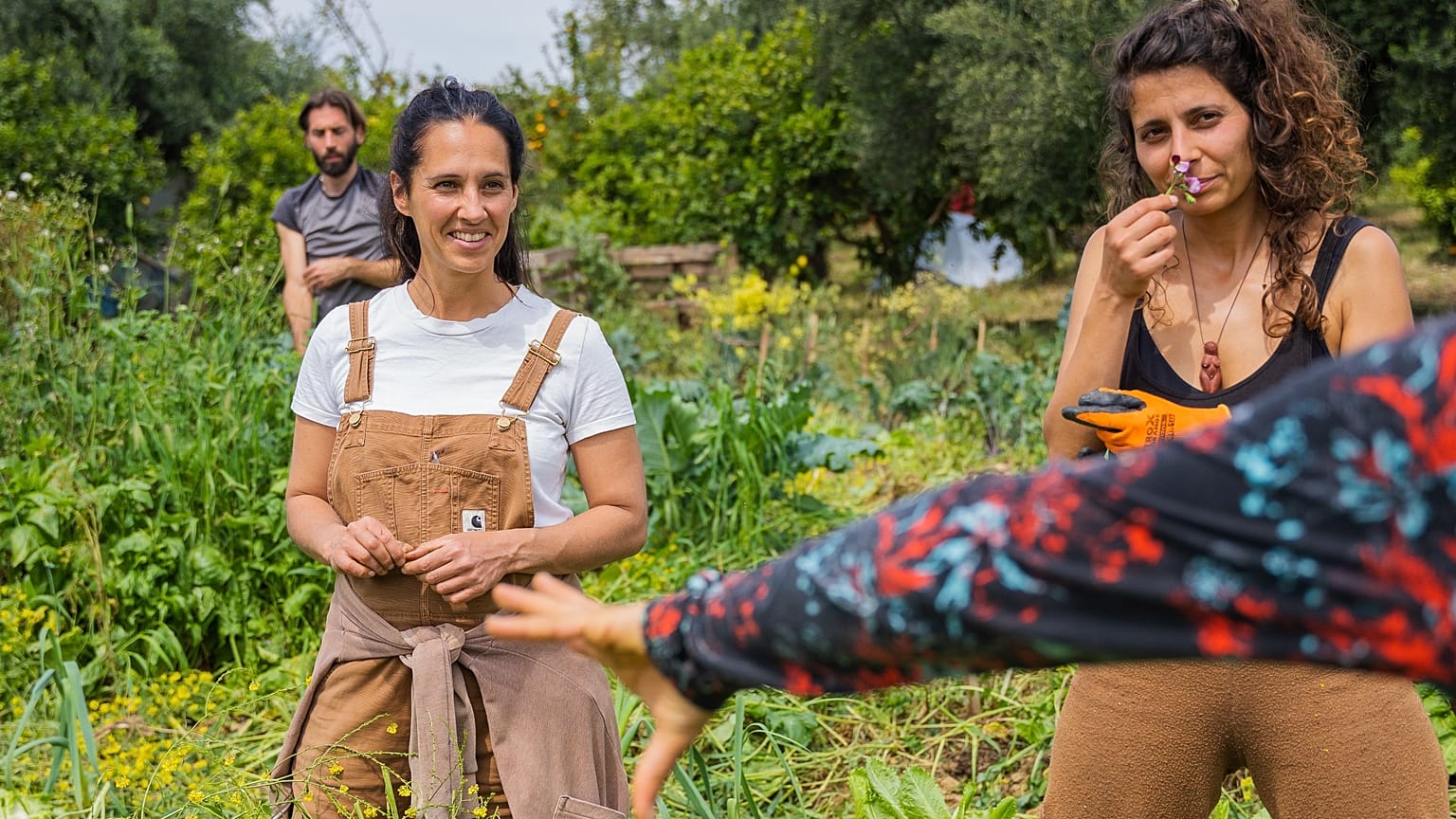
On her farm in Greece, third-generation farmer Sheila Darmos generates nitrogen naturally through plants.
“We integrate permaculture, syntropic agriculture, and agroforestry practices, and have been shredding tree prunings and leaving them on the soil for over 30 years, building rich fertile soil through decomposing organic matter – sometimes called green fertilisation,” she explains.
“We also grow nitrogen-fixing plants on the farm itself, so the system generates its own nitrogen without needing to import any synthetic fertiliser.”
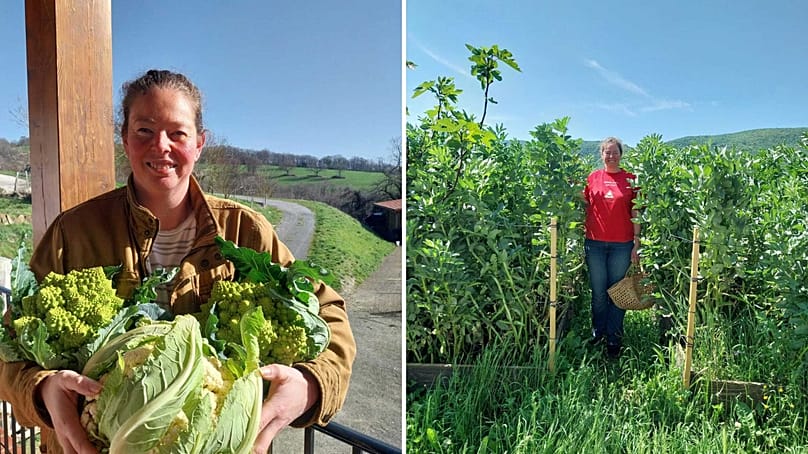
At Curly Creek Ranch in Spain’s Basque Country, farmer Meghan Sapp has also created a circular system.
“We produce all of our own compost from bedding from horses, goats and chickens, as well as kitchen waste and garden waste,” she explains. “We also grow fava beans, which fix nitrogen in the soil, and then we allow them to decompose in the beds, thereby boosting nitrogen levels.”
‘The ecosystem works with and for us’
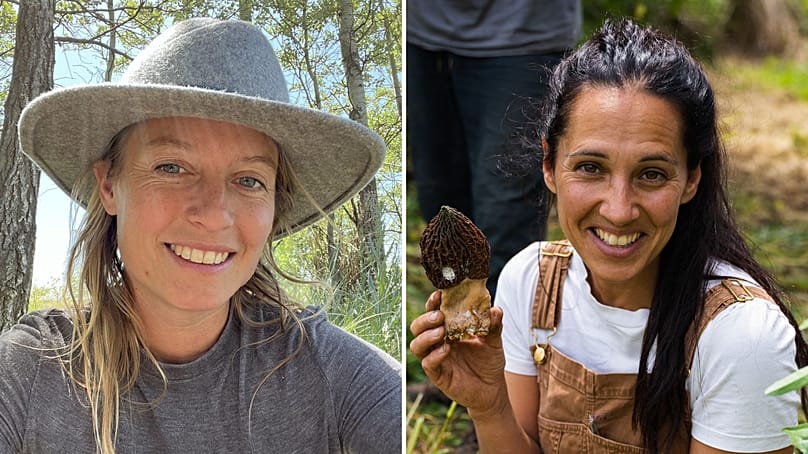
As a farmer and owner of the organic La Junquera farm in Murcia, Spain, Yanniek Schoonhoven has seen first-hand the benefits of switching from conventional to regenerative farming.
She says a field that once gave off a “haunting, vacant feeling” due to the absence of birds and insects has now seen biodiversity return.
Instead of applying inorganic fertilisers, La Junquera relies on vermicomposting – using worms to turn organic waste into compost – and foliage treatments to enrich the soil.
“Now, when I step into this field, I see wildflowers, rabbits, and all sorts of animals,” says Yanniek. “The ecosystem works with and for us: we barely have any pests.”
Why isn’t regenerative farming more widespread?
Despite the wide-ranging benefits of regenerative farming, uptake in Europe has been slow. Only around 2 per cent of farms are considered fully regenerative, while around 5-10 per cent are transitioning, according to a Nature report.
Switching to regenerative farming can be labour-intensive and gains may not be felt immediately. Not all farmers have access to the funding and training needed to make the changes, either.
“Farmers cannot do this alone,” says Yanniek. “Policies, incentives and investment need to… reward farmers for stewarding the land in ways that benefit the wider landscape.”
“We need to stop subsidising farming practices and businesses that don’t regenerate lands and communities,” adds Sheila.
The EU’s Common Agricultural Policy (CAP) does reward farmers for environmental, climate and biodiversity-friendly actions, but a March 2025 WBCSD report found that these schemes are difficult to access and fail to cover upfront investments. CAP is also earmarked for major cuts of between 20 and 30 per cent under the European Commission’s budget proposal for 2028-2034.
Market pressure for volume and uniformity of farmed goods is another aspect preventing producers from adopting regenerative practices.
Do regenerative farms produce the same yields?
A 2025 report by the European Alliance for Regenerative Agriculture (EARA) found that yields on regenerative farms were only 2 per cent lower than their traditional counterparts. Meanwhile costly inputs were significantly lower – 61 per cent less synthetic nitrogen fertiliser and 75 per cent less pesticides were used on average.
For a conventional arable farmer in Europe, synthetic fertiliser can account for up to 12 per cent of total input costs. This rises sharply during price spikes.
In the current crisis, regenerative farmers’ outputs are also better protected.
“Regenerative agriculture is not only about ecological regeneration and resilience: it also improves social and economic resilience to shocks and crises,” says Sheila, who believes more farmers will work to gain “long-term independence” from “the big agri-chemical industries” as a result of repeated fuel crises.
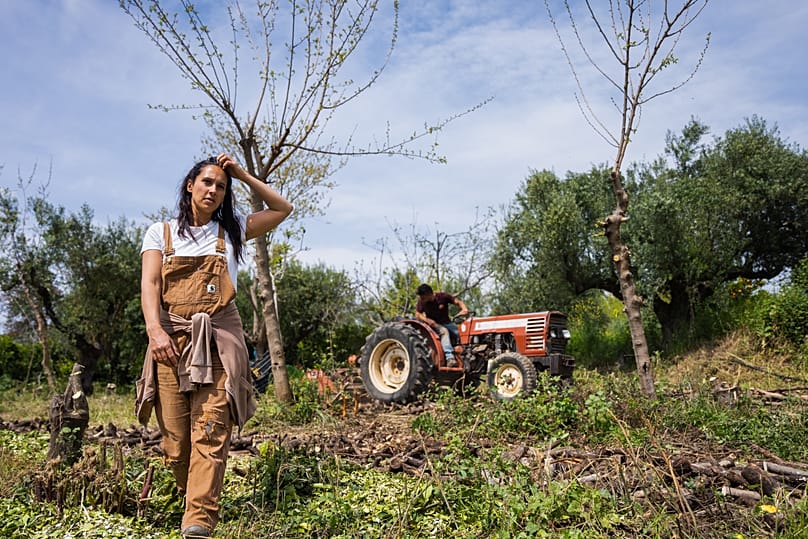
“We might spend €100,000 extra in diesel this year” for tractors, says Yanniek, “But it doesn’t negatively affect our yield.”
Meghan’s Basque Country farm is even better protected thanks to being disconnected from the national grid. The farm gets 97 per cent of its electricity from solar power, including charging its hybrid 4x4 vehicle. This also shielded them during last year’s power cut in Spain. Selling all their produce within a 50 kilometre radius further reduces their exposure to rising delivery costs during fossil fuel price shocks.
What help is available for switching to regenerative farming?
Knowledge and training gaps are another key setback. The EU offers free online courses and workshops through EIT Food (European Institute of Innovation and Technology) to help farmers transition to sustainable practices.
But on the ground, Europe’s regenerative farmers are leading the charge.
As co-founder of the Regeneration Academy, La Junquera’s Yanniek educates others on regenerative agriculture and land restoration in southern Spain.
She’s one of many farmers who partner with Commonland, which takes a holistic approach to farming that combines social impact, biodiversity restoration and financial return.
“We’re building resilience from the ground up,” says Commonland’s Gabrielle. “Scaling this transition, and ensuring those working on the ground have the resources and recognition to lead it, is one of the most important things we can do in these geopolitically uncertain times.”
As co-founder and director of The Southern Lights non-profit organisation and the Regenerative Farming Greece initiative – another Commonland partner – Sheila Darmos educates on regenerative practices in Greece.
“Once we reconnect what is broken – reconnect with how our food grows and who grows it, how our rivers relate to our soils and forests, how soil health underpins human health – then we will come to understand that not farming regeneratively is utterly dangerous and shortsighted,” she says.