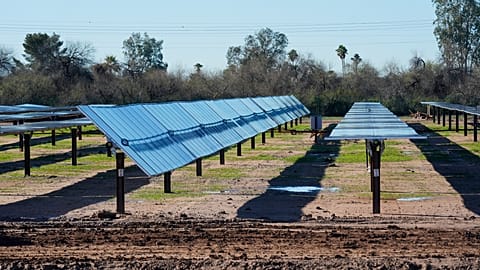
















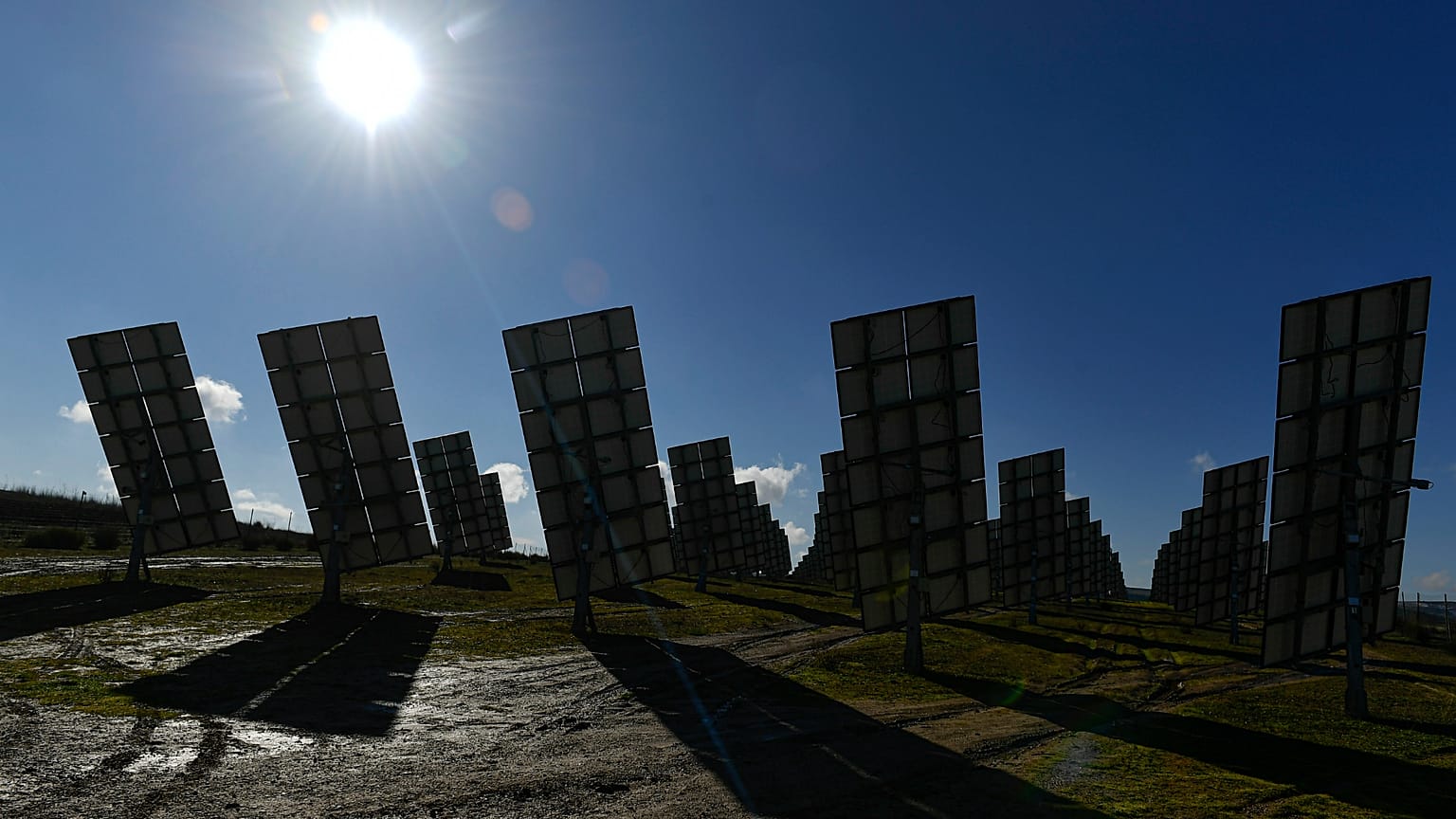













Homes and business are benefitting from Spain's commitment to clean energy.
Spain’s electricity bills have fallen while many other countries have seen a rise since the energy crisis caused by the outbreak of the Iran war.
 ADVERTISEMENT
ADVERTISEMENT
ADVERTISEMENT
New analysis shows that households have each saved €10 per month on their electricity bills since the Hormuz strait was effectively closed in March. Thanks to the country’s commitment to the clean energy transition, renewables have reduced the influence of fossil fuels on the electricity price by 75 per cent since 2019.
Gas is typically the most expensive source of electricity and raises electricity prices in any hour it is used for power. In Spain, the influence of gas on power pricing has fallen to only 9 per cent of hours since the beginning of 2026, down from 52 per cent of hours in 2021, according to analysis from independent energy think tank Ember. This is mainly thanks to the boom in wind and solar energy, which grew by 37 per cent from 2021 to 2025.
“Wind and solar growth are acting as a shield against the price impacts of global instability,” says Chris Rosslowe, author of the report. “While gas prices spike, renewables are keeping power bills down for Spanish households and businesses.”
Spain has quickly moved away from coal and towards solar and wind
Spain is a shining light in the European renewables race. Since 2019, it has doubled its wind and solar capacity, adding over 40 GW – more than any other EU country except Germany, whose power market is twice the size of Spain’s.
Spain did not use coal-fired power at all in August 2025. A far cry from just 10 years before, when coal accounted for a quarter of Spain’s power.
It shows how fast countries can change their energy sources - if they choose to. “You don’t need Spanish sunshine to achieve what Spain has done - every country in Europe could be making better use of its own wind and solar resources to reduce reliance on expensive gas,” argues Rosslowe
Most Europeans are missing out on savings that are rightfully theirs. In more gas-dependent Italy, power prices averaged €143/MWh in March this year, three times higher than in Spain (€42/MWh). Since the beginning of March 2026, Spanish wholesale power prices have been consistently among Europe’s lowest.
As a whole, the EU has increased its fossil fuel imports since the Iran war began, saddling the bloc with a €60 billion energy bill from the war. “Less than five per cent (€2 billion) of it has gone to electrification measures, the one structural investment that reduces exposure today and builds energy resilience for tomorrow,” says Alice Moscovici, a researcher at the European think tank Jacques Delors Institute.
Spain’s temporary cut on taxes saved billpayers money
The 60 per cent rise in the EU’s wholesale gas prices, reported by Ember, since the Iran war began has one clear winner: the fossil fuel giants. A March 2026 study from Greenpeace found that EU oil companies were raking in an extra €81.4 million in profits every single day. Many experts have called for a windfall tax on these excessive profits.
Last year, 28 per cent of the average European consumer’s electricity bill went on taxes and levies, according to the International Energy Agency. Many see this as particularly unfair because taxes on electricity are much higher than on fossil fuels – despite these being the leading cause of the climate and nature crisis. In Spain, taxes on electricity were 4.2 times higher than those on fossil gas in 2025 while Germany’s were 3.2 times higher.
Spain has taken the step of trying to redress this balance. Temporary tax cuts between March and May 2026 removed €8 from the typical monthly domestic electricity bill in Spain, both providing consumer relief and acting as a lever to encourage electrification – the key to reducing Spain’s dependence on imported fossil fuels.
Spain’s bills could be even lower
In April 2025, the entire country of Spain was plunged into a massive power cut. Chaotic scenes showed families sitting in their homes, lit by candlelight, as traffic was disrupted, thousands were stuck in metro tunnels, businesses shut down, and people were unable to make calls on mobile networks or pay without cash. Casualties were reported. A 472-page report concluded that a series of voltage fluctuations led to the blackout.
But the Spanish government did not let the blackout, nor widespread criticism, slow its momentum on renewables. Between May 2025 and February 2026, Spain added an average of 1.3 GW of wind and solar capacity per month, above the 1.2 GW average over the 12 months prior.
The blackout did lead to the power grid being in ‘reinforced mode’ to ensure stability. If this measure was stopped, bills could be even lower. But other measures designed to ensure grid stability are good news.
According to Ember’s report: “The Spanish government introduced a further package of emergency measures aimed at improving the resilience of the power system.” This included making it easier for battery storage to be used at existing renewables plants by exempting them from additional environmental assessments.
“By boosting renewables and their integration, these storage developments should further reduce the role of gas in Spain’s power system and its influence on prices."