




























Bees pollinate 75% of the world's key crops.
Bees are essential to our survival - but new research shows that less than half of the British public recognise them as sentient beings with the ability to have physical and emotional experiences - be they positive or negative. In reality, scientific evidence shows that bees exhibit self-awareness, social learning, play behaviour and the ability to solve complex problems.
 ADVERTISEMENT
ADVERTISEMENT
ADVERTISEMENT
On World Bee Day (20 May) a wildlife charity is calling on all of us to play our part in keeping bees alive and buzzing.
“Bees really are incredible insects - they do so much for us and have such a great level of understanding that people take for granted. Bees can perform incredibly complex tasks, have fascinating social lives, and are essential pollinators. It’s important to make sure we take care of them," explains Rebecca Machin, wildlife expert at the UK's RSPCA.
Bees are some of the most effective pollinators we have - not just helping plants to grow, but helping crops including broccoli, cabbages and apples to thrive.
In fact, bees pollinate about 75 per cent of leading crops globally and contribute to a third of the world's food production. With recent fuel shortages threatening food shortages worldwide, helping the crops on our own doorsteps is essential- and easier than you might think.
Many bee populations in Europe are declining because of climate change and habitat loss.
Here's what you can do to help.
Why are bumblebees on the decline?
Globally, bumblebee populations are diminishing.
A 2023 study in Nature projected that around 38 to 76 per cent of European bumblebee species currently classified as ‘Least Concern’ are projected to undergo losses of at least 30 per cent of ecologically suitable territory by 2061–2080. 2024 was also the worst year for bumblebees in the UK, according to the Bumblebee Conservation Trust.
There are a number of factors at play: land use change, intensive agriculture, invasive species, and infectious diseases affect pollinators like bumblebees.
Climate change also plays a role: intensifying extreme weather that can threaten bees’ habitats and disturb life cycles.
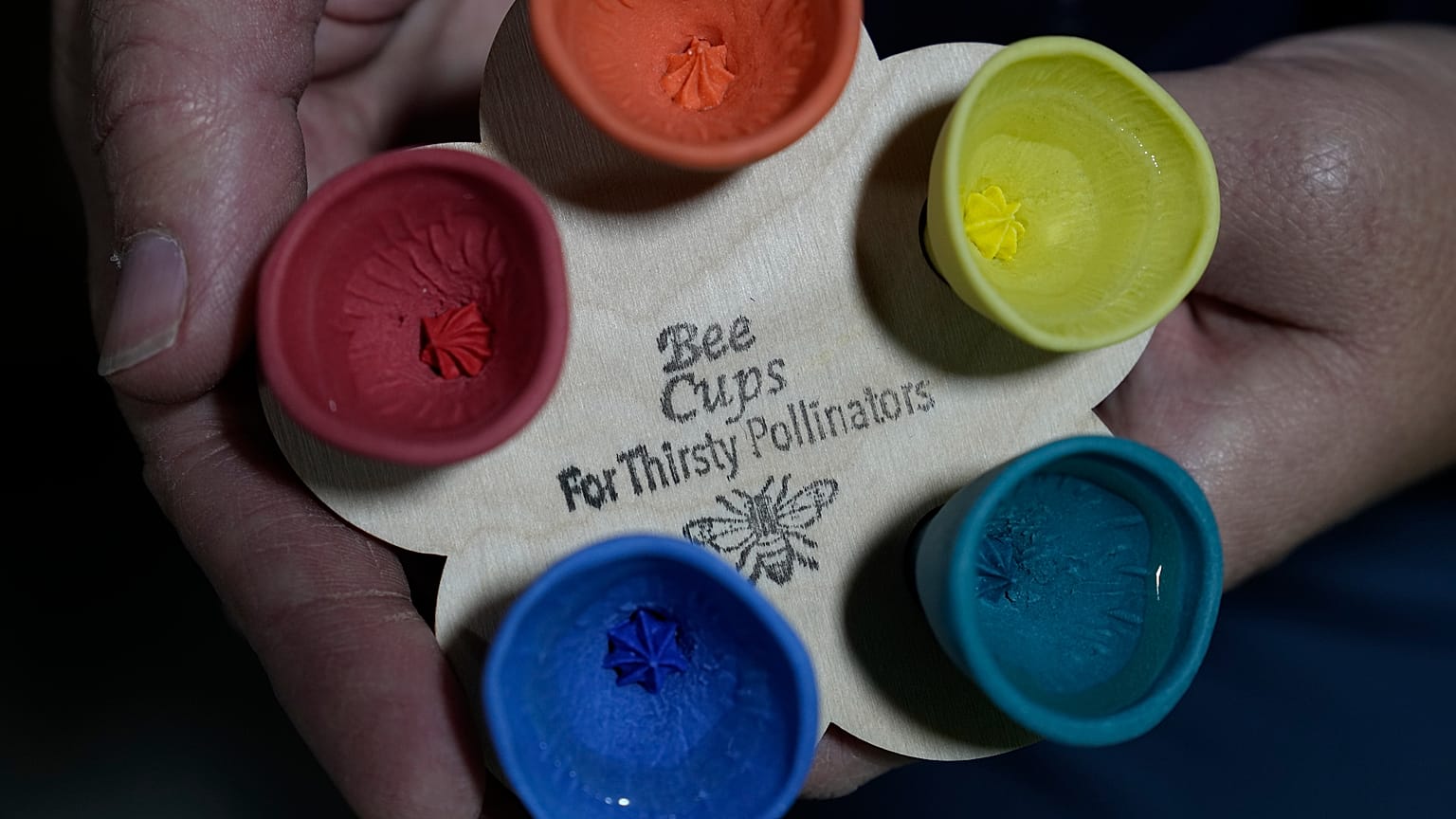
Make a DIY bee drinking station
With more and more heatwaves every year, bees' sources of water frequently dry up. Rain patterns are also a lot more unpredictable and extreme, seesawing between floods and drought. So leaving water out for bees to drink is an easy way to help them, and they only takes a few minutes to set up and maintain.
The RSPCA has full instructions on how to make a do-it-yourself bee drinking station. The added bonus is that you'll be helping other wildlife who need water to drink, too.
Plant with pollinators in mind
In return for the nectar flowers provide, bees and other insects help them by spreading their pollen and helping them to reproduce - this is pollination.
The more flowers we plant, the more food there is for bees – and they'll be healthier and more likely to survive illness or bad weather.
The RSPCA has full details on the best bee-friendly flowers to plant, when to plant them and other helpful advice.
Invest in a solar farm to provide more wildflowers for bees
A recent study, published in Global Change Biology, looked at how solar farms could help with bumblebee conservation in the UK.
Community solar farms are now widespread around Europe, offering citizens the opportunity to make small (or large) investments in local clean energy projects. Along with the warm fuzzy feeling of helping to speed up the transition away from fossil fuels and towards clean energy, community energy offers other benefits. Some afford you a return on your investment, while others grant you cheaper energy for your house or business.
In the study, which reports to be the first to look at the role of solar farms in future biodiversity conservation, researchers wanted to see how bumblebees would fare with solar farms.
The researchers looked at 1,042 operational solar farms in Great Britain, creating a high-resolution model to simulate bumblebee foraging and population dynamics. This enabled them to predict bumblebee density in and around the UK's solar farms, while also accounting for the effects of different future scenarios, like changed habitatcontext and configuration.
“The model predicts how bees use these landscapes based on foraging and nesting resources,” said Dr Hollie Blaydes, Senior Research Associate at Lancaster University and first author of the study. “This aspect of the work was particularly novel - it is unusual for modelling like this to be done in such detail.”
The modelling suggests that the number of bumblebees within solar farms could more than double if solar farms are managed for biodiversity. Wildflowers on the farms provided a rich source of food, especially compared with turf.
“Solar farms can be refuges for bumblebees in the present day and in the future and could play a part in mitigating habitat loss – if managed well,” says Blaydes. “But, solar farms alone will not be able to counteract the effects of all future land use changes on bumblebees and other biodiversity.”