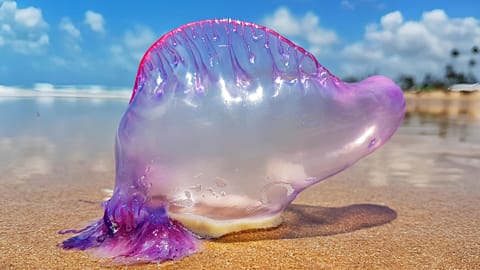
















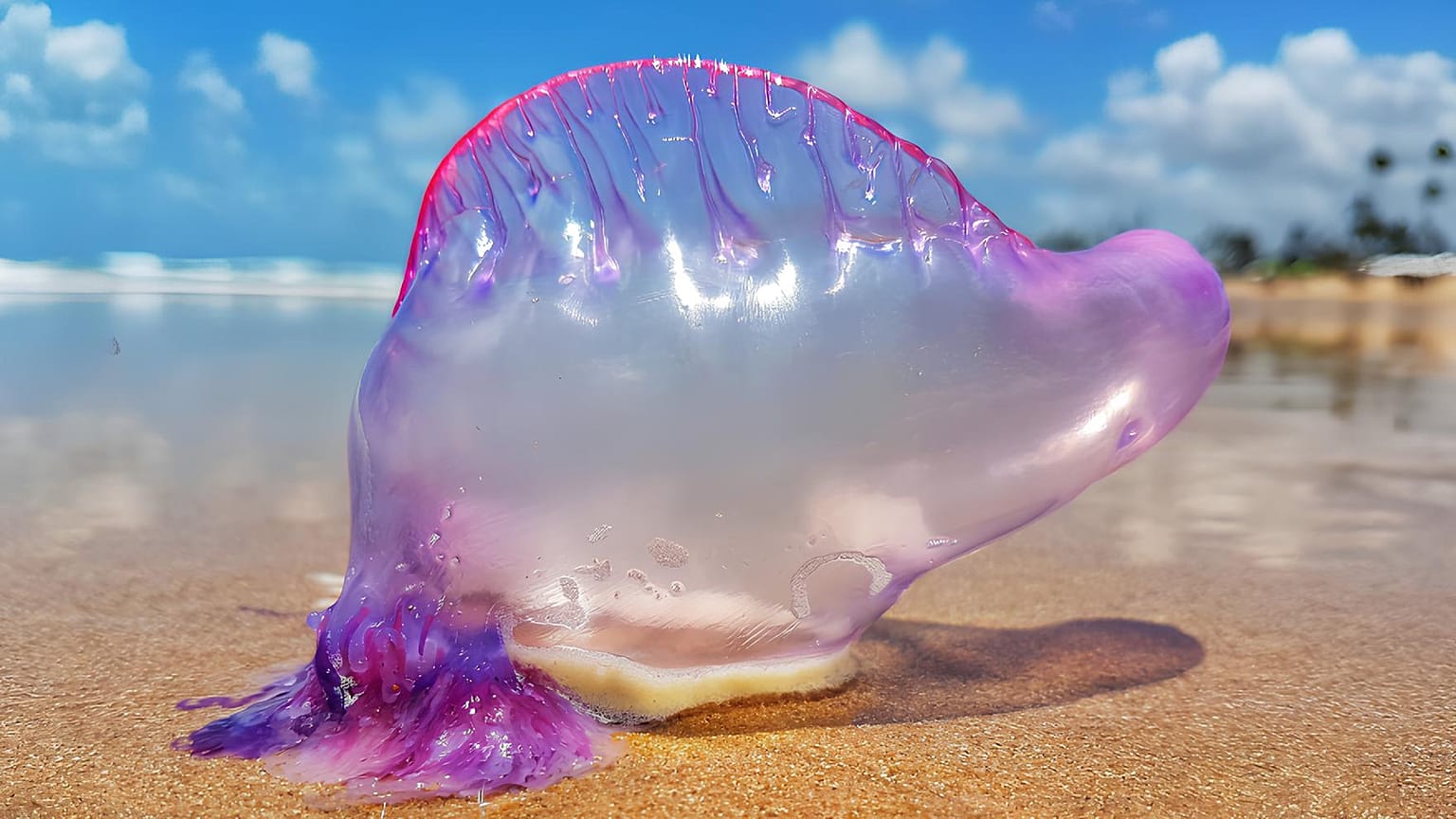














The growing number of specimens along the Cantabrian coast has forced swimming bans on several Basque beaches and prompted health authorities to step up guidance on how to respond to stings.
The presence of Portuguese man o' war, marine organisms with venomous tentacles**,** has increased this summer in northern Spain, especially in Cantabria and the Basque Country, where the authorities have had to restrict bathing and temporarily close several beaches after recording more than a hundred stings in a single day.
 ADVERTISEMENT
ADVERTISEMENT
ADVERTISEMENT
According to San Sebastián city council, most of the people treated had only minor injuries and the number of incidents was low compared with the volume of swimmers.
The Portuguese man o' war (Physalia physalis) is often mistaken for a jellyfish, but is in fact a colonial organism. Its long tentacles contain stinging cells capable of causing intense pain and, in some cases, severe reactions, so the authorities advise against any contact, even when the animal appears to be dead or has washed up on the sand.
What to do if you are stung
The Basque Government's Department of Health recommends (source in Spanish) leaving the water immediately and going to the lifeguard post, or seeking medical attention if severe symptoms appear.
The official advice includes:
- Rinse the affected area only with seawater or saline solution.
- Do not use fresh water, as it may trigger the release of more venom.
- Remove any remaining tentacles with tweezers or a similar object, never with your hands.
- Apply cold using an ice pack wrapped in a cloth.
- Seek medical attention if you experience dizziness, nausea, difficulty breathing or very intense pain.