





























Brent crude topped €100 a barrel after the Strait of Hormuz was closed. With no unified EU response from Brussels, capitals are opting for tax cuts, price caps or simply delaying concrete action.
The war in Iran has led to a surge in Brent crude prices with a domino effect on fuel and energy costs. The rise in fuel prices in Europe is plain to see, exceeding 34% in Spain.
 ADVERTISEMENT
ADVERTISEMENT
ADVERTISEMENT
The increase has also been felt by Europeans in electricity and gas bills, prompting many countries to adopt or announce measures to cushion this relentless rise in prices since 28 February, when the attack on Iran began.
The conflict has disrupted roughly 20% of global oil supplies passing through the Strait of Hormuz, pushing Brent from around €60 to more than €100 per barrel in a matter of days. Natural gas prices in Europe have jumped by 60% since the start of the conflict.
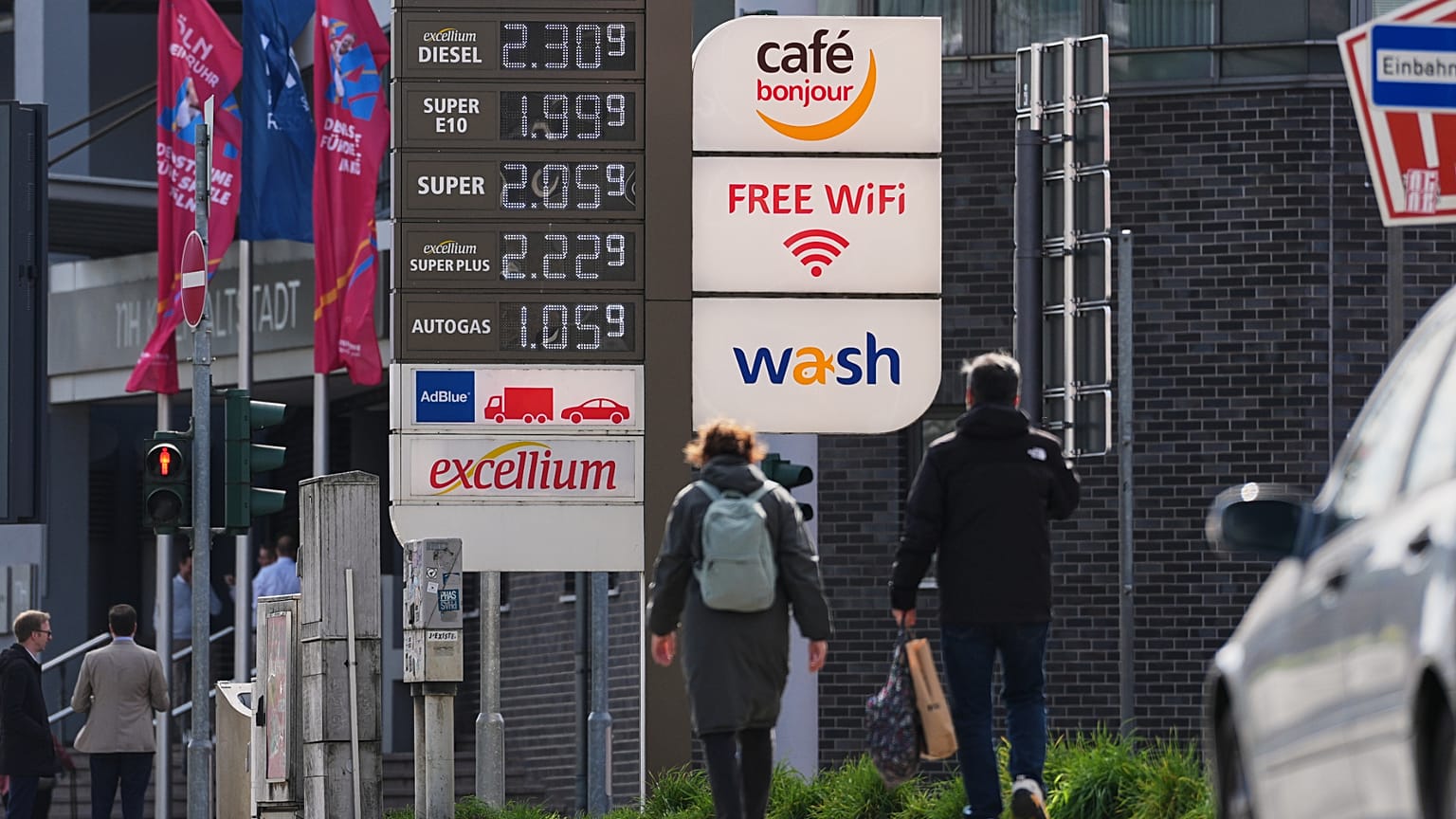
The rise in both petrol and diesel prices at European petrol stations has been striking, with prices topping €2 per litre in Germany.
The sharpest increases have been in diesel fuel. Several countries are now above €2 per litre, with percentage rises ranging from nearly 17.5% in Portugal to 34.3% in Spain.
With such steep increases, governments have begun to take action so that citizens do not have to shoulder the full impact of higher prices, especially given that these products are heavily taxed by many European governments.
Spain has the most ambitious package
Pedro Sánchez’s government took a little longer to finalise its response, partly because of internal frictions with Sumar, but ultimately approved the most comprehensive package of those considered. The Council of Ministers passed a Royal Decree-Law with a €5 billion plan to cushion price rises, with measures in force until 30 June 2026.
The plan is centred on tax cuts. The government reduced VAT on all forms of energy from 21% to 10%, including motor fuels, electricity, natural gas and butane, whose maximum price has also been capped.
The anti-crisis measures will cut electricity bills by 13%, and petrol and diesel will be around 30 cents cheaper per litre. Hauliers, farmers and fishers, identified as the most exposed sectors, will also receive a rebate of 20 cents on every litre of professional fuel.
At the same time, the government authorised the release of 11.5 million barrels of oil, equivalent to just over 12 days of national consumption, as part of the International Energy Agency’s global plan to release 400 million barrels from strategic reserves.
Spain also starts from a comparatively better position on electricity. Power prices in Spain range between €37 and €57 per megawatt hour, compared with €113 in Germany and €141 in Italy, thanks to the fact that more than 60% of the energy produced in the country comes from renewable sources.
Germany, Italy and Portugal take different approaches
Germany has seen one of the biggest hits at the pumps. Petrol prices have soared from around €1.82 per litre to €2.16 per litre, an increase of almost 18% in just two weeks. The Berlin government’s response has focused on regulating the behaviour of petrol stations rather than providing direct subsidies.
The German economy minister, Katharina Reiche, has presented a bill that would allow petrol stations to raise prices only once a day, at 12:00, although it has yet to enter into force because it requires changes to competition law. On the broader energy front, Berlin has firmly ruled out resuming purchases of Russian gas, calling that prospect “absolutely unacceptable”.
Italy has taken a different path. Rome considered using the extra VAT revenue generated by higher fuel prices to compensate consumers, and plans to sanction companies that use the crisis to inflate their profit margins. At European level, Prime Minister Giorgia Meloni has activated the measure for 20 days.
Portugal was the first of the southern European countries to activate a concrete measure. The government of Luís Montenegro announced a “temporary and extraordinary” reduction of €3.55 cents per litre in the automotive diesel tax, returning to taxpayers the extra VAT revenue generated by the price rise. The measure was triggered when fuel prices passed the 10-cent increase threshold that the executive itself had set as a trigger.
France, Poland, Hungary and Austria take more restrained positions
In France, the most visible response did not come from the government but from a company. TotalEnergies announced that it would cap petrol and diesel prices until the end of the month.
At state level, Paris has focused its efforts on diplomacy rather than tax cuts: Macron pushed in the European Council for a proposal to halt attacks on energy and water infrastructure, given the risk that the conflict could further aggravate price rises. No tax-reduction measures equivalent to those in Spain have been announced.
Poland, where price increases at the pumps have been more moderate, has taken a cautious line. The Polish government has not announced any major tax-cut measures, and its secretary of state for energy, Wojciech Wrohna, warned that you cannot suspend regulations overnight without harming market stability and investor confidence.
Austria, where petrol has also risen by around 13%, has gone further than Germany in price regulation. It has allowed operators to increase fuel prices only three times a week, while cuts can be applied at any time.
Hungary has opted for an outright cap. Prime Minister Viktor Orbán has set a maximum price of 1.54 euros for 95-octane petrol and €1.59 for diesel, although the measure applies only to vehicles with Hungarian number plates, to prevent drivers from neighbouring countries crossing the border to refuel.
European Union measures on gas reserves
Across the EU, energy commissioner Dan Jørgensen has indicated that Brussels is considering activating temporary emergency measures in the event of a “severe price crisis”, but stressed that they must be targeted, time-limited and must not discourage the transition to clean energy.
According to the Financial Times, on Saturday 21 March the energy commissioner ordered member states to reduce the target for filling their gas storage facilities to 80% of capacity, 10 percentage points below the EU’s official targets, “as early as possible during the filling season in order to offer security and reassurance to market participants”.
As we can see, measures range from no support at all, as in France, to more than €5 billion in aid from Spain. How long this energy price crisis in Europe lasts will depend on the duration of the war and on the blockade of the Strait of Hormuz.