












As satellite launches skyrocket and orbital debris multiplies, aviation authorities are scrambling to prevent space junk from causing the next major flight disruption
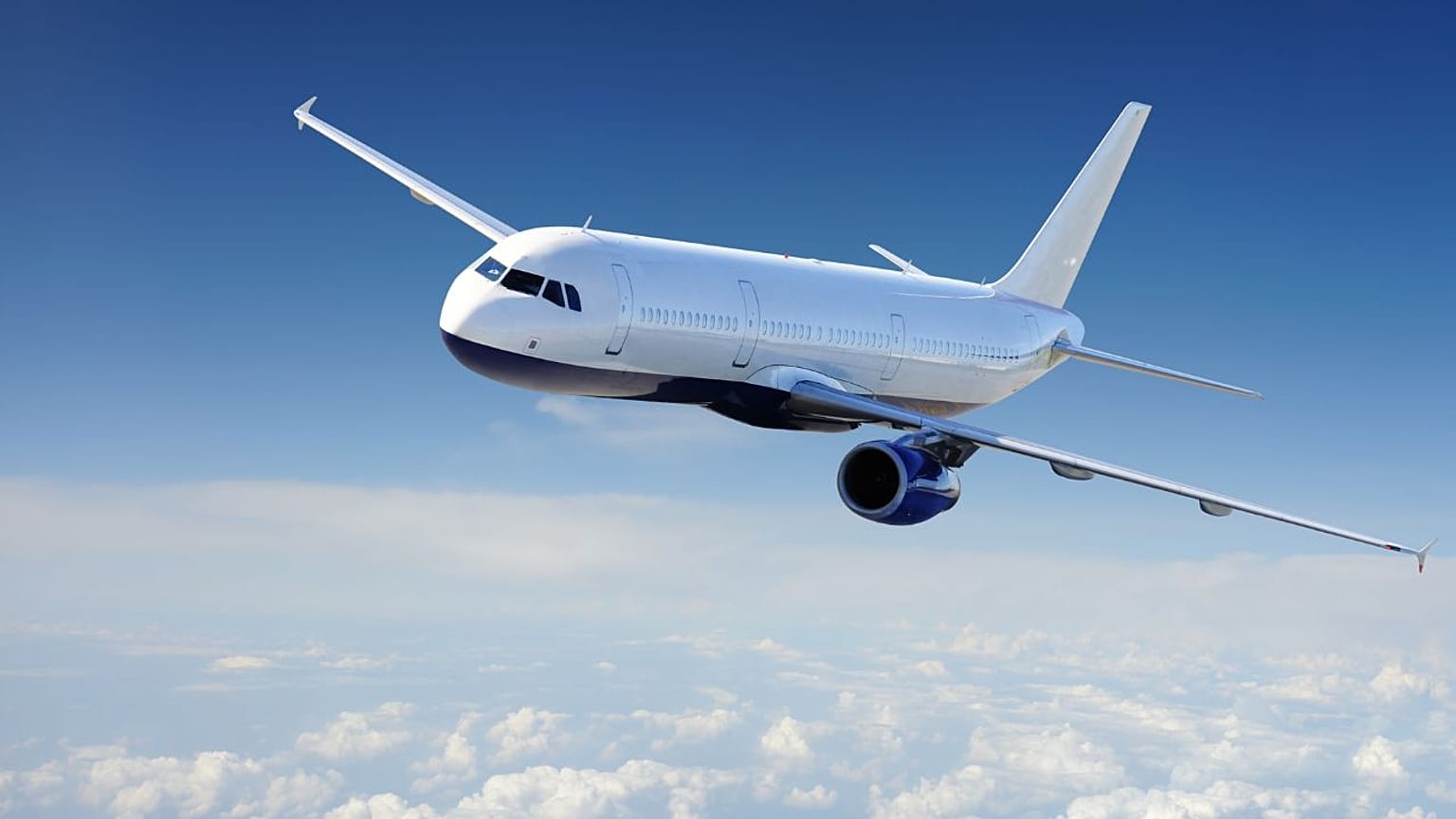
While a flight delay or diversion because of bad weather sounds routine, what about a delay caused by falling space junk? While it sounds like a bad disaster movie, experts warn that satellite debris is a growing risk that flight operators must prepare for.
 ADVERTISEMENT
ADVERTISEMENT
ADVERTISEMENT
To date, there have been no confirmed cases of a commercial plane being hit by space junk, but the odds are shifting as both the number of satellites in orbit and the frequency of passenger flights increase.
A study published in Scientific Reports recently highlighted that there is a 26 percent chance each year that an uncontrolled rocket reentry will occur over busy regions such as northern Europe, the northeastern United States, or major Asia-Pacific hubs.
But that does not mean there is a 26 percent chance of a plane being hit. EUROCONTROL, which manages air traffic across 42 countries, told Euronews Next that the percentage figure indicates the probability that the path of a falling rocket will pass through busy airspace, requiring authorities to close it as a precaution. In reality, the global probability of an actual collision with an aircraft remains extremely low and is calculated to be roughly one in a million years based on current traffic levels.
However, even a 'precautionary’ closure can have a massive impact on travellers. For example, in 2022, some of the airspace over Spain and part of the French neighbouring airspaces were closed to flights along one of the predicted paths of falling Chinese rocket debris. That single event delayed hundreds of flights and cost millions of euros, even though no aircraft were struck, and the debris eventually fell into the ocean thousands of kilometres away.
Today, EUROCONTROL already actively monitors rocket launches and re-entries affecting European airspace, and with the support of institutions such as EU-SST, shares information when necessary, and integrates space debris re-entry scenarios into its crisis management protocols.
Why space junk survives the heat
A key reason for the concern is that space equipment is built to be incredibly tough. Stijn Lemmens, a senior space debris analyst at the European Space Agency, said that "the issue is when you design an object to go to space, it has to survive launch, so it's strong and stiff."
Propellant tanks made from high-quality titanium are one space debris favourite, for example.
Most space debris isn't so easily identified. Lemmens told Euronews Next that they look "like a piece of equipment that has been put in a furnace," leaving behind only an ablated lump of metal.
To better understand the fiery process of coming back to Earth, ESA is preparing a groundbreaking mission called Destructive Reentry Assessment Container Object (DRACO), scheduled for launch in 2027. This washing machine-sized satellite is essentially a 'suicide mission' set to record its own destruction from the inside.
As the satellite begins to burn up, a specially designed 40-centimetre indestructible capsule will act as a 'black box' inside. It will be connected to 200 sensors and four cameras throughout the satellite, measuring temperatures and the strain on the metal as it disintegrates.
Once the main satellite has burned to dust, the capsule will plummet toward the ocean, deploying a parachute to slow down, and briefly beam back its precious data up to a geostationary satellite for the experts on Earth to examine.
This information is vital because, as Lemmens notes, "it is currently impossible to recreate the exact circumstances on the ground."
Designing a 'friendly' reentry
The data from DRACO will help engineers design satellites that are what's known as 'demisable', meaning they are built to break apart and vaporise completely before they ever reach the altitudes where tourist-packed planes cruise by.
Following ten years of research, ESA is testing technologies like 'demisable' washers and brackets, the idea being that they act as trigger points to help a spacecraft fall apart during reentry. Engineers are also looking at switching from titanium tanks to aluminium alloys that melt more easily, though Lemmens cautions that "one solution for one satellite might not work for another."
The long-term goal is to make controlled reentries - where an object is steered into a remote part of the ocean - the standard for all large rocket stages.
A more complex sky
Our skies are becoming increasingly crowded. Air traffic in Europe is expected to grow by up to 2.4 percent every year through to 2050, and there is a clear trend toward more long-haul flights, as well as adjustments to flight paths to mitigate geopolitical risks and optimise flying time to reduce emissions.
We can also add into the mix a new breed of air traveller, from Katy Perry-style suborbital space tourists, to slow-moving high altitude communications balloons and perhaps in the not-too-distant future, hypersonic point-to-point vehicles zipping around Earth. Dense urban areas will also begin to see VTOL passenger drones.
Managing risk will require much better coordination between air traffic controllers and the space community. EUROCONTROL is working to move away from "case-by-case" responses and toward a permanent service that monitors space events in real-time. The goal is to have a multi-layered air-space picture, from city skies to low Earth orbit.
Looking ahead, EUROCONTROL says it would like to see better coordination, including from emerging and established private space industry players, including joint simulations from airlines and militaries to spacecraft operators.
And finally, if debris does make it through the upper atmosphere, the agency is calling on everyone to be transparent and specific about how and why a piece of metal or composite made it to more risky lower altitudes. In short, if it's your piece of smoking spaceship that hits terra firma, own up to it, share the data, to help keep all travellers safe.