













Europe's space leaders were told to "speed up" security missions and launch the IRIS2 satellite constellation by 2029 at the biggest Brussels space conference of the year. Euronews Next highlights the key takeaways from the event and asks if the sector still has the power to inspire.
The era of ambitious talk is over—2026 must be the year Europe finally delivers on its space promises, leaders declared at the European Space Conference in Brussels this week.
 ADVERTISEMENT
ADVERTISEMENT
ADVERTISEMENT
Here are the top five messages from the conference, which is now in its 18th edition.
Security takes centre stage
Civilian space operations have been historically shy about their ties to military space operations, but not anymore.
With conflict in Europe and geopolitical tensions, European Commissioner for Defence and Space Andrius Kubilius warned in his keynote speech that "Member States fear that war is coming", and "only unity can deter Putin and defend the European Union".
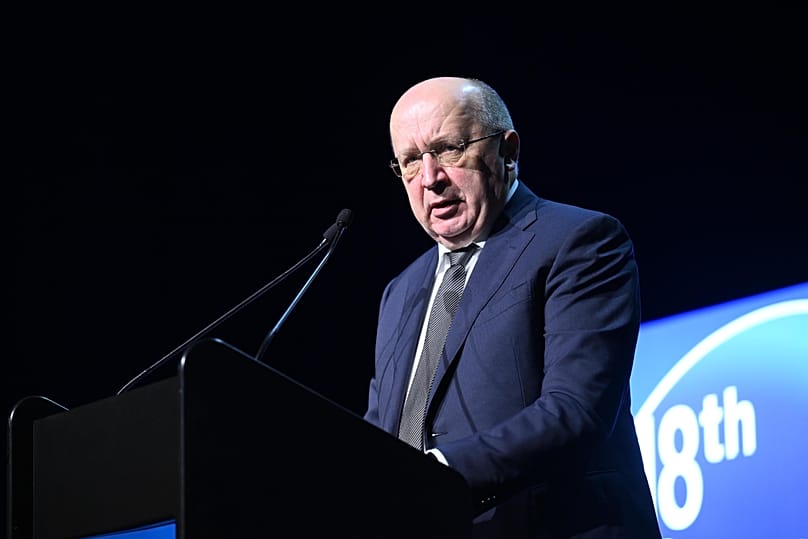
He highlighted the new encrypted and secure navigation service from the EU's Galileo satellites, as well as the launch last week of Europe's GOVSATCOM, a sovereign satellite communication system utilising existing European space hardware.
For many space professionals, public discussion of what's known as 'dual-use' is a welcome reflection of the reality of the sector since the outset.
"A majority of the satellites we launch are dual, whether we talk about telecommunications, Earth observation, or positioning," Arianespace CEO David Cavaillolès told Euronews Next. "All of this can have both civil and military uses."
The European Space Agency’s director general, Josef Aschbacher, criticised European states that act alone on space security. "This weakens us," he said.
ESA is promoting an initiative called European Resilience from Space (ERS), which Aschbacher said allows "Member States (to) retain full control and ownership of their national assets, pool and share with others, and therefore allow Europe to benefit from an integrated system-of-systems."
But not everyone is confident about the sector's outlook, despite the record influx of cash into the space sector from European governments and institutions in the past year.
Industry figures at the European Space Conference said they need more public contracts and better long-term visibility, and newer players, such as Bulgaria's Endurosat, say they still depend on American venture capital to grow.
Timelines are tightening for IRIS2
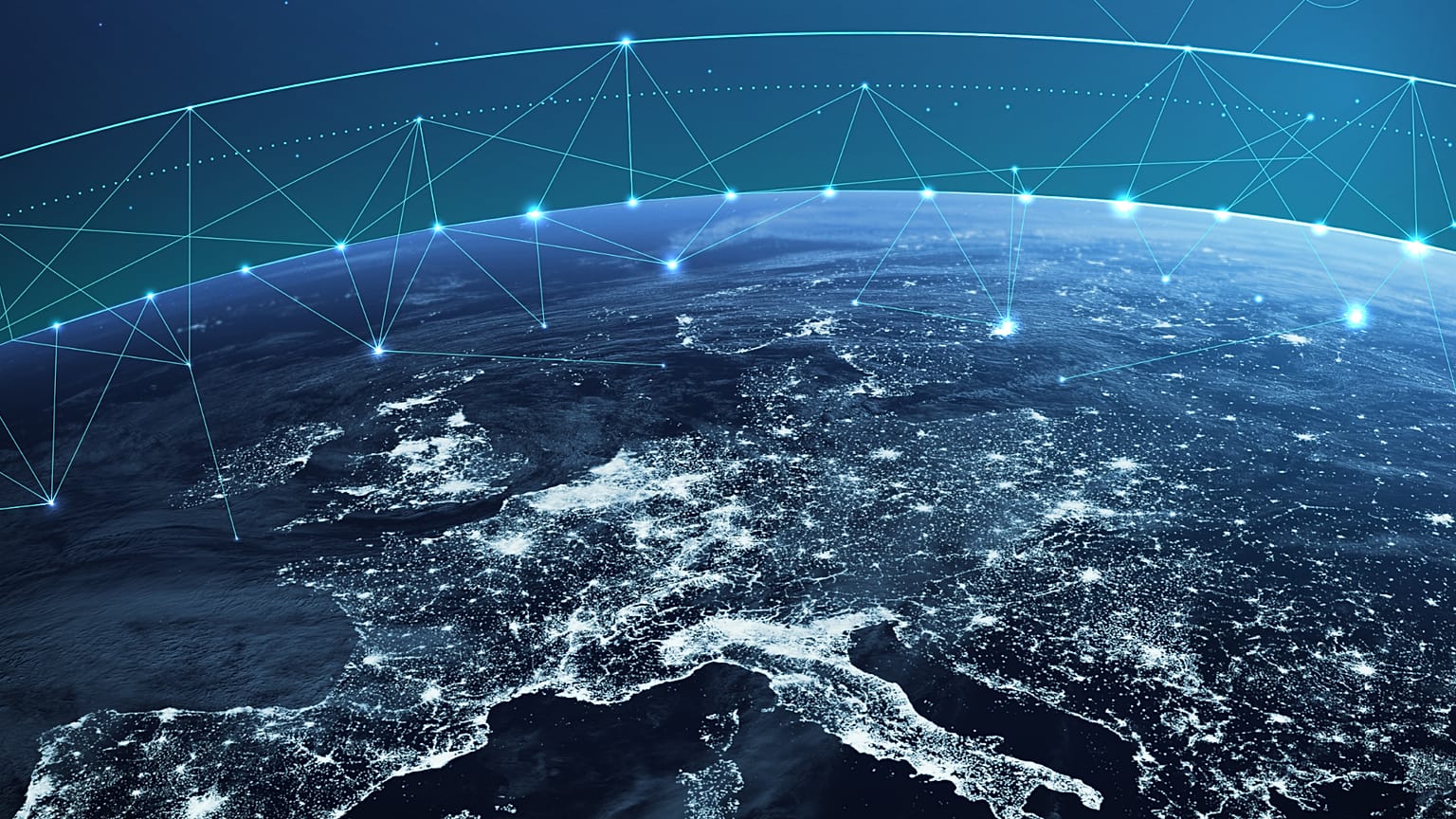
Europe's new IRIS2 secure connectivity constellation is moving forward on an accelerated timeline.
Kubilius said he had "asked all partners to step up and speed up," with 2029 now slated for initial services, although many suspect it will slip to 2030 at least.
Members of the SpaceRise consortium tasked with building and operating this fleet of 290 satellites still have plenty of questions about the project, admitting to Euronews Next that at times, there are “too many cooks in the kitchen”.Manufacturing ground terminals and securing critical satellite components remain top concerns.
Construction could begin as early as this year, with officials accepting that the first IRIS2 satellites may launch with limited capabilities and undergo iterative improvements throughout the 2030s.
While the customers at the European Commission are fully committed to IRIS2, the commercial business case was questioned, with telecoms operators at the conference saying they will buy bandwidth from competitors such as Starlink.
The project faces fresh competition from Blue Origin's newly announced TeraWave constellation, which targets the same institutional and business clients. However, Hispasat CEO Luis Mayo and SES CEO Adel Al-Saleh told Euronews Next that they viewed the American competitor's similar multi-orbit design as validation of their approach.
Big space players are bonding in Project Bromo
Project Bromo, the codename for the merger of space industry heavyweights Airbus Defence and Space, Thales Alenia Space, and Leonardo, was given a generally positive reception at the conference.
The thinking goes that this 'bromance' makes business sense if Europe wants to compete with the United States and China.
"I think it's a normal thing to consolidate, to try and horizontally optimise, to be more effective, maybe to organise the workforce in a better way," said European Space Policy Institute director Hermann Ludwig Moeller. However, he told Euronews Next that Project Bromo may stifle the space industry's desire to create new start-ups and encourage small and medium-sized enterprises (SMEs).
Finnish ICEYE vice president Joost Elstak called it "overall a good thing, if you look at it from the European perspective, we're trying to become more competitive and making sure that industry is more able to compete globally."
Cavaillolès had a similar view: "What is clear is that the world is changing fast, so we need to be agile. At our level, for the launcher world, we did the consolidation, simplification, some years ago. Now we see that our colleagues from the satellites are doing the same."
Spotting storms before they hit home
Forecasting for intense and violent storms may start to become more precise later this year as weather services integrate images from Eumetsat's new MTG-S1 satellite.
The very first images from this pioneering Infrared Sounder were unveiled in Brussels, showing how temperature, humidity, and composition of our atmosphere evolve at different altitudes.
The instrument makes its observations in almost 2,000 different wavelengths across the infrared spectrum simultaneously.
"What the image will do is actually provide four-dimensional information about the atmosphere,” said Eumetsat director general Phil Evans.
So it provides information through the profile of the atmosphere as it evolves over time. And that's a European first."
The first image was taken in November 2025, from a geostationary orbit 36,000 kilometres above the equator, and shows bands of water vapour crossing the Atlantic, dramatic temperature variations across the Sahara, the tops of thunderstorms and plumes from pollution sources like fertiliser plants.
Space can still inspire
Despite the focus on security and European competitiveness, space missions still have the ability to inspire those who work in the business.
Elstak from IceEye recounts sitting with engineers on ESA's JUICE mission to Jupiter's icy moons "talking about how the transfer from Venus to Jupiter was the least of their concerns, and I thought 'that's pretty cool'".
ESA director of Earth observation Simonetta Cheli said she was blown away earlier this year when the agency's Biomass satellite was commissioned.
"Biomass is a fabulous mission," she told Euronews Next."Looking at CO2 absorption by tropical forests, a climate change mission, with amazing technology, a P-band radar, never flown before, that was really 'wow'," she said.
ESA astronaut Jean-François Clervoy admitted that he continues to be fascinated by the search for life beyond our planet. "If, before I die, I have the beginning, just the beginning of the beginning of an answer to that question, I will be happy. So let's continue to explore," he said.
Clervoy was at the European Space Conference as an ambassador for Monaco's Venturi Space, which is shortlisted by NASA to produce components for a future Artemis programme lunar rover. If chosen, the first wheels on the Moon this century could be made in Switzerland, powered by batteries produced in Monaco with a control system from France.
There's more inspirational space news on the way, too. Within a few days, the next Artemis II mission should take astronauts around the Moon for the first time since 1972, their Orion craft relying on the German-made European Service Module for air, water and propulsion.
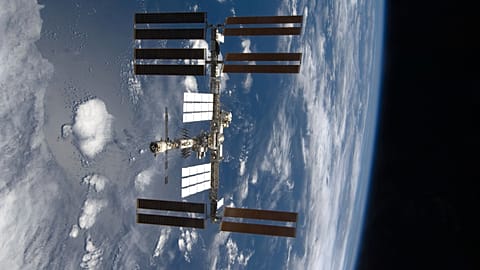
Then, coming up in February, French ESA astronaut Sophie Adenot will blast off for the International Space Station. In the words of Aschbacher, "There is a lot to look forward to."