














NASA astronauts could be sent back to the Moon for the first time in 50 years as soon as April 1. Here's what you need to know about the mission.
For the first time in more than half a century, humans are venturing back towards the Moon.
 ADVERTISEMENT
ADVERTISEMENT
ADVERTISEMENT
The Artemis II mission sent four brave astronauts on a journey around the Moon on a 10-day journey on Wednesday, before returning to Earth's atmosphere at a record speed of approximately 25,000 miles per hour (40,000 km/h).
The mission was initially scheduled for February this year, but was delayed until March after engineers detected a new issue with the rocket's helium system. A few weeks later, agency officials said the flow of helium to the rocket's upper stage was interrupted, pushing the mission back further.
Now, NASA says it will target a launch window between April 1-6, and this time, they're ready.
"We are getting very, very close [to launch], and we are ready," said Lori Glaze, acting associate administrator for NASA's Exploration Systems Development Mission Directorate, in a press conference over the weekend.
"All of our operations have been going smoothly; it's been going very well."
While the voyage will not include a Moonlanding, it represents a key step in the United States' plan to establish a long-term human presence beyond low Earth orbit.
Here’s a full lowdown on the Artemis II mission and why you should be tuning in for when it launches.
What is Artemis II?
Artemis II is the second mission in NASA's Artemis programme, launched in 2017 to return humans to the Moon and eventually send astronauts to Mars. It will also provide important data that will be used for future Moon missions
It follows Artemis I, an uncrewed test flight that successfully orbited the Moon in late 2022.
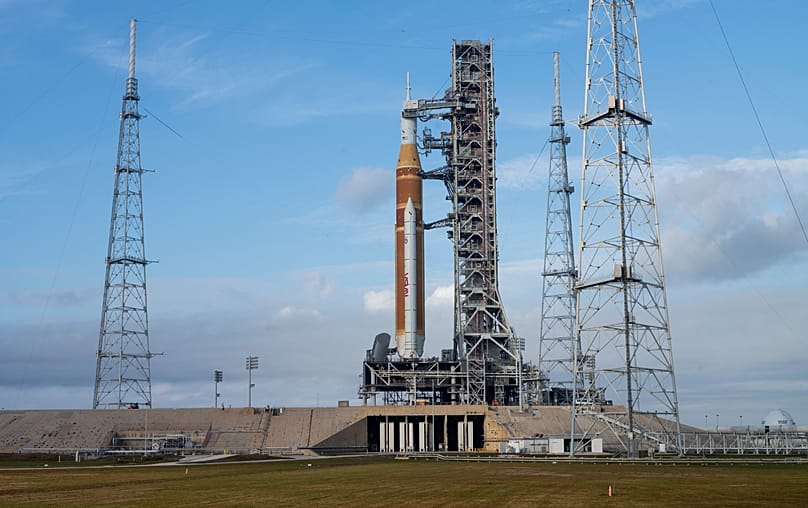
For Artemis II, astronauts will fly aboard NASA's newOrion spacecraft, launched on the Space Launch System (SLS) rocket.
It will be the first time humans have flown on either vehicle, and the first time any crew has travelled near the Moon since Apollo 17 in 1972.
Why won’t the mission land on the Moon?
Unlike later Artemis missions, Artemis II is not designed to put astronauts on the lunar surface. Instead, the crew will orbit the Moon, passing around its far side before returning to Earth.
The mission is intended as a full end-to-end test of the systems that will eventually be used for landing missions.
NASA is using Artemis II to prove that its spacecraft, rocket and life-support technologies are safe and reliable enough to carry humans into deep space.
Artemis II mirrors Apollo 8, the 1968 mission that first sent astronauts around the Moon without landing.
What is the significance of this mission?
Although it may appear modest compared with a Moon landing, Artemis II carries significant political and strategic weight.
Sending humans beyond low Earth orbit requires long-term funding commitments, reliable technology and sustained political support.
Crewed missions signal seriousness in a way robotic missions do not, giving international partners and commercial companies the confidence to align their own plans with NASA's timeline.
“This is a massive milestone for NASA and the Artemis programme because this is going to be the first time that a crew of humans will see the far side of the Moon, and is such an important milestone in NASA's eventual goal of getting two feet, human feet, back on the lunar surface," said John Pernet-Fisher, a research fellow at the University of Manchester.
"It's also exciting because it's a huge technological achievement. The huge new rocket and the spacecraft that they're riding in, and they're also going to be the fastest-moving humans that have ever existed on reentry when they come back into the Earth's atmosphere. We expect them to be going about 25,000 mph," he added.
Who will be on board?
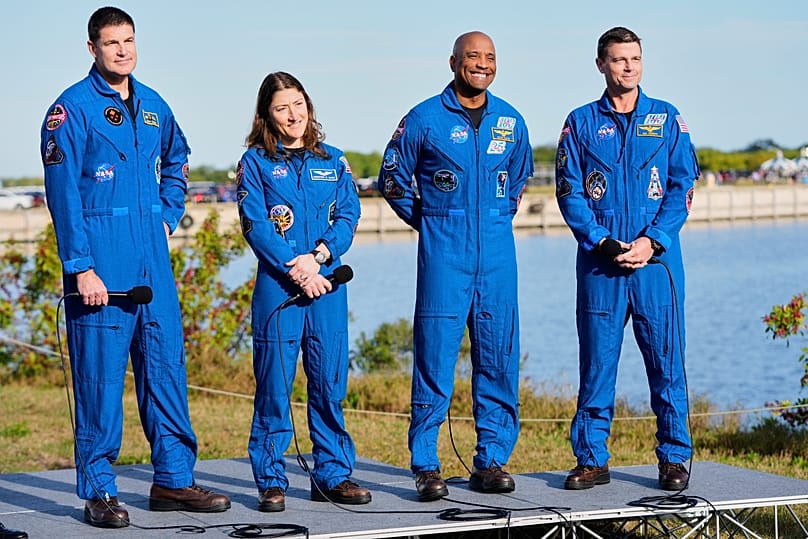
The Artemis II crew will consist of four astronauts, including three Americans, Reid Wiseman, Victor Glover, and Christina Koch, and one Canadian, Jeremy Hansen.
Canada’s participation highlights the international nature of the Artemis programme, which now includes more than 60 countries signed on to the Artemis Accords.
What will the astronauts do during the mission?
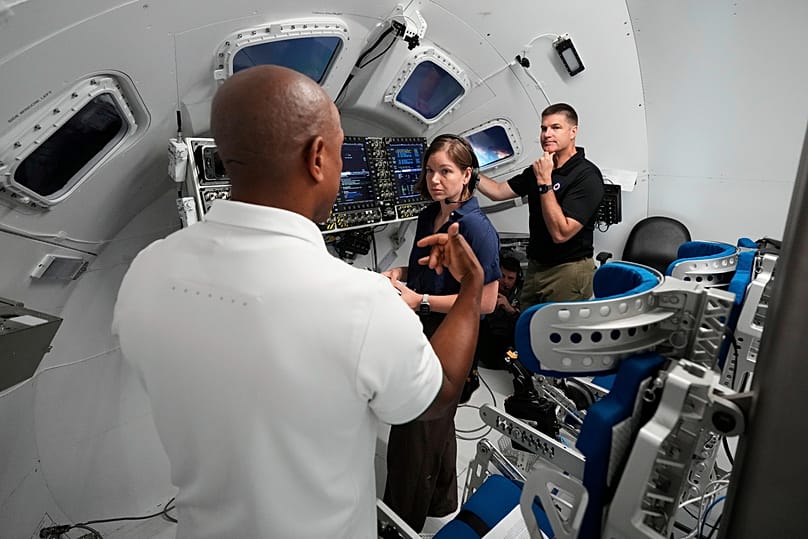
Shortly after launch, the crew will begin testing Orion’s core life-support systems, including air, water and safety equipment.
This will also be the first time astronauts test a deep-space toilet system - a notable upgrade from the Apollo era, when crews relied on so-called “relief tubes".
“SLS and the Orion module that’s going to sit atop it is basically the next generation of rocket technology," said Pernet-Fisher.
"So back in the Apollo days, we had the Saturn V with the Apollo module on top. These are the modern equivalents, and specifically the SLS, the Space Launch System, is designed to be such a large rocket that it’s actually capable of perhaps even going a bit further eventually in the future."
He said that if NASA continues on this path, "it could well see missions to Mars, it could see things going deeper into space, for instance, it's been suggested that it's powerful enough to reach Jupiter, for instance."
How long is the mission expected to last?
An estimated 10 days, from launch to splashdown.
What comes after Artemis II?
If the mission is successful, it will pave the way for Artemis III and future missions aimed at building a human presence on and around the Moon, including the Lunar Gateway space station.
Europe made
The Orion craft relies on the German-made European Service Module for air, water and propulsion. It is a cylindrical module that provides electricity, water, oxygen and nitrogen, as well as keeping the spacecraft at the right temperature and on course.
This article was updated on 2 April, 2026.