
















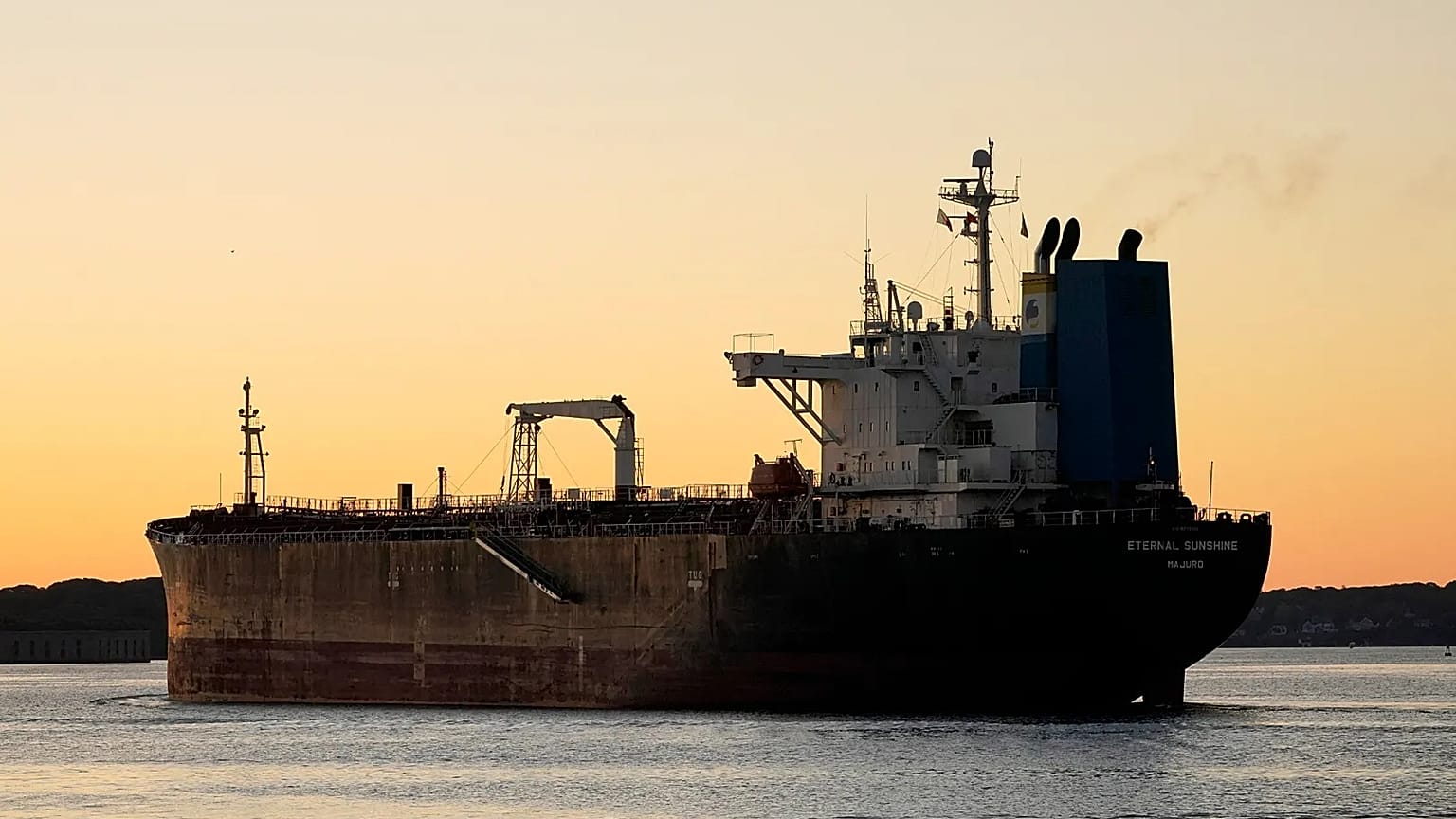













The Trump administration is allegedly set to suspend the Jones Act, a century-old federal maritime law. A waiver would allow foreign tankers to transport cargo between US ports as oil prices remain above $100.
The Trump administration is preparing to issue a temporary suspension of the Jones Act, a century-old maritime law that restricts the movement of cargo between American ports, as Washington scrambles to contain oil prices surging in the wake of the Iran war.
 ADVERTISEMENT
ADVERTISEMENT
ADVERTISEMENT
According to Bloomberg, the 30-day waivers for the Jones Act would allow foreign tankers to help supply refiners on the US East Coast with fuel from the Gulf Coast and elsewhere in the country.
The move is one of several options the Trump administration is pursuing to stem rising crude and petrol prices.
Earlier this week, Washington announced the release of 172mn barrels from the Strategic Petroleum Reserve as part of a coordinated international effort with G7 economies and the International Energy Agency (IEA) to inject 400mn barrels into global markets.
However, oil prices have actually risen higher since the IEA's announcement.
What is the Jones Act?
The Jones Act, formally the Merchant Marine Act of 1920, requires goods shipped between two US ports to travel on vessels that are American-built, American-owned, American-flagged and crewed primarily by American workers and permanent residents.
Originally designed to guarantee domestic shipbuilding capacity and a pool of merchant mariners for use in national emergencies, the law today applies to a fleet that has shrunk from 193 qualifying ocean-going vessels to just 92.
In practice, the restriction makes moving domestic oil and gas between American ports significantly more expensive, and the waivers would allow companies to contract cheaper foreign-flagged ships to supply coastal refineries.
However, the measure carries both political and economic complications.
The Jones Act commands strong support from maritime unions, making any suspension politically sensitive.
The last Jones Act waiver was issued in October 2022 for a tanker supplying Puerto Rico after Hurricane Fiona.
Before that, the Biden administration temporarily eased the law in 2021 for refiner Valero Energy after a cyberattack crippled a major East Coast fuel pipeline.