















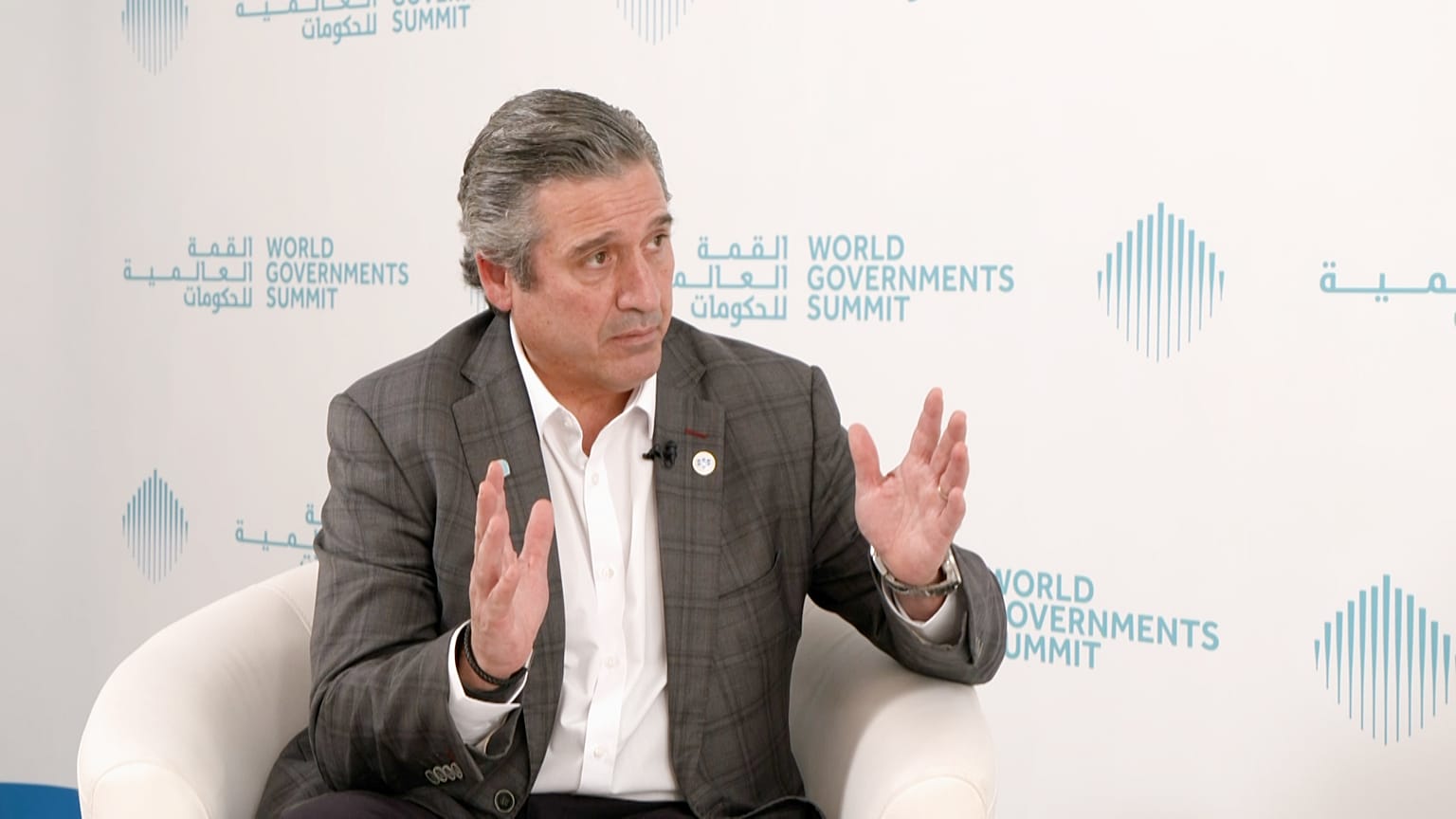














Speaking at the World Government Summit, John Giamatteo told Euronews Next how the once mobile maker now powers secure systems for governments and cars.
Once favoured by corporate professionals in the early 2000s, BlackBerry was one of the first devices to let people send secure emails on the move, long before smartphones became part of everyday life.
 ADVERTISEMENT
ADVERTISEMENT
ADVERTISEMENT
Combining push email, web browsing, calls and photography in one device, it became a symbol of secure communication, particularly after the 9/11 attacks when cellular networks struggled.
Many assumed the qwerty keyboard signature faded with the rise of touchscreen smartphones. Instead, it quietly survived and reinvented itself.
Today, BlackBerry operates largely out of public view, focusing on cybersecurity and the Internet of Things (IoT).
The Canadian company remains firmly rooted in the same principles that once defined its phones, BlackBerry’s CEO John Giamatteo told Euronews Next at the World Government Summit in Dubai, UAE.
“Security, trust, and innovation are always what BlackBerry has been about. So while the products and services we sell today can't be held in the palm of your hand, those same underpinning values of security, trust and innovation continue to guide everything that we deliver to the market,” said Giamatteo.
Rebranded as a cybersecurity firm
BlackBerry faced a major turning point in the late 2000s and early 2010s as Apple’s iOS and Google’s Android reshaped the smartphone market with touchscreen devices and large app ecosystems.
As its handset business discontinued, the company shifted its attention towards security software, an area it had long specialised in.
“When you use the BlackBerry, that feeling of security and trust and basically what we did is we got out of the hardware business, we took all of that software,” said Giamatteo.
According to the CEO, the company now focuses on two main areas: QNX and secure communication services.
QNX is a real-time operating system that is widely used in vehicles, powering software that runs everything from infotainment systems to safety-critical functions such as braking and steering.
Giamatteo said the market is expanding as cars become more connected and automated.
“Our fastest growing part of the QNX is that next generation car, those autonomous vehicles, self-driving cars, robo taxis,” he said.
“We're proud to say that, you know, the entire ecosystem, whether it's Qualcomm, NVIDIA, NXP, all the silicon players are actually building their architecture on top of our QNX platform, so we are truly going to be powering the next-generation vehicle”.
The company’s second focus is secure communications and device management.
“One of the solutions that we provide is a top-secret classified-level encryption, end-to-end encryption for voice, data, and video,” he said.
One of BlackBerry’s key products is its enterprise device management system, which allows organisations to manage and protect smartphones, laptops and tablets across different operating systems.
With rising geopolitical tensions, Giamatteo said there is a growing demand among governments and senior officials for secure, encrypted communications.
BlackBerry’s clients include the German government as well as the Ministry of Defence and banks in the United Kingdom, Giamatteo said.
Cautious approach to AI and cloud
While artificial intelligence (AI) and cloud computing are reshaping much of the technology sector, Giamatteo said BlackBerry takes a measured approach when deploying these technologies in “mission-critical systems”.
“‘How much do you really use the cloud?’ is one of the things that we think about in terms of how you implement the technology in the vehicle,” said Giamatteo.
“The types of solutions that we provide, mission-critical communications or the operating system that has 500 million lines of code that's in a car. Leveraging AI in those types of applications is something that we're very, very careful about,” he added.
BlackBerry has deployed AI in products like its enterprise device management system.
Rather than avoiding AI, the company focuses on where it can be used safely and reliably, as its customers are in environments where failure could have serious consequences, according to the CEO.
“Big banks. Big government, people who have a lot to protect, they rely on a BlackBerry mobile device management system,” he added.
“With the deep fakes and a lot of the AI and the adversaries and how sophisticated they're getting, we're seeing a lot of companies, and most importantly, governments, pull back and say, ‘you know what? Maybe we need to keep this within our borders, premise-based solutions, or local clouds, local infrastructure."
For more on this story, watch the video in the media player above.