















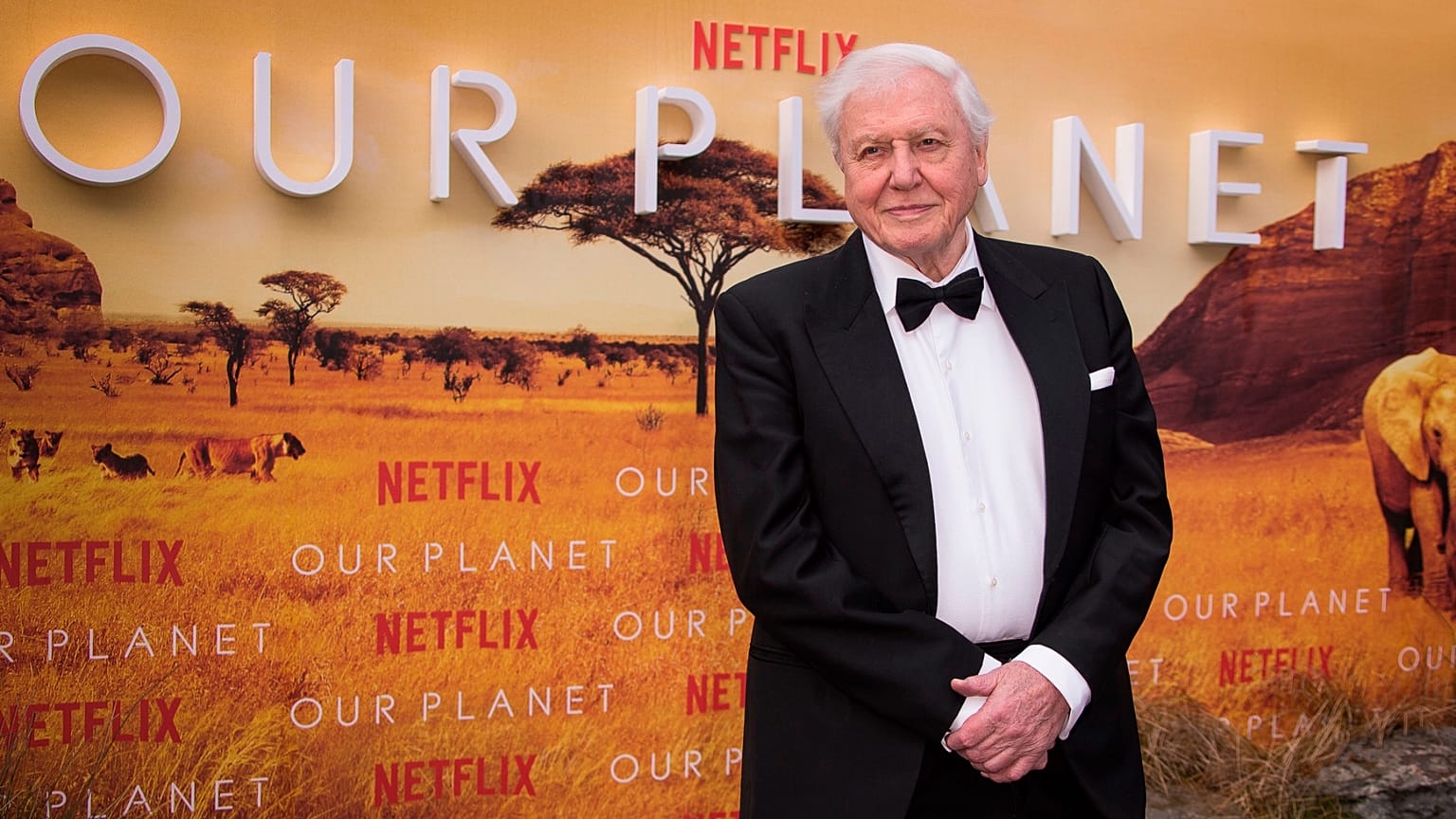














Sir David Attenborough has been highlighting environmental issues for more than seven decades, but have we listened to his advice?
For the past seven decades, Sir David Attenborough has dedicated his career to shedding light on Earth’s complex and diverse ecosystems – inspiring a generation to connect with the natural world.
 ADVERTISEMENT
ADVERTISEMENT
ADVERTISEMENT
He’s the voice behind some 100 documentaries and TV series that have transported audiences all the way to the deepest depths of the Pacific Ocean to the frozen wilderness of Antarctica. And today (8 May) he turns 100.
To honour the legendary broadcaster, who started his career as a trainee producer for the BBC in 1952, Euronews Earth is exploring how the planet has changed – for good, and for bad – during Attenborough's incredible lifetime.
David Attenborough vs the biodiversity crisis
In the 2020 BBC documentary Extinction: The Facts, Attenborough warned that declining biodiversity is becoming one of the biggest challenges of our time – one that threatens our food and water security, undermines our ability to control our climate, and even puts us at greater risk of pandemic diseases.
“Over the course of my life I have encountered some of the world’s most remarkable species of animals,” the broadcaster said. “Only now do I realise just how lucky I have been. Many of these wonders seem set to disappear forever.”
According to World Wildlife Fund’s Living Planet Report in 2024, in just 50 years (from 1970 to 2020) there has been a ‘catastrophic’ 73 per cent decline in the average size of monitored wildlife populations.
The steepest decline was found in freshwater populations (85 per cent), followed by terrestrial (69 per cent) and then marine (56 per cent). Some of the species populations captured in the Living Planet Index include a 57 per cent decline in nesting female hawksbill turtles between 1990 and 2018 on Milman Island in the Great Barrier Reef in Australia and a 65 per cent decline in Amazon pink river dolphins.
Despite the stark warning, climate change continues to wreak havoc on the natural world. Just last month, emperor penguins and Antarctic fur seals were reclassified as ‘Endangered” on the International Union for Conservation of Nature (IUCN) Red List of Threatened Species – as heat-trapping gases continue to thaw out Antarctica.
Nature charity Fauna & Flora warned that this year alone, some of the world’s most unique species are being pushed towards extinction – including the Psychedelic earth tiger spider and the clouded leopard.
The Amazon rainforest, often regarded as the Earth’s lungs, has reached a critical state, with around a fifth of its area already destroyed. Decades of deforestation were recently blamed for the deadly floods that swept through Indonesia last year, threatening the already endangered Tapanuli orangutan.
However, the picture isn’t completely bleak. Conservation efforts around the world are starting to bring about real change, providing a glimmer of hope amidst the chaos.
Last month, around 100 Eastern barred bandicoots, which were once declared extinct on mainland Australia, were released onto a coastal island near Melbourne following the world’s first genetic rescue programme.
In 2025, green sea turtles were officially reclassified from “endangered” to “least concern” after it was unveiled that the global population had increased by around 28 per cent since the 1970s. The dramatic rebound was attributed to decades of conservation efforts focused on protecting nesting females and their eggs on beaches, reducing unsustainable harvest of turtles and their eggs for human consumption, and tackling accidental capture of turtles in fishing gear.
The European bison is also making a comeback across the continent, following efforts that stem back to the 1950s. Over the last 10 years, the estimated number of free-roaming European bison has increased from 2,579 to 7,000 individuals, with the largest herds found in Belarus and Poland.
These majestic beasts are helping boost biodiversity, restore complex ecosystems and even capture carbon. A herd of 170 European bison has the potential to store the same amount of carbon released by 84,000 average US petrol cars each year by grazing grasslands and recycling nutrients.
Other success stories include rewilding tauros, a breed of huge wild cattle, in the Scottish Highlands, and moose returning to Germany following conservation efforts.
A plastic epidemic
Plastic production has dramatically increased over the last 100 years, threatening some of our most vulnerable ecosystems.
According to Our World In Data, the world produced just two million tonnes in 1950. Now, we produce more than 450 million tonnes every year.
Around half of that plastic is designed to be used only once, with the equivalent of 2,000 garbage trucks full of plastic being dumped into the world's oceans, rivers, and lakes every single day.
Microplastics – which are plastics that have broken down to less than 5mm – have now become seemingly ubiquitous on Earth: infiltrating rural woodlands, our drinking water and even Greenland’s ‘pristine’ glaciers.
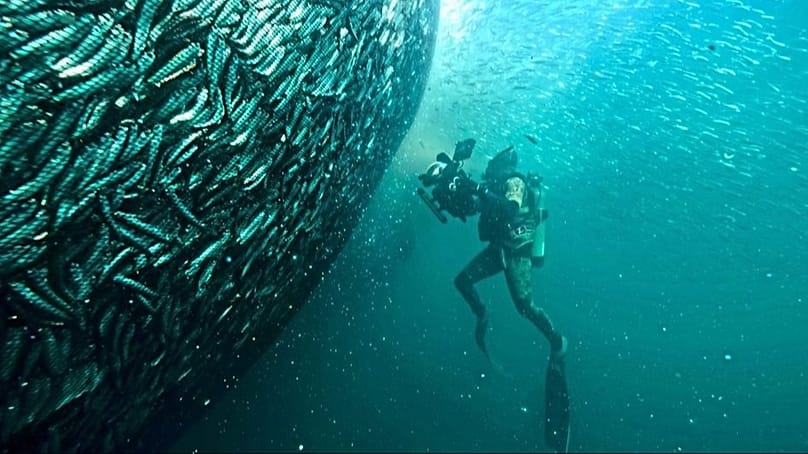
This was one of the main issues addressed in Attenborough’s award-winning series Blue Planet 2, which debuted in 2017.
Heartbreaking footage of sea turtles being tangled in plastic, an albatross accidentally feeding its chick plastic debris, and a calf whale that was thought to be killed due to toxic plastic left viewers feeling hopeless and shocked. But it also ignited action.
A 2019 poll by GlobalWebIndex, which surveyed 3,833 people in the US and the UK, found that when Attenborough issued a call to action to combat plastic waste in the second series of Planet Earth, searches for “plastic recycling” spiked by 55 per cent in the UK.
In the wake of the documentary, survey participants reported a 53 per cent drop in their single-use plastic consumption – leading to the popular phrase ‘the Attenborough Effect’.
“I’ve been absolutely astonished at the result that that program has had,” Attenborough said in an interview with the BBC. “I never imagined there would be quite so many of you who would be inspired to want change.
“You’ve been on beaches, with thousands more of you than ever before picking up rubbish. Families have changed their habits, and schools and communities have searched for ways to reduce their plastic footprint.”
The EU officially banned several single-use plastic items, such as cutlery, plates and straws, in 2021 – and more recently clamped down on plastic pellet nurdles, which are deadly to marine life if ingested.
Earlier this year, scientists deployed a fleet of drones and litter-picking robots that can independently identify rubbish lying on the seabed as part of the bloc’s Mission Restore our Ocean and Waters – which aims to cut marine litter by around half by 2030.
Tests have already been conducted in a marina in Marseille, France as well as in Germany, with further tests to be carried out this year.
And just last week, a ‘miracle tree’ was found to remove 98 per cent of microplastics from drinking water, outperforming chemical alternatives.
Despite these incredible feats, there is no denying that throw-away culture is worsening. Experts predict the global production and use of plastics is set to reach a staggering 736 million tonnes by 2040. That’s a 70 per cent increase from 2020, despite increased awareness of the consequences.
A transition away from fossil fuels
It can be difficult to speak about nature without acknowledging that climate change is responsible for its demise.
According to the UN, fossil fuels – coal, oil and gas – are by far the largest contributor to global climate change, accounting for around 68 per cent of global greenhouse gas emissions and nearly 90 per cent of all carbon dioxide emissions.
As the planet warms, the world is losing species at a rate 1,000 times greater than at any other time in recorded human history.
Transitioning away from fossil fuels has become one of the most critical talking points of our lifetime, but petro-states have worked hard to block progress. Last year, all mentions of fossil fuels were scrubbed from COP30’s final deal, despite momentum growing to establish a phaseout roadmap.
Even so, the rapid rise in renewables is starting to challenge the status quo. Clean energy from sources like wind and solar was essentially a dystopian concept 100 years ago, but they now make up a huge part of our electricity generation.
“The living world is essentially solar-powered,” Attenborough said in 2021. “The earth’s plants capture three trillion kilowatt-hours of solar energy each day. That’s almost 20 times the energy we need, just from sunlight.”
“It’s crazy that our banks and our pensions are investing in fossil fuels when these are the very things that are jeopardising our future that we are saving for,” Attenborough adds.
Since the broadcaster made these comments, clean energy generation surpassed the global rise in electricity demand, pushing fossil fuel power into reverse for the first time ever in 2025, according to a report by energy think tank Ember.
Overall, the share of renewables, including solar, wind, hydropower and other clean energies, hit more than one-third of the world’s electricity mix for the first time in modern history last year, growing 33.8 per cent. At the same time, coal power saw its share fall below one-third of global generation, dropping 0.6 per cent in 2025.
The war on Iran has strengthened the argument for renewables, pushing Europeans to focus on home-grown, clean energy. Solar sales have surged in countries such as the UK and Germany, along with heat pump uptakes and the sales of electric vehicles (EVs).
A new report from the International Renewable Energy Agency (IRENA) found that when solar and wind power are combined with battery storage, they can already compete with new coal plants on cost.
Last month, 56 countries gathered in Santa Marta, Colombia, to host the first-ever international conference dedicated to mapping a fair and orderly transition away from fossil fuels. The conference marked an important moment in global diplomacy ahead of the official UN climate talks (COP31), which will be held in Antalya, Türkiye, (9-20 November 2026) under the Turkish presidency, with Australia leading the negotiations.
France then took a major step forward in its climate plans by publishing its national roadmap to transition away from fossil fuels. The plan commits to ending coal use by 2030, oil by 2045 and gas for energy by 2050, as part of its broader goal to reach carbon neutrality.