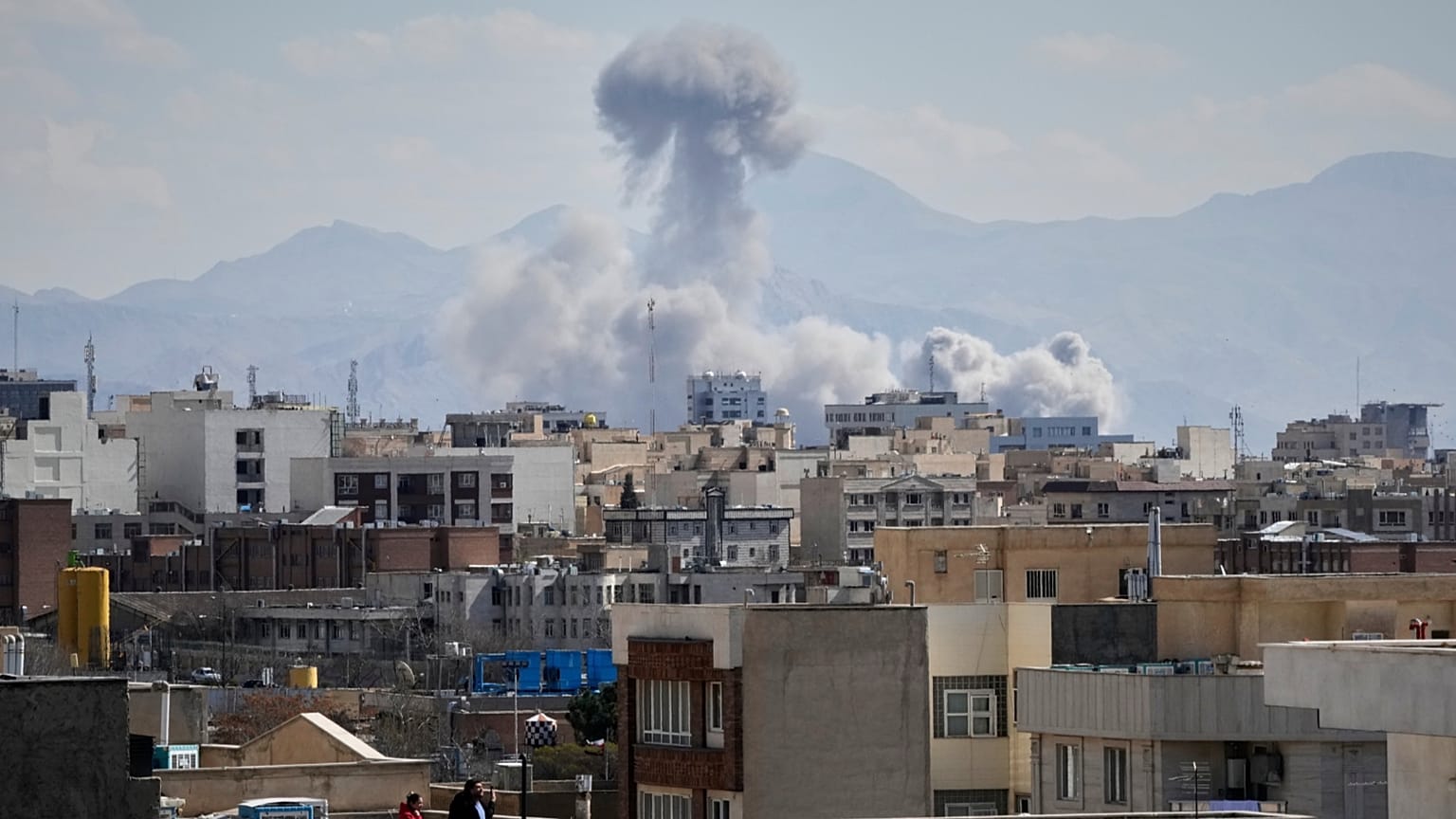













After Iran warned that the Strait of Hormuz was closed for navigation, climate groups have urged governments to focus on clean energy.
The war on Iran has exposed the "horrendous costs” of fossil fuel dependence, as climate groups call for a swift transition to clean energy.
 ADVERTISEMENT
ADVERTISEMENT
ADVERTISEMENT
Global oil prices skyrocketed yesterday (1 March) as Iran continued to launch strikes across the Middle East amid its escalating conflict with the US and Israel.
Brent crude, which is used as the worldwide benchmark for oil prices, increased by 10 per cent to more than $82 (around €69.86) a barrel.
The price jump followed the attack on at least three ships near the Strait of Hormuz – a 38km passage that carries around one-fifth of global oil supplies. That’s around 20 million barrels every day.
How the oil industry is responding to strikes in Iran
The Organisation of the Petroleum Exporting Countries (OPEC+) agreed to boost oil output next month by 206,000 barrels per day in response to the conflict, amid disrupted oil flow in the region.
Oil, gas and other shipments ground to a halt this weekend after Iran warned the Strait of Hormuz was closed for navigation – with hundreds of ships being forced to drop anchor. Until the Gulf returns to normal, countries will struggle to export oil to the market.
Analysts at Wood Mackenzie, which consults on the energy and natural resources industry, are now warning that failure to quickly re-establish flows through the Strait of Hormuz could trigger prices to escalate again to “well over” $100 per barrel (around €85.22).
Middle East producers may look to increase exports via the East-West pipeline to the Red Sea, while additional volumes could be supplied into the Mediterranean from Iraq.
“Higher prices will incentivise upstream producers elsewhere to maximise output, by foregoing maintenance, pushing assets harder and accelerating activity,” the firm says. “But it’s not a tap that can just be turned on.”
Who is OPEC+?
OPEC was founded in 1960 by Iran, Iran, Kuwait, Saudi Arabia and Venezuela to coordinate petroleum policies and ensure price stability and now includes 12 nations.
In 2016, OPEC formed the OPEC+ coalition with 10 of the world’s leading non-OPEC oil exporters – including Russia and Saudi Arabia – and now accounts for over 40 per cent of global oil production.
OPEC+ has a history of increasing oil output to dampen disruptions during conflict.
Calls for a green energy transition
Mads Christensen of Greenpeace International says OPEC+’s move makes one thing clear: as long as our world runs on oil and gas, our peace, security and our pockets will “always be at the mercy of geopolitics”.
Christensen argues that while increasing output may temporarily ease price pressures, it fails to address the "structural vulnerability” caused by the world’s reliance on fossil fuels.
“Political leaders in all countries must wake up and reclaim the moral compass,” he adds. “This means pursuing peaceful, diplomatic solutions, and securing access to affordable, sustainable energy to replace the volatility of the fossil fuel-driven world order.”
‘A world chained to fossil fuels’
350.org, a grassroots environmental organisation, has also urged governments to accelerate the transition away from fossil fuels and towards renewable energy.
“The new war on Iran and the closure of the Strait of Hormuz lay bare the horrendous costs of a world chained to fossil fuels,” says managing director Oliva Langhoff.
“When global energy security can be upended by a single flashpoint, it shows how unstable and risky our dependence on oil and gas is.”
Langhoff argues that renewable energy will help provide countries with “home-grown” power that remains secure and affordable regardless of geopolitical shocks.
“Once again, families will pay the price through fossil fuel-driven inflation,” she adds. “All because of a system tied to a volatile, conflict-driven industry.”