



























The World Health Organization calls for every European country to have free spaces where people can go to cool off during heatwaves.
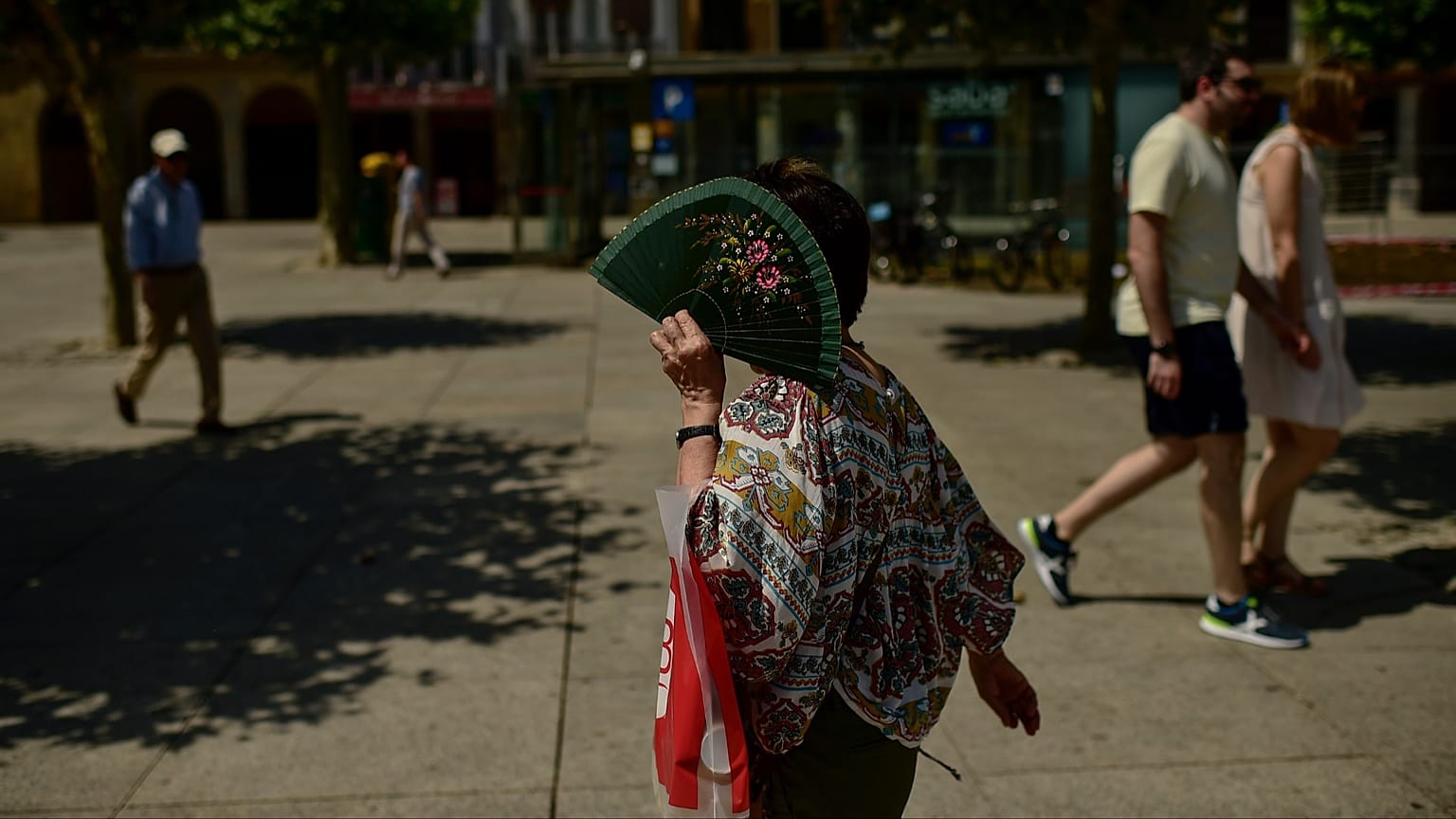
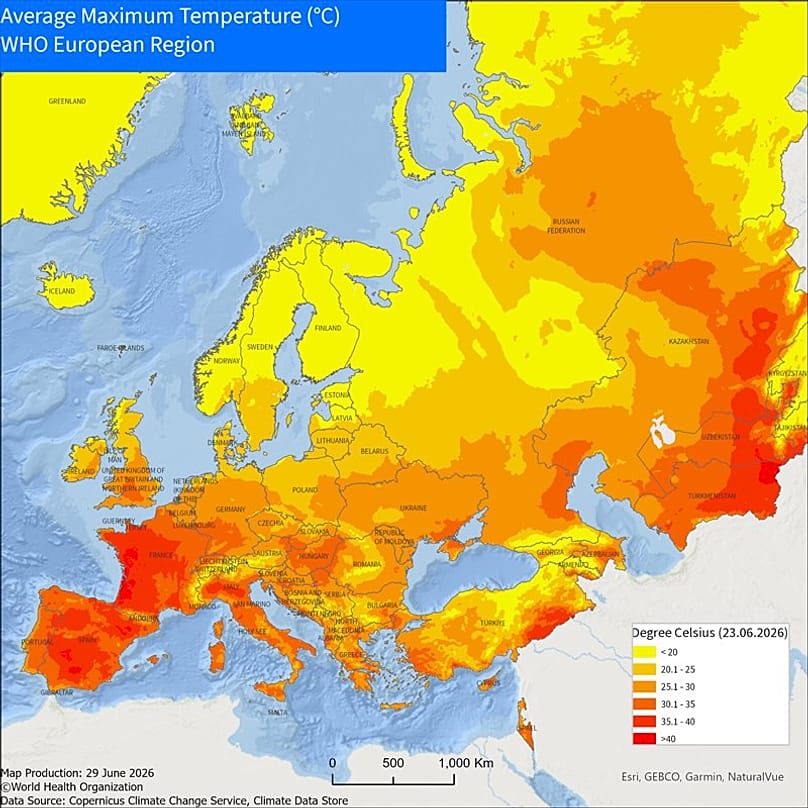
The World Health Organization (WHO) has called the current heatwave "a dress rehearsal", saying European countries must be much better prepared if they are to save lives.
 ADVERTISEMENT
ADVERTISEMENT
ADVERTISEMENT
In a statement, the organisation described a bleak picture of calls to emergency services being up by 50 per cent in some places, with London receiving the highest number of calls in one day. Spain "has already estimated more than 300 heat-associated excess deaths in just a few days. Italy reported five deaths in 24 hours."
The WHO made it clear that the heatwave is climate change-fuelled, saying: "Europe is warming at more than twice the global average. Heatwaves are no longer one-off freak events. They are recurring crises, and they are getting more frequent, stronger and lasting longer. Every summer we fail to prepare for them is a summer we pay for in lives."
WHO Director-General Dr Tedros Adhanom Ghebreyesus said that what gives him some reassurance is that "prevention works".
One measure that was praised is Barcelona's network of climate shelters.
What are climate shelters?
Spain has developed one of the most advanced networks of climate shelters in the world, as extreme heat becomes the deadliest environmental hazard of our time.
Last year, Spanish Prime Minister Pedro Sanchez announced that a series of government buildings would be used to offer members of the public refuge from the increasingly intense heatwaves the country had been experiencing.
The nationwide network builds upon schemes already established by regional governments, including in Catalonia, the Basque Country and Murcia. In Barcelona, there are already 400 climate shelters available in public buildings such as libraries, museums, sports centres and shopping malls.
These spaces, which tend to be air-conditioned and equipped with seating and free water, are designed to protect people who lack the resources at home to cope with high temperatures – such as the elderly, babies and those with existing health issues.
Why climate shelters gained ground in Spain
Spain boosted its climate shelter efforts following last year’s record-breaking summer, which saw a 16-day heatwave in August drive temperatures up to a deadly 45°C.
The country experienced more than 150,000 heat-related deaths in 2025, the second-highest total ever recorded. More than 10,000 of those deaths were linked to prolonged exposure to moderately high temperatures, which have “effects that build up even in the absence of heat alerts”, experts warn.
The death of Montse Aguilar, a 51-year-old street cleaner in Barcelona, was one of the many tragedies that hit the headlines. Aguilar collapsed on the streets after enduring a gruelling shift in 35℃, while the city was placed under high alert, and later died from heat-related causes.
Protests soon ensued, as hundreds of fellow street cleaners and concerned citizens took to the streets and demanded that the government do more to protect outdoor workers.
Will the rest of Europe invest in climate shelters?
Heat-related deaths are not only a rising problem in Spain. Europe is one of the world’s fastest-warming continents, and extreme temperatures are reaching even the most northern countries, known for their usually cool climate.
Last year, for example, Finland endured three consecutive weeks of 30℃ temperatures, putting pressure on hospitals and causing an ice rink in the north to temporarily transform into a climate shelter. Heatwaves swept across Italy, France, Portugal and even the UK, as Europe sweltered through its third hottest year on record.
According to the Lancet Countdown Europe report, an estimated 62,000 heat-related deaths occurred in Europe during 2024.
“It is the deadliest environmental hazard, with increases in practically all European regions studied,” Elvira Jiménez Navarro, a PhD student at the Open University of Catalonia’s Digital Transformation and Governance Research Centre (UOC-DIGIT), tells Euronews Earth.
“Southern European countries such as Spain, Italy, Greece, France, Croatia, Cyprus, Slovenia, Cyprus, Malta and Serbia have the highest increase in mortality, highlighting the urgent need for adaptation measures, such as climate shelters.”
Navarro, who is calling for a global network to address the increase in extreme heat, warns that heat-related mortality is also rising, at a “slower but steady rate” in central or eastern countries like Germany, Austria, Hungary, Bulgaria, Romania, Estonia and Lithuania.
“Overall, extreme heat is a public health issue affecting all European countries to a greater or lesser extent,” the expert adds. “Even those facing less urgency should use the opportunity for better planning.”
Who are climate shelters for, and what challenges do they face?
While climate shelters are free for anybody to use, experts have highlighted the need to make sure they’re accessible to the most vulnerable populations. According to Spain’s daily mortality surveillance system (MoMo), most of the 21,700 people who died from heat-related causes between 2015 and 2023 were over 65 years of age.
“Vulnerability arises from overlapping factors – ranging from age and pre-existing health conditions to housing quality, working conditions and income – and is therefore unevenly distributed,” Navarro explains.
The expert argues that municipalities should map not only heat exposure but also these broader vulnerability indicators, by combining data to identify priority areas and place shelters where they are most needed.
Ensuring that climate shelters are open during peak demand, maintaining basic comfort standards and communicating access in an “inclusive way” are also challenges that must be taken into consideration. For this to be achieved, it’s not just governments that need to take action.
“While authorities are central to identifying needs, selecting sites, allocating resources,and managing operations, effective governance also depends on collaboration with community groups, NGOs and local businesses to extend opening hours, improve outreach and foster durable, locally rooted resilience,” Navarro says.
“The ultimate challenge is to shift climate shelters from short-term emergency measures into permanent, inclusive, multifunctional urban spaces that both protect people from extreme heat and enhance daily well-being.”
‘Transforming public spaces’
As extreme heat events increase, climate shelters may become the norm across Europe. Just last month, the General Council of Bucharest in Romania approved the establishment of a network of climate shelters to protect citizens from heatwaves and plunging temperatures.
Navarro says that these adaptation measures, particularly in urban environments, have become “increasingly necessary”. However, municipal governments have limited resources to ensure equitable and nearby access to climate shelters – which often means relying on private spaces, such as shopping malls, to help citizens in need.
“A network can be relatively easily implemented in the short term using existing public facilities, but it doesn’t address the deeper changes needed in urban settings facing multiple climate impacts,” the researcher adds.
“A comprehensive adaptation strategy is required, focused on transforming public space to reduce exposure to high temperatures and other extreme events, while also improving public well-being and reducing inequalities in the impacts of climate change.
“This includes investing in green and blue infrastructure, changes in urban mobility, and social measures that support the needs of the most vulnerable populations.”