












Euronews Green exclusive: Big Agriculture’s ‘hidden’ climate strategy has been exposed in a new report.
Meat and dairy giants have been accused of halting climate progress by cosying up to policymakers to justify the soaring growth of animal agriculture.
 ADVERTISEMENT
ADVERTISEMENT
ADVERTISEMENT
Globally, food and agriculture contribute one-third of total greenhouse gas emissions, second only to burning fossil fuels. In the EU, animal-sourced foods make up between 81 and 86 per cent of total greenhouse gas emissions of total food production – despite only supplying around 21 per cent of calories and 64 per cent of protein.
Scientists have repeatedly warned that our diets need to change to bring down emissions and improve our health. The 2025 EAT-Lancet Commission report – compiled by 70 leading experts from 35 countries – found that around 15 million deaths could be avoided each year if the world shifted to predominantly plant-based diets. Such a move could also lead to a 15 per cent reduction in greenhouse gas emissions from agriculture.
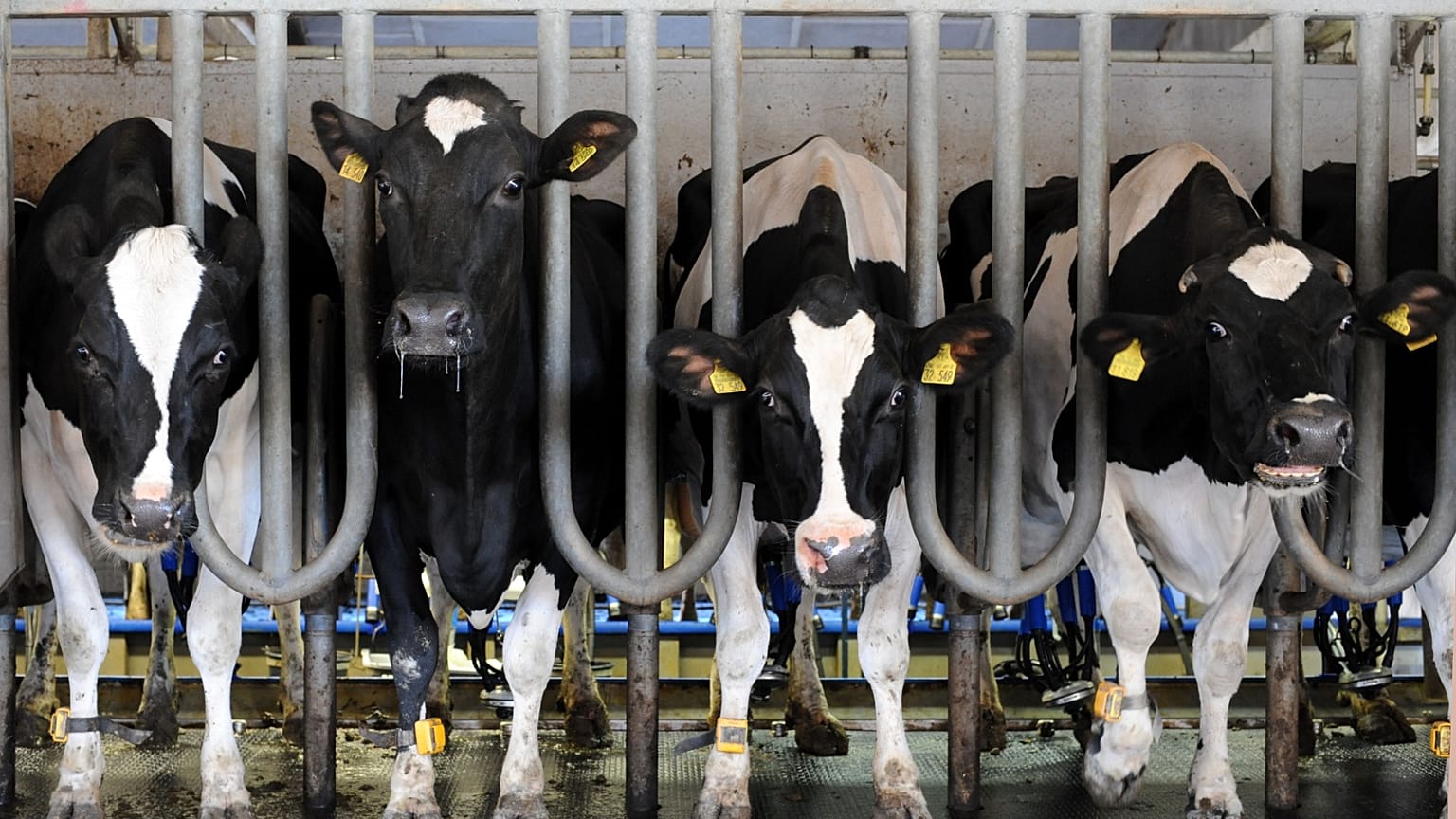
But the carbon footprint of animal agriculture continues to rise, driven by both modern industrial farming practices and increased livestock. According to Greenpeace, 60 per cent of all mammals on Earth by weight are now livestock – including methane-producing cattle. Just four per cent are wild, while the rest (36 per cent) are humans.
Despite this, only four per cent of national climate plans include quantified, time-bound agricultural methane reductions – and fewer still include targets towards sustainable diets.
A new report from European non-profit Changing Markets Foundation, which exists to expose ‘irresponsible’ corporate practices, says that meat and dairy are being kept off the climate agenda due to ‘hidden’ partnerships and twisted narratives.
How meat lobbyists are ‘undermining’ climate action
The report, titled Dangerous Distractions, argues that there is mounting evidence that departments within the UN Food and Agriculture Organisation (FAO) have a “bias in favour of the livestock sector”.
Last year, Thanawat Tiensin, Director of the Animal Production and Health Division at the FAO, delivered a speech at the World Meat Congress. The biennial conference, which was held in Brazil’s agricultural capital of Mato Grosso, is organised by the International Meat Secretariat - an organisation that represents the meat industry by engaging international bodies such as the FAO and World Trade Organisation.
Speakers at the event included prominent pro-meat advocates including Eric Mittenhal from the Meat Institute and Frédéric Leroy from Vrije Universiteit Brussel, who has been accused of peddling "misleading narratives and conspiracy theories” around animal agriculture’s impact on the planet.
The report states that much of Tiensin’s talk focused on how the FAO is an ally to the meat industry, arguing that the world “needs more animal protein” despite the challenge of greenhouse gas emissions.
“When my stomach is empty, I don’t have time to talk about sustainability,” he said. While Tiensin declared that a new era has arrived where the livestock industry will do better on sustainability, the report claims he gave no details or “concrete examples” of how this would be achieved.
Attacks on EAT-Lancet
The report also reveals how the EAT-Lancet report has come under attack by the meat industry and affiliated scientists.
At The World Meat Congress, pro-meat consultant Carrie Ruxton claimed that the report’s authors were not experts – implying that farmers themselves were better suited to tackling sustainability in our food system.
“Now, it’s my view that you don’t need to worry about the actual [EAT-Lancet] report that was published this year,” she told attendees. “It didn’t get a lot of media traction.
“What you do need to worry about is what happens next because they’re going to go out and start talking to politicians, campaigners, policy people, charity and public procurement. They’re going to be talking to all of these parts of society that will then have an impact on your industry.”
Ruxton repeated the conspiratorial idea that EAT-Lancet commissioners have a “conflict of interest” because many choose to follow a vegetarian diet.
“Leroy also used his talk to try and discredit the scientific commission,” the report states.
“He declared that behind the commission are major agri-food interests who wish to capitalise on the promotion of plant-rich diets.”
Leroy, who often touts hunter-gatherer-style diets as the gold standard, has long criticised the EAT-Lancet report, falsely claiming that humans need 20-30 per cent of their calories to come from animal-sourced foods. The planetary health diet suggests this needs to be lowered to 12 per cent.
‘Narrative tracking’ at COP30
The World Meat Congress took place just one week before the COP30 climate summit, attended by more than 300 lobbyists for industrial agriculture.
Changing Markets says there were several screenings of an industry-funded documentary called World Without Cows being played within the official UN zones at COP30. Critics argue this film downplays the environmental impacts of cattle-rearing on the climate and promotes the idea that livestock can be “part of the solution” to climate change.
World Without Cows was produced by animal nutrition company Alltech, which rakes in an annual revenue of around $2.6 billion (approximately €2.25 billion).
Beef and lamb have repeatedly been identified as the biggest culprits of environmental damage in the food sector. According to the carbon footprint calculator CO2 Everything, one 100g serving of beef is equivalent to 78.7 km of driving, releasing 15.5 kg CO2 equivalent.
“To promote the film, Alltech set up a subsidiary called Planet of Plenty LLC ‘dedicated to science-led storytelling, advocacy and educational initiatives that amplify agriculture’s vital role in creating a sustainable future’,” the report reads.
While industry representatives at COP30 did discuss solutions that could help reduce emissions from meat and dairy, such as improving feed efficiency and turning manure into biogas, the report states that talks on dietary change were “few and far between”.
In the run up to COP30, Changing Markets also identified industry narratives positioning meat as healthy or part of wellness trends being pushed by prominent influences.
A separate DeSmog investigation found that news anchors, doctors, and models were being hired by agri-business companies to legitimise the industry’s actions and “enhance its reputation”.
Despite the insidious lobbying, the report does highlight how there has been some progress on tackling food systems at national levels. For example, Denmark launched its Action Plant for Plant Based Foods back in 2023 - which aims to reduce meat consumption and increase healthy, plant-rich diets.
FAO declined to comment.