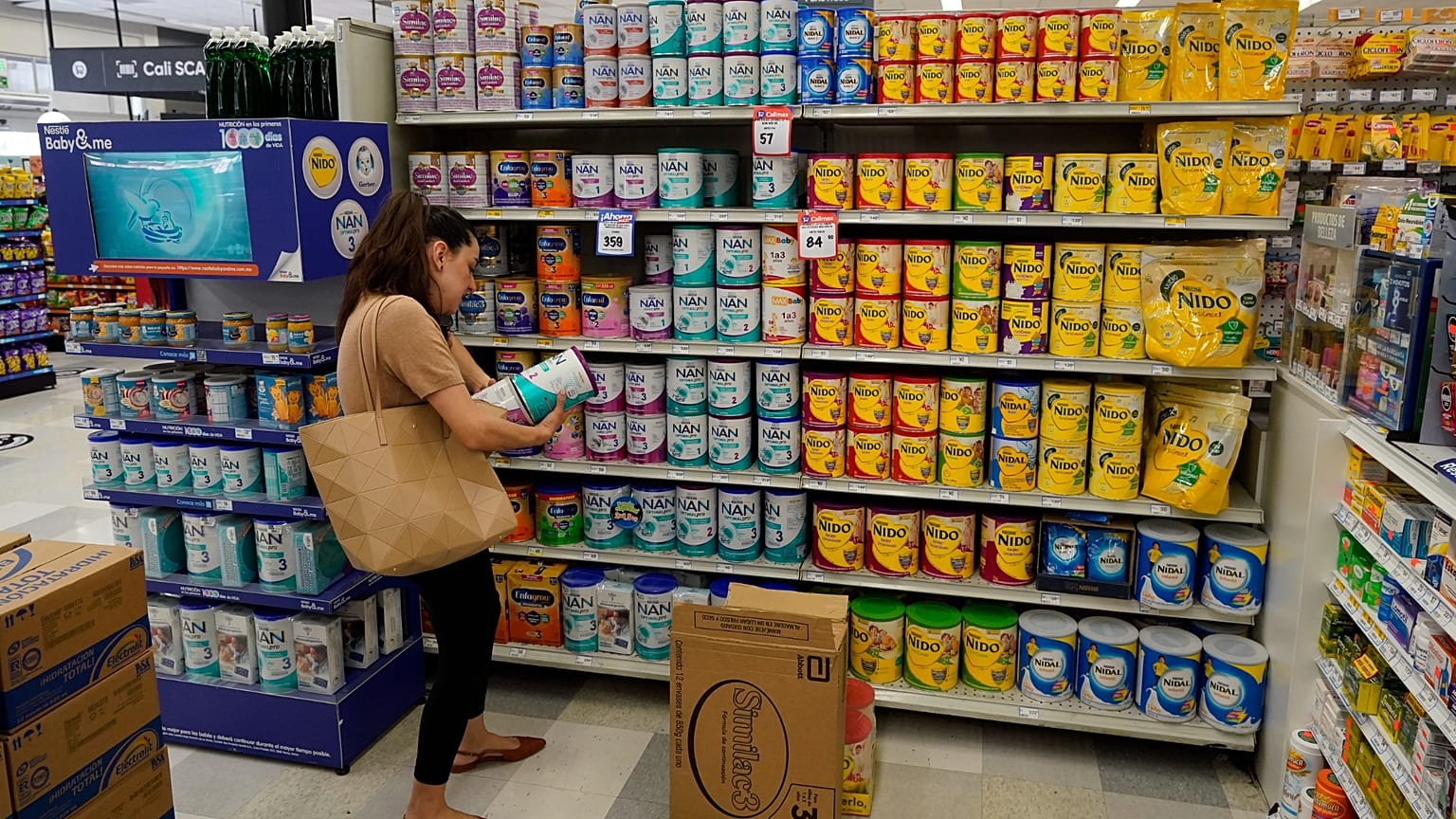













Global dairy giants maintain baby formula recall amid cereulide contamination scandal as France investigates two infant deaths.
Following a global recall of baby formula by some of the world’s biggest companies, French authorities are investigating the deaths of two babies reported to have consumed Nestlé infant formula affected by the recalls due to cereulide contamination.
 ADVERTISEMENT
ADVERTISEMENT
ADVERTISEMENT
The French Health Ministry confirmed to Euronews Health that no causal link has been scientifically established.
Nestlé said that it continues to follow the developments and is cooperating in full transparency to provide any information required.
The Flemish Government in Belgium confirmed a baby fell ill in January 2026 after consuming contaminated Nestlé baby formula.
"The child vomited and had watery diarrhoea, but fortunately recovered completely after about 10 days. Through stool samples from the baby, we were able to confirm that the baby had become ill due to contamination with cereulide from a Nestlé milk product,” said Joris Moonens, spokesperson for the Department of Care.
They confirmed the batch number of the dairy product that caused the baby in Flanders to become ill is part of the Belgian-wide recall of the formula.
What is cereulide, and what are its effects on babies?
Cereulide is a heat-stable toxin produced by Bacillus cereus bacteria that can grow in food.
The most common symptoms of a possible cereulide infection are vomiting and diarrhoea shortly after ingesting the milk between 30 minutes and three hours – very similar symptoms to a stomach flu.
When did the contamination start?
It started at the beginning of December last year. On 10 December, Nestlé France announced the recall of infant formula produced in its factory in Nunspeet, the Netherlands, under suspicion of cereulide contamination.
The contamination has been traced to a single Chinese supplier of ARA (arachidonic acid) oil, a critical ingredient in premium infant formulas.
From late December 2025, all infant formula manufacturers worldwide using ARA oil from this supplier must conduct their own risk analysis to ensure the safety of their finished products, the French Agriculture Ministry told Euronews Health.
In early January 2026, Nestlé extended the recall to other batches of infant formula to other batches across 60 countries, growing into one of its largest ever, affecting multiple brands such as SMA, Beba, Guigoz, and Alfamino.
Other companies affected
In January, the French company Lactalis contacted the authorities to inform them that it was assessing the situation, given the possibility that some batches may have incorporated arachidonic oil from the same supplier.
After concluding the analysis, Lactlis concluded that there was a possible risk associated with certain batches of infant formula on the market and recalled batches of its Picot infant formula brand, distributed across 18 countries.
Affected batches have been on sale since January 2025 with expiration dates up to March 2027.
Danone has also confirmed recalls of targeted batches due to potential cereulide contamination in ARA oil, primarily Aptamil and related brands across Europe, the United Kingdom, and Asia.
Two other companies, Vitagermine and Hochdorf Swiss Nutrition, have also withdrawn batches of baby formula in France and Switzerland, respectively.