

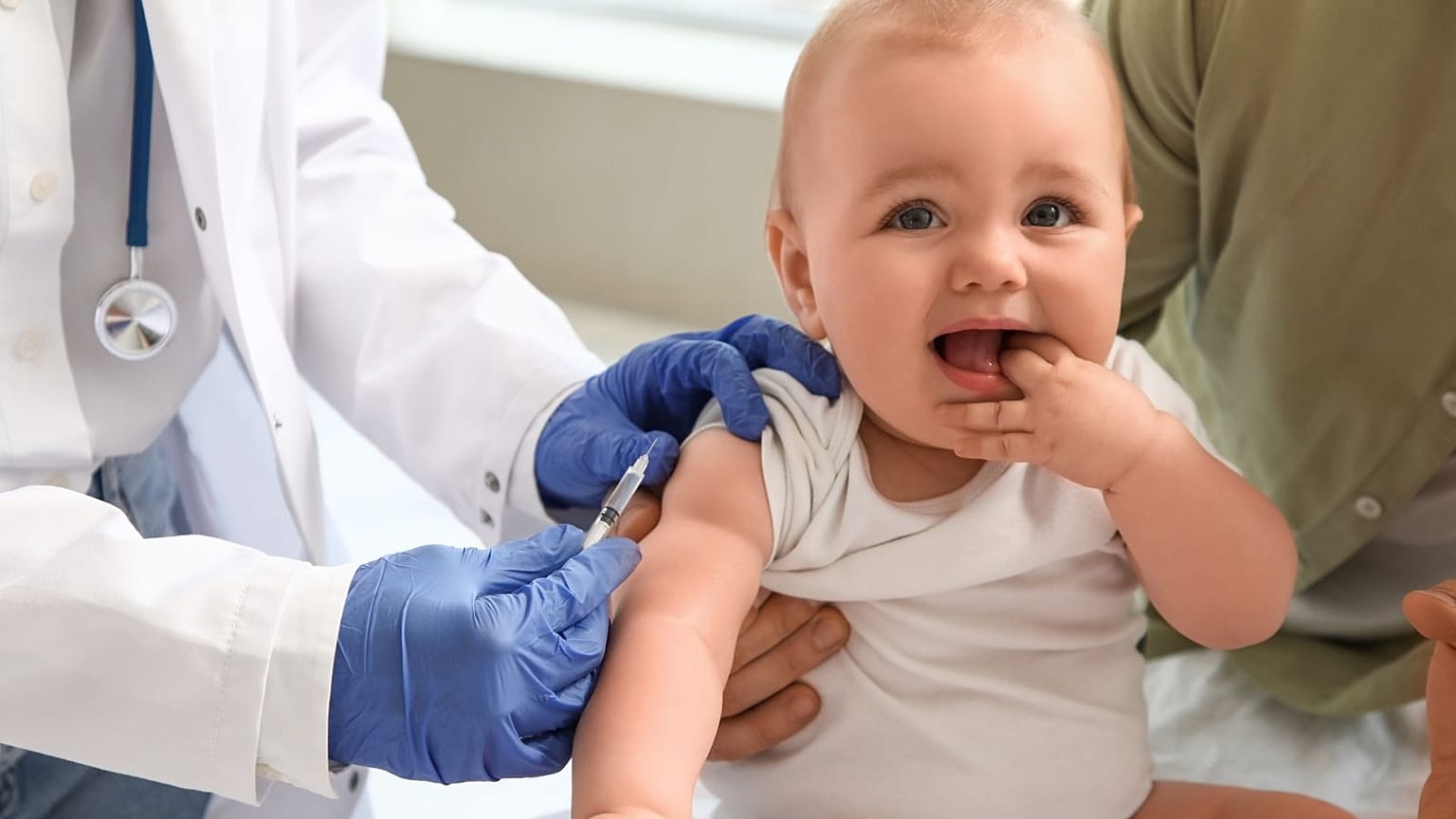













Sugar placed in a baby’s mouth before a needle procedure can reduce pain, according to a new scientific review.
Sugar can help relieve pain for babies during hospital procedures, a new review has found.
 ADVERTISEMENT
ADVERTISEMENT
ADVERTISEMENT
Babies, especially newborns and infants in intensive care units, routinely undergo multiple procedures, including vaccinations and blood tests. Because their pain regulation systems are still immature, infants experience pain differently from adults, often, more intensely.
A new Cochrane review found that sucrose can reduce pain during and immediately after the needle injection. The authors also found that sucrose appeared to be more effective than pacifiers.
“Parents may be surprised to learn that something as simple as a few drops of sugar solution can make a real difference to their baby’s comfort during blood tests,” said Ligyana Candido, co-author of the study from the University of Ottawa in Canada.
The authors analysed 29 trials including 2764 babies worldwide. In all of them, infants were assigned randomly to two or more treatment groups, sugar, and other pain relief methods such as pacifiers, breastfeeding and skin-to-skin contact.
They found that newborn babies who were given sugar had less pain during and shortly after the procedure, compared to those who received nothing or water.
Scientific evidence of its efficacy compared to breastfeeding and skin‐to‐skin care is still limited, the authors noted.
Especially useful for hospitalised babies
Some newborns spend time in the hospital, whether because they are born prematurely or because they need to receive treatment for a specific condition.
During this time, they are often exposed to needles for blood tests or for the insertion of intravenous lines to administer fluids and medication.
The review noted that it is widely accepted that repetitive and untreated pain in the early stages of life negatively impacts growth and development.
“Newborn babies undergo frequent needle procedures in hospital without any pain relief or comforting measures, even though older children and adults rarely have these procedures done without pain care,” said lead author Mariana Bueno from the University of Toronto.
She added that this low-cost intervention has been proven to work within minutes and can be especially helpful when other comforting methods are not available.
The authors noted that the long-term effects of continuous use of sucrose need to be further evaluated.
“The message from our findings is ultimately that infants need and should receive pain management before a procedure such as venepuncture,” Bueno added.