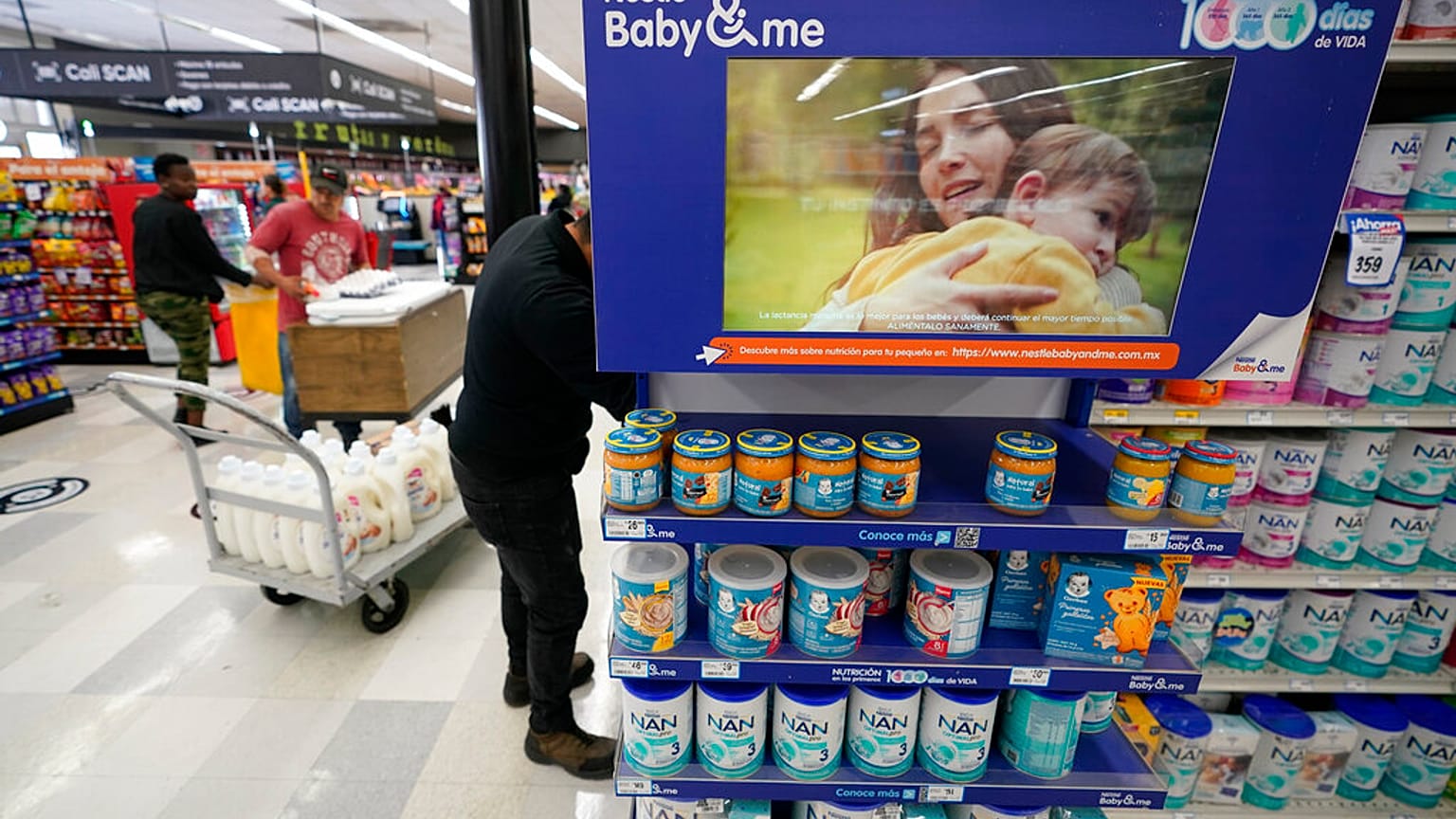













Nestlé, Danone, and Lactalis were forced to recall infant formula batches worldwide amid concerns of toxic cereulide contamination.
Three of the world’s largest dairy companies, Nestlé, Danone, and Lactalis, have recalled large batches of infant formula after detecting cereulide contamination – a toxin that can cause vomiting, diarrhoea, and abdominal cramps.
 ADVERTISEMENT
ADVERTISEMENT
ADVERTISEMENT
The contamination has been traced to a single Chinese supplier of ARA (arachidonic acid) oil, a critical ingredient in premium infant formulas.
Lactalis was the latest company to announce the recall of six lots of its Picot infant formula brand, distributed across 18 countries.
Affected batches have been on sale since January 2025 with expiration dates up to March 2027.
“Upon receiving this alert, and in parallel with the analyses requested from the supplier of the ingredient concerned, LNS (Lactalis Nutrition Santé) immediately initiated testing through an accredited independent laboratory to assess the potentially affected products”, the Lactalis said in a statement.
The company added that it fully understands that this information may cause concern among parents of young children and that, at this stage, no complaints or reports related to the consumption of these products have been communicated by the French authorities.
Danone’s recall is smaller so far, with only one batch produced in Thailand being recalled at the request of Singapore's Food Agency before reaching the market.
“All our products are manufactured in line with strict food safety and quality standards and undergo rigorous testing before leaving our factories”, the company told Euronews Health, adding the products were blocked as a precaution.
“All controls confirm that the products are safe and fully compliant with international and local regulations and no irregularities or deviations in relation Bacillus cereus and Good Manufacturing Practices have been identified”, the spokesperson added.
Nestlé: transparency controversy
Nestlé was the first one to withdraw its formula from markets across more than 60 countries after detecting contamination in one of its sites in the Netherlands.
The company's voluntary recall has grown into one of its largest ever, affecting multiple brands such as SMA, Beba, Guigoz, and Alfamino.
“Food safety and the wellbeing of all infants remain our top priority”, said Nestlé in a statement after the recall.
“We understand that this news may cause concern, and we are committed to providing clear, transparent information and support for parents and caregivers throughout this process,” the company added.
However, the transparency of the process has been questioned by consumer protection groups who have announced plans to file legal complaints against Nestlé, alleging failures in traceability and delayed public warning obligations.
According to an investigation by foodwatch Netherlands, Nestlé first confirmed in early December 2025; however, public recalls only began the first week of January.
“Why did we only find out in January 2026 that sixty countries were ultimately affected by the recall of powdered baby milk due to the presence of Bacillus cereus, when there were only nine in December?” said Nicole van Gemert, director of foodwatch Netherlands.
“How does Nestlé, which is supposed to ensure immediate traceability of sensitive baby products, explain the piecemeal dissemination of information and late recalls in many countries?” she added.
Nestlé stated that no illnesses have been confirmed in connection with the products involved to date.