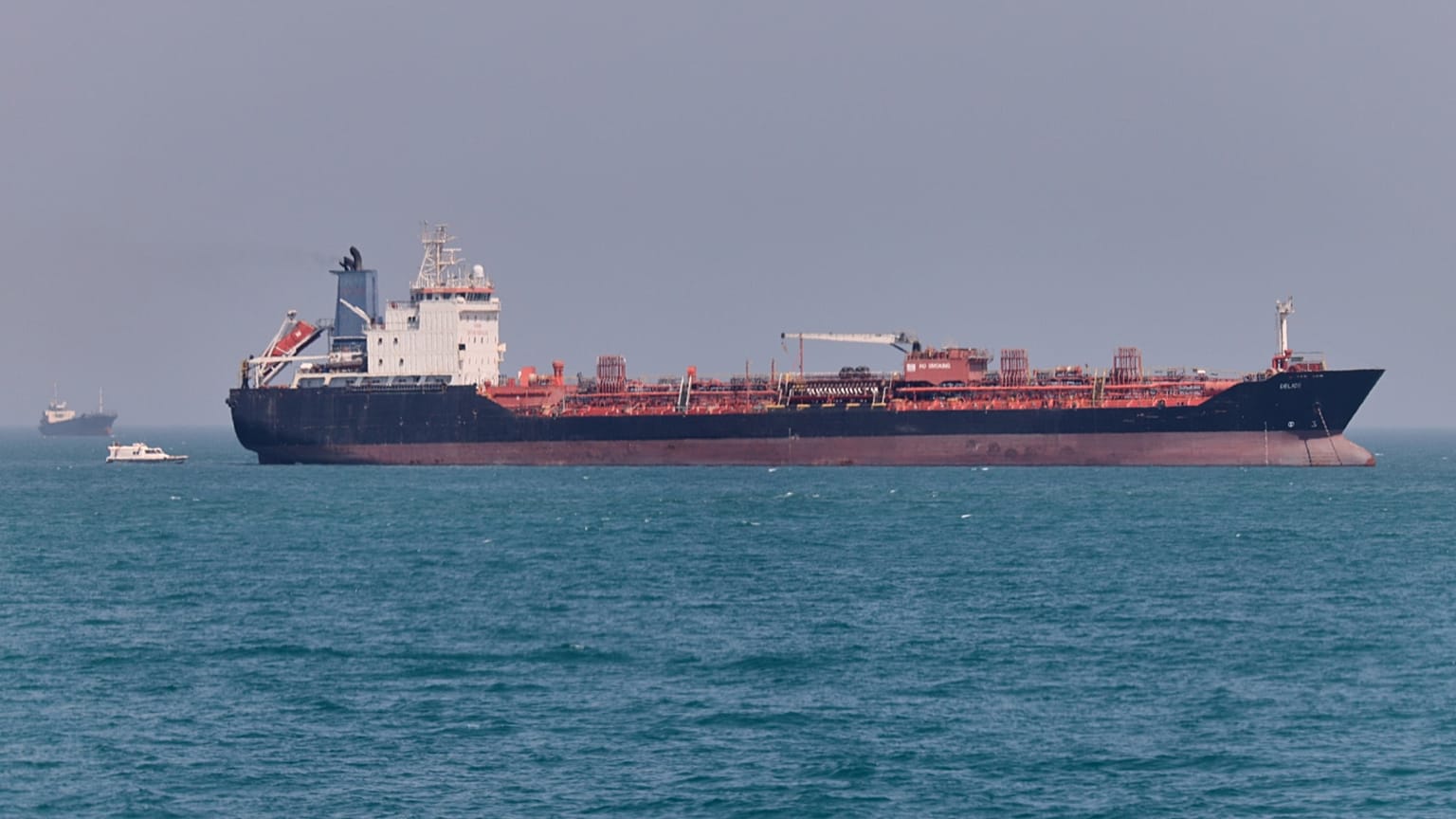













While the EU has responded to the latest fossil fuel crisis by limiting fossil fuel imports, a trio of states have “deepened their exposure by increasing them".
It’s been 100 days since the war on Iran began, dragging the world into one of the greatest fossil fuel shocks of our time.
 ADVERTISEMENT
ADVERTISEMENT
ADVERTISEMENT
Europe’s renewable boom has helped shelter the continent from soaring oil and gas prices – which remain volatile due to Iran’s stranglehold on the Strait of Hormuz – with solar alone saving Europe €12.8 billion as of 2 June.
However, the EU still spends billions of euros on fossil fuel imports – and has increased its dependency on its two largest liquid natural gas (LNG) suppliers, the US and Russia.
Is the EU reducing its fossil fuel imports?
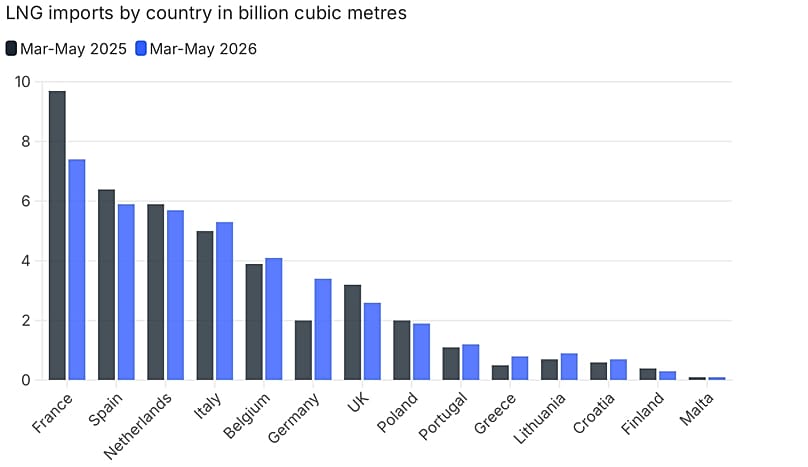
A new analysis by the Institute for Energy Economics and Financial Analysis (IEEFA) shows that EU imports of LNG have dropped by 1.2 per cent since March and continue to decline.
In the UK, LNG imports decreased by 20 per cent during the same period. Together, this represents a three per cent reduction.
“The EU has realised that its 2022 decision to boost LNG imports is no longer sustainable,” says IEEFA energy analyst Ana Maria Jaller-Makarewicz.
“Supply constraints have prompted a reduction in LNG imports, highlighting the imminent need for further gas demand reduction to avoid jeopardising the bloc’s energy security.”
While many EU members have responded to the latest fossil fuel crisis by limiting LNG imports, others have “deepened their exposure by increasing them”, argues Jaller-Makarewicz.
Germany’s LNG imports surged 72 per cent year-over-year from March to May 2026, the sharpest increase among all EU countries. Italy – which risks missing its 2030 emissions target – and Belgium have also increased LNG imports over the last year.
Is the EU becoming more reliant on US and Russian gas?
IEEFA’s analysis also found that US and Russian LNG dependency continued during the first 100 days of war in the Middle East.
Following the effective closure of the Strait of Hormuz, Europe’s imports of Qatari LNG have fallen.
However, from March to May 2026, the EU's year-on-year LNG imports rose across all other major suppliers: up five per cent from the US, 11 per cent from Algeria, 25 per cent from Russia, and 84 per cent from Norway.
The US accounted for 60 per cent of the EU’s LNG imports during this period, up from 56 per cent year-on-year.
Electrification the key to energy resilience
The increase in fossil fuel import costs, along with more than 210 emergency measures adopted by member states, has left the EU with a €60 billion energy bill from the war.
“Less than five per cent (€2 billion) of it has gone to electrification measures, the one structural investment that reduces exposure today and builds energy resilience for tomorrow,” says Alice Moscovici, a researcher at the European think tank Jacques Delors Institute.
Home grown renewables have often been touted as the best way to reduce the EU’s fossil fuel dependency. Last year, clean energy saved the EU €51 billion by cutting polluting imports, with solar and wind leading the way.
European households are also turning to electrification to shelter themselves from spiralling energy prices. Heat pump sales jumped 25 per cent in France, Germany and Poland in the first months of this year, while UK energy firm Octopus Energy witnessed sales in the first three weeks of March increase by 51 per cent compared to the same period the month before.
Multiple car marketplaces across Europe have seen a surge in interest in electric vehicles (EVs), while UK government data shows that more than 27,000 solar installations were completed in March 2026, the highest monthly total since 2012.
“Accelerating the transition to electrified transport, heating, and industry is essential to reducing dependence on imported fuels and strengthening resilience,” says Adrian Hiel, Director of the Electrification Alliance.
“The reason it will work is because households and businesses will save tens of billions of euro every single year.”
Will renewables lower electricity prices?
The price of electricity remains tied to volatile fossil fuels in many EU countries due to what is known as the merit order principle. This ensures that electricity prices are based on the most expensive power plant still needed to meet demand.
However, investment in renewables is starting to break this principle – further shielding Europeans from fossil fuel shocks and keeping energy bills stable.
“In the first five months of 2026 countries with low shares of fossil fuels in their electricity generation mix had a more favourable proportion between gas and electricity prices,” explains Aneta Stefańczyk, an industry expert at European Climate Neutrality Observatory.
“The differences are large: the electricity-to-gas price ratio is over two times lower in Spain compared to more fossil-fuel reliant countries like Italy or Poland".
According to energy think tank Ember, 75 per cent of Spain’s electricity was generated from low-carbon sources in 2025, above the EU average of 71 per cent.