












“Political ambitions mean nothing if clean electrons are stranded in connection queues.”
Europe’s ‘outdated’ energy grid is struggling to keep up with the renewables boom – but experts say an “immediate, zero-intervention” solution is waiting to be unlocked.
 ADVERTISEMENT
ADVERTISEMENT
ADVERTISEMENT
Previous reports by energy think tank Ember warned that more than 120GW of anticipated renewable projects are currently at risk due to bottlenecks and “insufficient grid capacity”.
To put this into perspective, a power plant with a capacity of 1GW could power approximately 876,000 households for one year if they consume the annual average of 10,000 kWh of electricity.
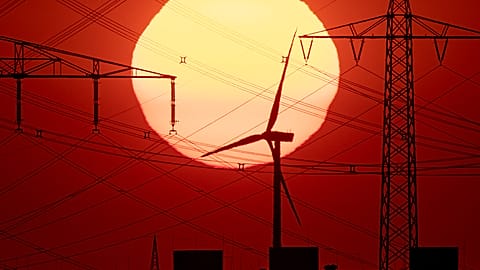
Existing solar and wind farms are also being constrained by the continent’s energy grid, which was originally built around centralised coal plants.
This, combined with the inflexibility of wind and solar – which relies on weather conditions for generation as opposed to actual demand – means that huge amounts of clean energy is being wasted every year.
While battery storage and long-term investment in the energy grid are often touted as the only real solutions to tackle this problem, new Ember analysis found that Europe could add 25GW of wind and solar across seven EU countries without building extra grid capacity through ‘hybridisation'.
What is hybridisation?
Hybridisation combines technologies like wind, solar and storage behind a single grid connection. Think of it like the three sources sharing the same ‘plug’ into the electricity grid.
Ember says that in Europe, hydropower plants are “particularly well-suited” for hybridisation because much of their grid capacity goes unused during the day.
This is because hydropower plants act like on-demand batteries which can be ramped-up when electricity consumption increases (which is typically in the early morning and early evening when people are at home) or run at low output in off-peak hours.
“By adding wind or solar at the same connection point as a hydropower plant, developers can get online faster and operators can use grid infrastructure more efficiently – on average doubling utilisation – while staying within export limits,” says Elisabeth Cremona, energy infrastructures lead at Ember.
The report found that across Austria, Bulgaria, France, Italy, Portugal, Romania and Spain (the EU’s major hydropower markets) hybridisation could integrate 18 per cent of the new renewables expected by 2030 without requiring additional grid capacity.
Hybridisations offers an ‘immediate’ solution
Across the seven markets Ember studied, only Portugal and Spain have specific rules for hybrid projects. The other countries lack “clear regulatory frameworks,” according to the report.
The experts are therefore calling for national legislation, along with faster prioritisation of hybrid projects, to remove barriers to renewable deployment and make better use of existing infrastructure.
“Political ambitions mean nothing if clean electrons are stranded in connection queues,” Cremona adds. “For countries facing gridlock, hybridisation offers an immediate, zero-intervention solution.”