




























Soaring temperatures can actually hinder some kinds of renewable energy output, even sun-absorbing solar.
Europe has been baking amid its first major heatwave of the season, with the UK and France experiencing record May temperatures.
 ADVERTISEMENT
ADVERTISEMENT
ADVERTISEMENT
Sunny skies have caused a surge in solar power output, resulting in negative electricity prices in some parts of Europe - where the wholesale market of electricity dips below zero due to supply outstripping demand.
While this may sound like a welcome relief for consumers amid spiralling energy costs, this increasing phenomenon won’t actually lower your bills.
Plus, soaring temperatures can actually hinder some kinds of renewable energy output.
Heatwave turns power prices negative
A recent Bloomberg analysis found that the UK saw solar meet almost half of its electricity demand at around midday last Sunday (24 May) – the highest ever, according to NESO data – as temperatures climbed to a sweltering 32.2°C in London.
The surge in renewable power pushed hourly prices in France below zero at around 1pm on Tuesday, 26 May on Epex Spot – while the country suffered under a “highly anomalous and powerful” heat dome.
This is not the first time this has occurred this year. According to analytics firm Montel, negative electricity prices on the Iberian Peninsula hit a new all-time high in the first quarter of 2026.
Spain was hit the worst, recording 397 hours of negative prices between January and March, a significant spike compared to the 48 hours registered in the same period of 2025, while Portugal reached 222 hours of sub-zero prices during the same period.
Why do negative electricity prices occur?
Electricity prices go negative when supply exceeds demand. In Europe’s day-ahead market, energy producers submit offers saying how much electricity they will sell at what price. Normally, that price is positive.
However, ideal weather conditions can drastically boost solar and wind output – meaning more energy is being produced than is needed. This can often occur on public holidays, when people are more likely to be using less energy than they normally would.
Generators can underbid each other, based on operating and restart costs, to avoid being switched off (curtailed). This is because they either still make money through subsidies/contracts or because they will lose more money through curtailment.
Last year, for example, Britain wasted a staggering £1.47 billion (around €1.67 billion) by turning down wind turbines and paying gas plants to switch on.
How can Europe stop negative electricity pricing?
Solving negative electricity pricing is no easy feat. Europe’s outdated energy grid was never designed for the renewables boom, and is instead set up for centrally-located plants. This means that wind and solar energy – which tend to be located in remote areas – often can’t get to where it is needed, like homes and offices.
While grid investment in Europe has increased by 47 per cent over the past five years to around €70 billion annually, experts warn it still falls short of what’s required.
A recent report by energy think tank Ember warns that more than 120 GW of anticipated renewables are at risk due to Europe’s “insufficient grid capacity”. This includes 16GW of rooftop solar installations, impacting more than 1.5 million households across Europe.
Giving away free or discounted energy is another way of tackling negative electricity prices, an incentive already being considered in the UK.
Greg Jackson, CEO of Octopus Energy, which has long been pushing for reforms to provide cheaper energy rather than curtailing wind power, says such initiatives should be made permanent to persuade consumers to invest in electrification.
Can battery storage fix Europe’s outdated energy grid?
The main issue around negative electricity prices is that excess electricity is hard to store. This has resulted in calls to bolster Europe’s battery energy storage systems (BESS).
Last year, the EU installed 27.1 GWh of new BESS – marking 12 consecutive years of record growth.
According to a 2026 Solar Power Europe report, despite a tenfold expansion of the EU battery fleet since 2021, reaching more than 77 GWh today, Europe remains “far from where it needs to be”.
To meet its 2030 targets, the EU must repeat its tenfold growth once again – scaling battery storage towards 750GWh within the next five years.
Five EU markets delivered more than 60 per cent of all new BESS capacity in 2025, with Germany and Italy leading the race. Bulgaria became the fastest-growing market, bumping up to third place, followed by the Netherlands and Spain.
Heatwave hinders other renewables
While solar output is surging, rising temperatures can be a hindrance to other kinds of renewable power.
There are concerns over hydro and nuclear availability this summer due to increased water temperature in rivers used for cooling French reactors.
The heat dome effect also slows wind speeds. The Bloomberg analysis reports that below-normal wind generation was forecast last week in Germany, Spain, Italy and France.
In France, output dropped to about 0.5 gigawatts around 1pm on 29 May, according to RTE data. It has averaged 7.4 gigawatts so far this year.
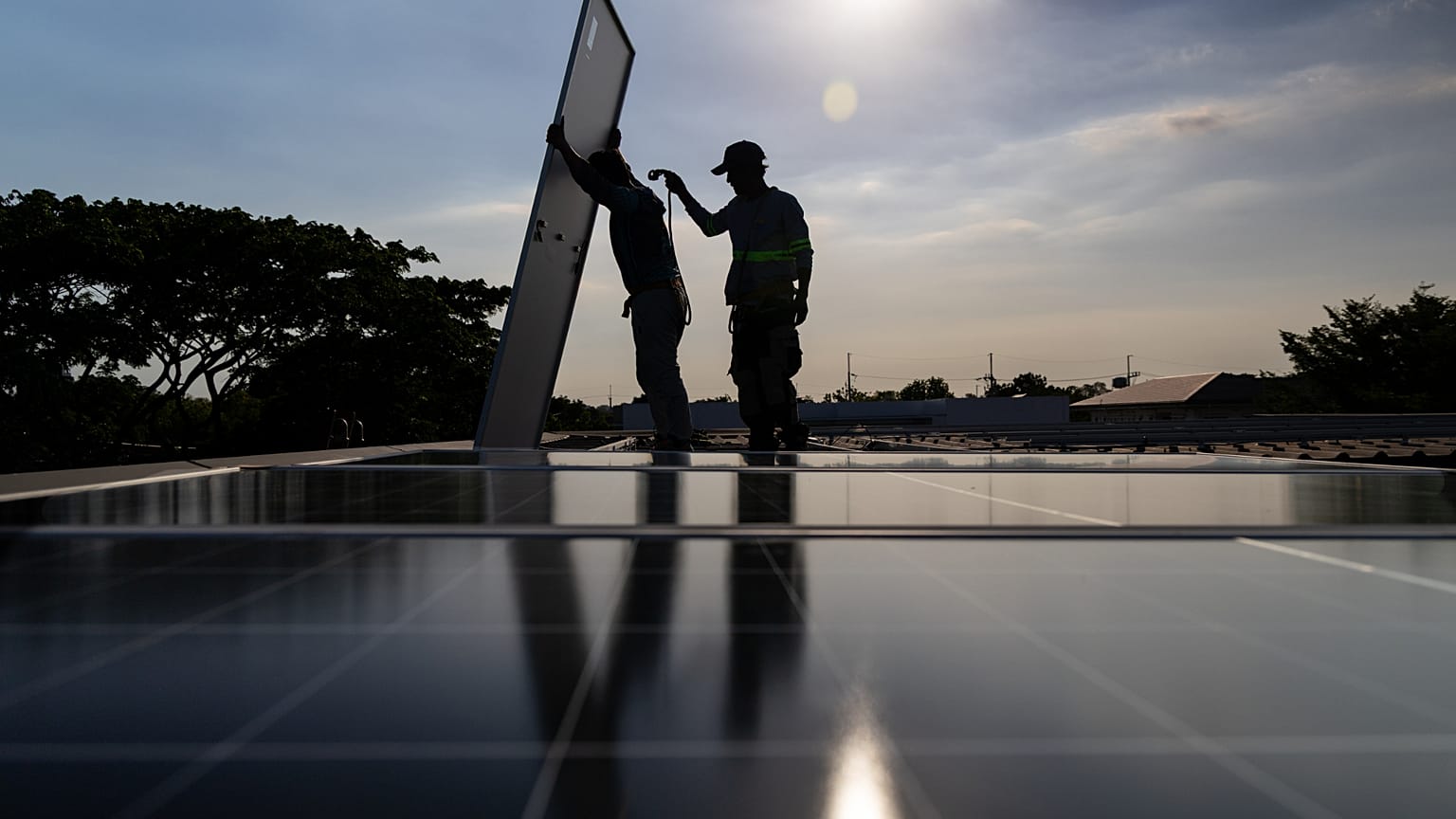
Even solar power is not immune. Intense heat can actually reduce efficiency while increasing strain on the electricity grid.
“It’s a common misconception that more sun always equals more power,” Ioanna Vergini, founder of wfy24.com, a platform that analyses weather data and climate volatility trends, tells Euronews Earth.
“Photovoltaic (PV) cells are semiconductors, and like all electronics, they lose efficiency as temperature rises.”
For every degree above 25°C, solar panel efficiency drops by about 0.4 to 0.5 per cent.