





























Orbán, who once described EU climate ambitions as a 'utopian fantasy', has been replaced by Péter Magyar.
Hungary’s landslide election today saw Viktor Orbán ousted after 16 years as Prime Minister.
 ADVERTISEMENT
ADVERTISEMENT
ADVERTISEMENT
Having once described EU climate ambitions as a “utopian fantasy” – blaming them for pushing up energy costs and destroying the middle class – Orbán frequently backed policies that were at odds with the net-zero goals set by his government.
So are things likely to change under the new Tisza Party leader, Péter Magyar?
Although the 45-year-old is a former member of Orbán’s Fidesz Party, there’s cautious optimism about his pledges to crack down on corruption and rebuild Hungary's damaged relationships with the European Union.
During Tisza’s election campaign, the centre-right and pro-EU party promised to end political bargaining on environmental issues by rebuilding independent protections for nature and enforcing stricter regulation of polluting industries.
“Investments cannot endanger people’s health and the competitiveness of the country cannot be built on the environment,” the Tisza Party said on its official Instagram page in February.
“We are building a liveable country, not only until the next election, but for the next generations.”
Hungary’s Tisza Party eyes energy independence
Hungary’s newly elected Tisza Party promises to loosen the country’s ties with Russia and bring it more in line with the EU.
It has vowed to end the country’s reliance on Russian energy by 2035 and double its share of renewable energy by 2040.
Orbán’s government repeatedly resisted EU sanctions on Russian oil after the country launched its full-scale invasion in Ukraine in 2022, instead doubling down on cheap Russian imports. While this has helped Hungary maintain some of Europe’s lowest energy prices, it has left the country vulnerable to shocks.
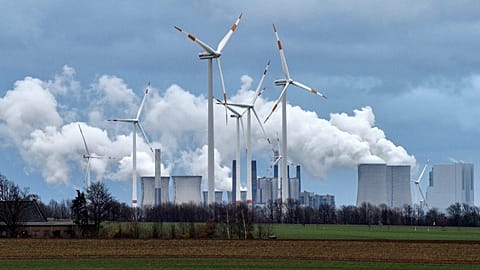
While Hungary has already made strides in solar power – which, alongside the transition away from coal, has contributed to a slow but steady decline in emissions – the country’s energy mix is still dominated by fossil fuels.
Investing further in homegrown renewables would boost Hungary’s long-term resilience.
Improved cooperation with the European Union is also likely to unlock billions in frozen funds intended for the green transition.
A crackdown on polluting industries in Hungary
In its promised clampdown on polluting industries, the Tisza Party has explicitly singled out battery factories.
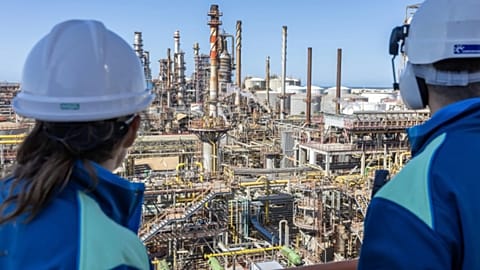
One of Hungary’s biggest environmental controversies, Chinese, South Korean and Japanese-owned battery facilities have sprouted up across the country in recent years, spurred on by government subsidies and weak regulation.
Protests and court cases have erupted over the toxic air pollution, groundwater contamination and illegal waste released by some of these plants, offsetting the environmental gains of the green tech they produce.
Greater transparency, anti-corruption controls and stronger, more independent environmental institutions would give authorities the power to better regulate or shut down harmful plants.
Protecting water as a national resource in Hungary
Like much of Europe, Hungary has faced droughts and heatwaves that have placed severe strain on its water resources – and the outlook, under accelerating climate change, is bleak.
By early 2025, water levels in both the Danube and the Tisza had approached historical lows.
A prolonged heatwave and drought in 2024 caused more than 100 billion forints (€273 million) in damages to the country’s agricultural sector. Poor wastewater treatment and over-reliance on groundwater for drinking have made the situation even more precarious.
Magyar's party says it aims to mitigate the crisis through large-scale water retention infrastructure, modernised irrigation systems, and climate adaptation in agriculture.
Some groundwork has already been laid under Orbán – an infrastructure renewal programme launched in 2025 began extending canal capacity by 300 kilometres and constructing or modernising more than 130 waterworks to raise water storage capacity for agriculture.
The stakes go beyond the environment. Better water management promises to improve food security and support the rural economy – a key constituency for Magyar, who has worked hard to gain the support of Hungary's farming communities.
Under Orbán, rural areas were often won over with short-term subsidies – including free agricultural water use – rather than the long-term infrastructure investment that experts say the country urgently needs.
Whether Magyar can deliver on that longer-term vision, while also rebuilding trust with Brussels and unlocking frozen EU funds, will be one of the defining tests of his first term.