
















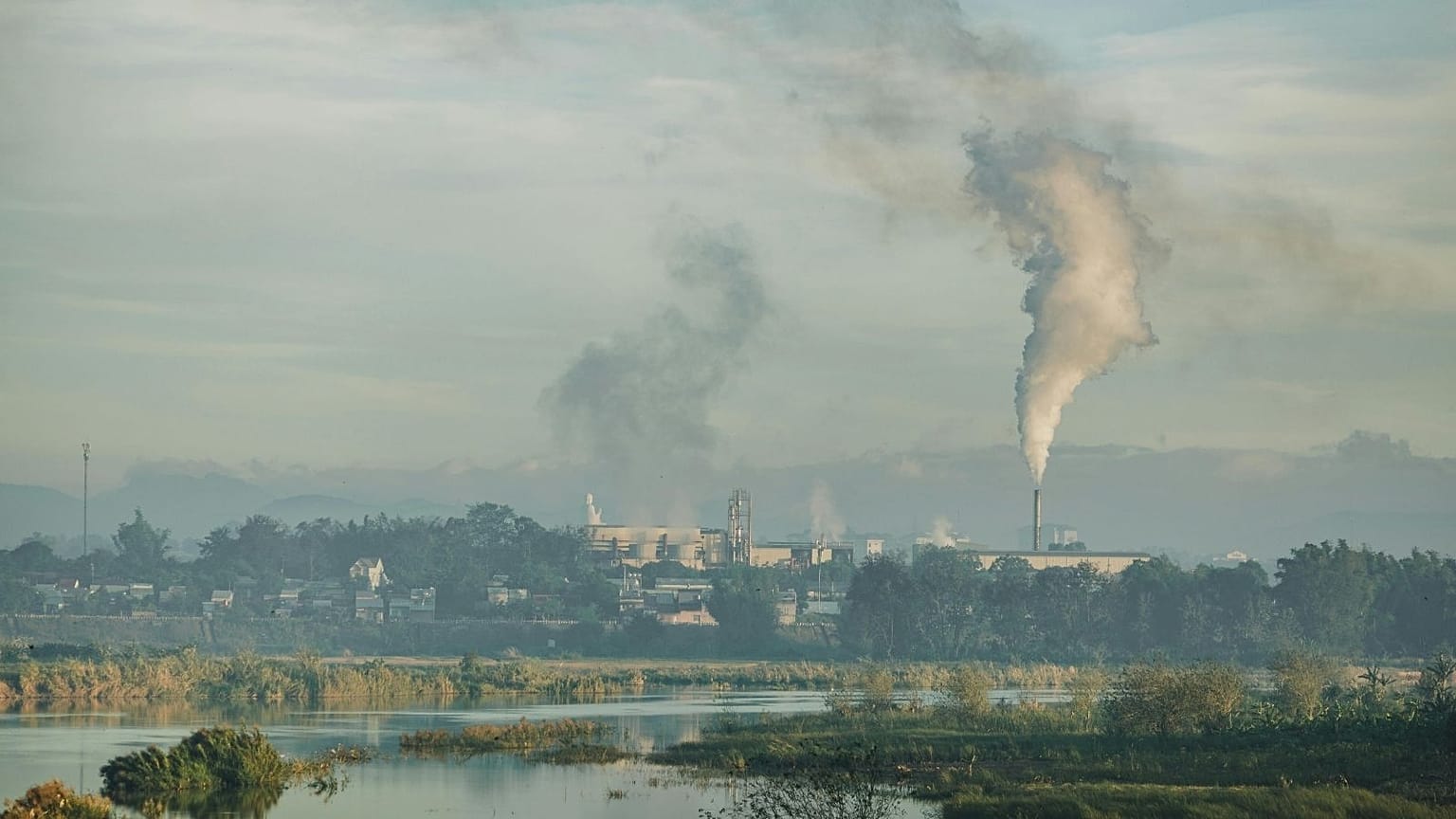













In Europe, the poorest regions suffer the most from the health effects of air pollution, according to a new study.
Regions with higher poverty levels and lower renewable energy adoption are at the highest risk of mortality associated with air pollution, according to a new study.
 ADVERTISEMENT
ADVERTISEMENT
ADVERTISEMENT
The research, published in the journal Nature, found that the higher the poverty, the greater the vulnerability to air pollution.
“It is not just that poorer regions are more polluted,” said Zhaoyue Chen, first author of the study at the Barcelona Institute for Global Health (ISGlobal).
He noted that wealthier regions usually have better-equipped healthcare systems, more comprehensive public health programmes, greater social awareness of the effects of air pollution, and a higher capacity to implement environmental policies.
“Quantifying the mortality risks attributable to air pollution in each region and period can help identify the most vulnerable populations more accurately,” Chen added.
The study, carried out by the Barcelona Institute for Global Health (ISGlobal) in collaboration with the Barcelona Supercomputing Center, analysed data from more than 88 million deaths across 31 European countries between 2003 and 2019.
Researchers found that the health risks of air pollution are not solely determined by pollution levels; they also depend on people’s vulnerability.
Even when regions experience similar air pollution levels, the health consequences can differ greatly because of socioeconomic and demographic conditions.
What drives these differences?
The study found that regions with higher gross domestic product (GDP) per capita, lower poverty rates, and higher life expectancy –mainly in Northern and Western Europe- presented a lower risk of mortality associated with air pollution.
In contrast, areas in Southern and Eastern Europe recorded significantly higher risks, with some even doubling those of regions with better socioeconomic conditions.
“Western European countries generally tended to invest more resources in clean energy, green infrastructure, and stricter emission controls,” said Joan Ballester Claramunt, senior author of the study.
He added that Eastern European countries have often relied more heavily on external funding and remain at an early stage of integrating renewable energy and pollution-control measures.
A widening gap
These inequalities have also evolved differently over the years, the authors noted.
Wealthier regions experienced a significant decrease in the risks associated with PM2.5, PM10, and nitrogen dioxide (NO2) between 2003 and 2019 – all pollutants linked to high health risks.
Regions with lower income or life expectancy saw only small improvements, or in some cases even increases, in mortality risks associated with these pollutants during the study period.
The researchers found that regions that rely more heavily on fossil fuels tend to be disposed to a broader mix of harmful substances, such as ultrafine particles and heavy metals, which can cause greater damage to the body.
Regions with advanced renewable energy adoption and sustained improvements in air quality may benefit from improved lung and cardiovascular function and greater physiological resilience, mitigating acute health effects.
The analyses show that the increase in renewable energy during the present century is associated with a reduction in air pollution of 15 percent for fine PM, 54 percent for coarse PM, and 20 percent for NO2.
Exposure to air pollution is a known risk factor for Alzheimer’s disease and for several common chronic health conditions, such as hypertension, stroke, and depression.
The European Environment Agency (EEA) estimated in a December report that unsafe levels of air pollution resulted in 182,000 deaths in 2023.