




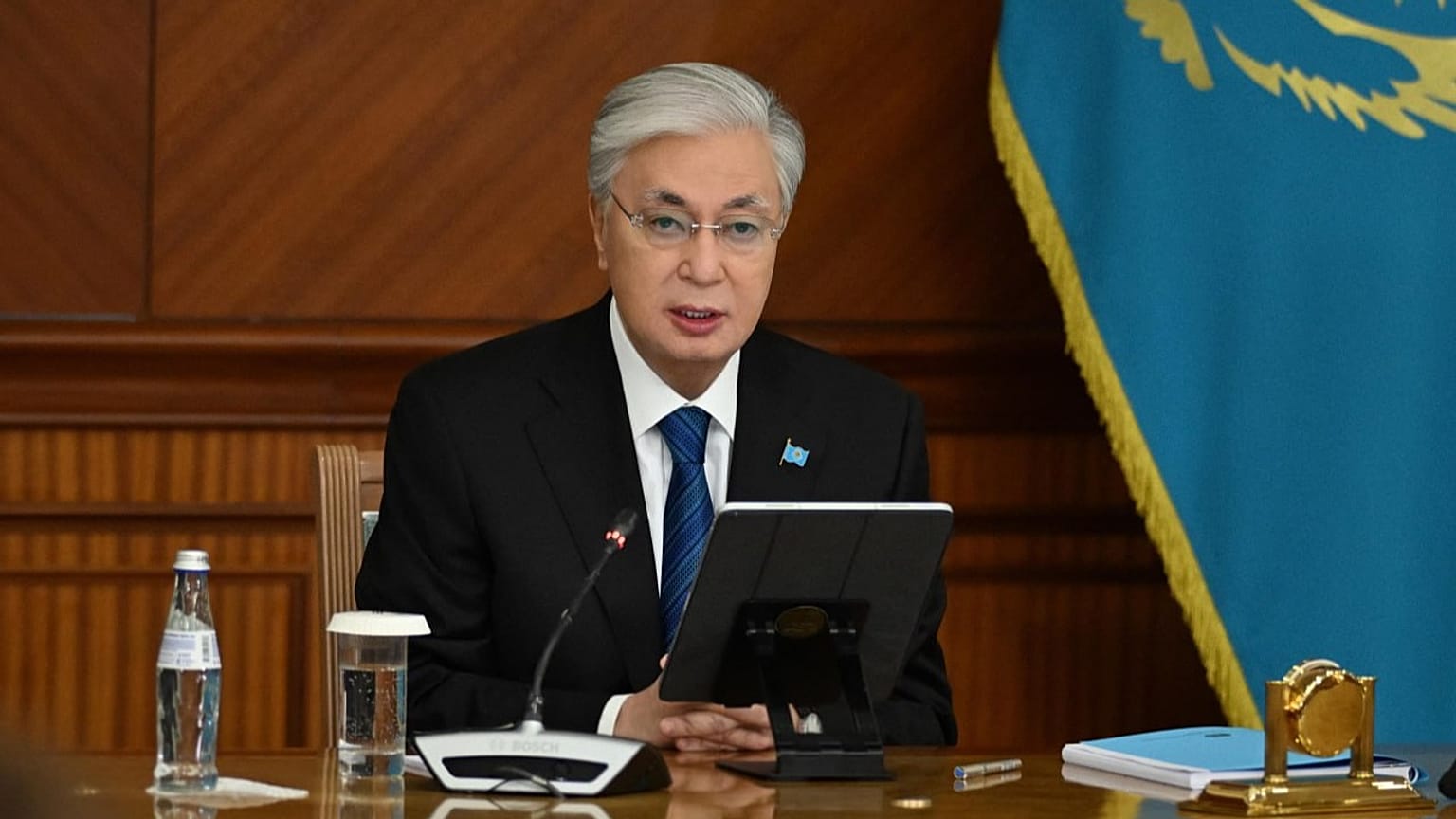













The draft of Kazakhstan's new constitution will consolidate the president's powers and introduce a number of additional changes. The referendum on its adoption is set for 15 March.
Kazakhstan will hold a referendum on 15 March to vote on the new constitution, after Kazakh President Kassym-Jomart Tokayev signed a decree following the Constitutional Commission's presentation of the final project on Wednesday.
 ADVERTISEMENT
ADVERTISEMENT
ADVERTISEMENT
“The proposed amendments will allow for the redistribution of powers, strengthen the system of checks and balances, and, most importantly, increase the effectiveness and sustainability of all political institutions,” said Tokayev during a government session on Tuesday.
The previous constitution played a tremendous role in the country’s achievements over the last 30 years, Tokayev said, but it no longer reflects the realities of today’s economic, geopolitical, and technological landscape.
“We must take into account that it was adopted when our country was just getting on its feet and bears the imprint of the first difficult years of establishing our independence. Since then, our society has changed significantly,” the president explained.
This is why it is important to "update the country’s goals, values and principles, and enshrine them at the constitutional level,” he added.
If the proposed constitution is adopted, the amendments are expected to change 84% of the old text.
Stronger presidential role on the table
The role of the president was strengthened in the new constitution. Currently, the president, with the approval of the Senate, can appoint the chairs of the Constitutional Court, the Supreme Judicial Council, the National Bank, the National Security Committee, and the Prosecutor General.
The new constitution gives him the power to also appoint the heads of the Supreme Court, the Central Electoral Commission, the Supreme Audit Chamber, the State Security Service, and the Human Rights Commissioner.
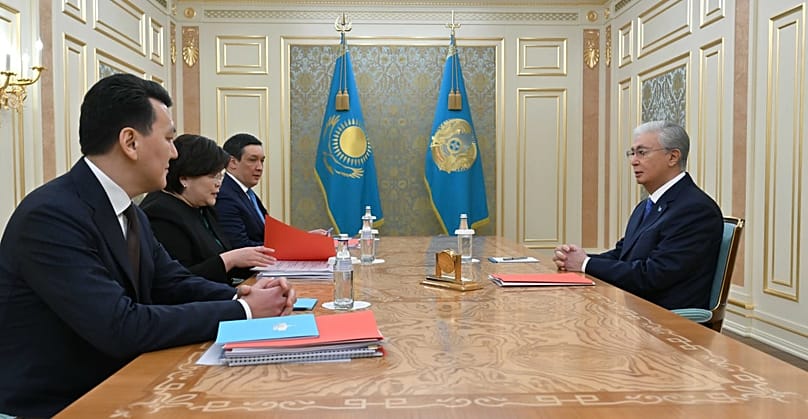
The president will also be able to appoint 10 judges of the Constitutional Court, six members of the Central Electoral Commission and eight members of the Supreme Audit Chamber – all with the approval of the new unicameral parliament, dubbed Kurultai.
However, a provision states that if Kazakhstan's Kurultai refused these candidacies twice, the president would have the right to dissolve the parliament.
In its temporary absence, he would hold the power to “issue decrees that have the force of constitutional laws or laws of the Republic of Kazakhstan.”
The Kurultai chairperson and the vice president would also be subject to this rule.
Return of the vice president position
The reform would also reinstate the position of vice president. The country had this position between 1991 and 1996, but it was later abolished.
Now his duties would include representing the country abroad, representing the president at parliamentary and other meetings, and interacting with social, cultural and scientific communities at home and abroad. The rest of his powers and duties would be determined by the president.
Reestablishing this office also means a change in the order of power transfer. Under the current constitution, if the president can no longer fulfil his duties due to abdication, illness, or death, the line of succession is: the Senate speaker, the speaker of the lower chamber, and then the prime minister.
Under the proposed new rules, the mantle would first be transferred to the vice president, then to the speaker of the parliament, and finally to the prime minister.
Unicameral parliament and People's Council
The unicameral parliament, the Kurultai, whose shift was first announced during Tokayev's September address, would also be reformed to consist of 145 members — as opposed to 148 across two chambers — and would be elected for five years.
Kurultai would have all the powers of both chambers, including the power to pass new laws. All laws would undergo three readings. The president, Kurultai members, the prime minister and members of the People's Council would have the power to initiate draft laws.
The People's Council is, in fact, another novelty. In January, Tokayev abolished the National Congress, which met to discuss important matters with the people, and the Assembly of the People of Kazakhstan, which represented the interests of all ethnicities living in the country.
The new structure would combine the essence of the two, but would also have the power to propose laws and initiate referendums.
Other provisions
The wording on freedom of speech provisions have been amended as well: the current constitution says that "freedom of speech and art is guaranteed."
However, the proposed version has expanded these guarantees to "scientific, technical and artistic creativity" as well.
One of the most discussed provisions is a minor change in the wording on the use of the Kazakh and Russian languages. Instead of being used on "equal grounds," the two will be used "alongside," implying that Kazakh would take precedence, according to experts.
"Official documents in the Kazakh language will have the highest authenticity. This means that if versions of the same document in different languages contradict each other, the version in Kazakh will be considered the correct one," said political scientist Gaziz Abishev.
The scope of protection of personal data is expanded. It is now also clearly stated that religion is separate from the state.
Marriage will no longer be a union of two people, but a union of a man and a woman, which comes on the heels of the recent ban on LGBTQ+ propaganda.
Kazakhstan is a member of many international organisations and a signatory to agreements, such as the UN and the Paris Agreement. Under the current constitution, Kazakhstan's international commitments take precedence over domestic law. The new version no longer makes this promise.
While the constitution still requires respect for international law, and the main principles of foreign policy will remain friendly relations, dialogue, and non-interference in the internal affairs of other countries, Kazakhstan wants to exclude the provision that requires it to "renounce the first use of armed force."
Non-profits and political parties financed by international sources will have to openly show the money coming from not only foreign governments and organisations, but also foreign companies and companies with foreign participation.
If the new constitution is adopted through the referendum, it will take effect on 1 July, after which the parliamentary election will take place sometime in August, so that the new season will start with the new convocation.
The third constitution
If passed, the new constitution would be its third iteration. The first one was adopted in 1993 but was quickly scrapped, and another constitution was adopted on 30 August 1995.
Since then, the constitution has been amended six times, with the latest round made in 2022.
Following the January 2022 unrest, the amendments were part of the country's political reform, and the new constitution is said to be the continuation of that process.
The Kazakhstan International Bureau for Human Rights and Rule of Law conducted a comparative analysis of the three versions of the constitution.
While acknowledging that assessing political regimes was not their task, they stated that the 1993 constitution was the least stringent.
“We note the more authoritarian nature of the 1995 constitution and the project and the clear strengthening of the role and powers of the president in them compared to the 1993 constitution,” said their press release.