




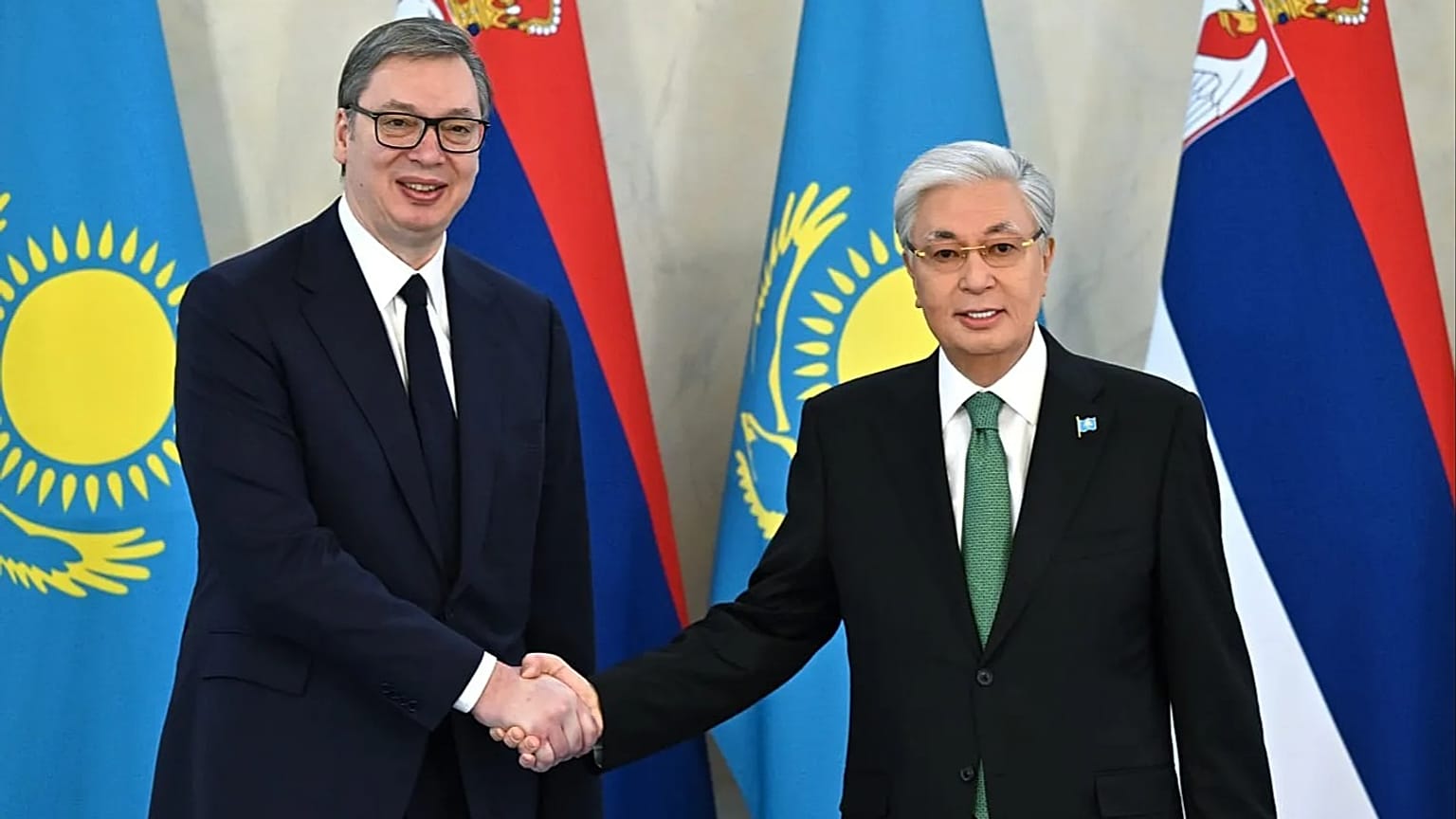














This week, Serbian President Aleksandar Vučić went on a diplomatic offensive to secure trade and investment in the east.
At the EU Enlargement Summit organised by Euronews in November, Serbian President Aleksandar Vučić repeated that while his country was dedicated to its EU integration process, it would also seek drivers of growth in places like Central Asia while waiting in the EU queue. In the previous weeks, he did just that.
 ADVERTISEMENT
ADVERTISEMENT
ADVERTISEMENT
During his official visit to Kazakhstan, at the invitation of President Kassym-Jomart Tokayev, the two leaders held talks focused on strengthening political dialogue, expanding trade and economic ties, and enhancing cultural and humanitarian cooperation.
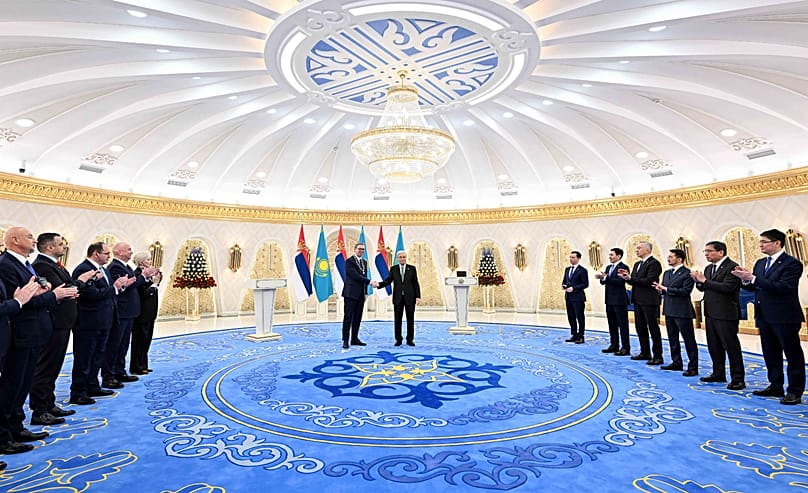
Vučić also met with Kazakhstan’s Prime Minister, Olzhas Bektenov, and representatives of Kazakhstan’s largest investment funds, signing several deals outlining future activities.
“We put stress on further development of trade, economic and investment cooperation," Tokayev said after the talks
"Trade exchange is increasing. There are 60 Serbian companies working in Kazakhstan. But the potential for our economic cooperation is much higher than that and that is why we agreed that we shall enhance joint operations in the fields that are complementary in our economy,” Tokayev added.
In November 2024, the Kazakh president visited Belgrade, and since then the relations of the two countries have taken a positive turn. The trade turnover increased by more than 7%, with Kazakhstan’s export to Serbia surging by as much as 80%.
Several trade and defence deals marked the new chapter in relations between the two countries. Days before Vučić’s visit, Astana hosted an expanded meeting of the Kazakhstan–Serbia Business Council and a Kazakhstan–Serbia Business Forum, during which several cooperation agreements were signed.
In the defence sector, SP Kaztechnology and Serbian company Yugoimport SDPR concluded an agreement to repair and modernise self-propelled artillery systems.
Another framework agreement was signed on technology transfer and the establishment of production for high-energy materials. Kazakh Invest has also been negotiating with Serbian pharmaceutical companies to localise production facilities in Kazakhstan.
“There's a lot for us to see and learn here and I think we have laid solid foundations for further development of relations between Kazakhstan and Serbia,” said Vučić after he visited the International Centre for AI in Astana and Astana International Financial Center.
He also thanked his host for not recognising Kosovo — Serbia's former province which declared independence in 2008, a move Belgrade does not recognise — as an independent state.
This was Vučić's fourth visit to Kazakhstan, and he invited Tokayev to visit Belgrade again.
Quest for diversification of energy sources
Days before landing in Astana, Vucic welcomed Azerbaijan's President Ilham Aliyev in Belgrade, signing an agreement on the design, construction and operation of a gas-turbine power plant.
The project, a key component of Serbia's long-term energy transition strategy and the partnership with Baku allow Belgrade to diversify its gas imports, reducing its reliance on single-source suppliers.
“The project documentation can be prepared, and construction can begin immediately after that”, Vučić stated during a joint press statement with his Azerbaijani counterpart. The process would take approximately three months, according to him.
The project will be realised across three pre-selected sites near Niš, Serbia’s third-largest city, and the construction itself will take more than two years, with an opening scheduled for 2029.
Aliyev reminded that some time ago Azerbaijan began exporting natural gas to Serbia, and later the sides agreed to increase the volumes. Now Serbia will also convert the gas to be exported into electricity, thereby acquiring clean electricity.
“This will create opportunities for both the Serbian market and for future exports,” Aliyev said.