




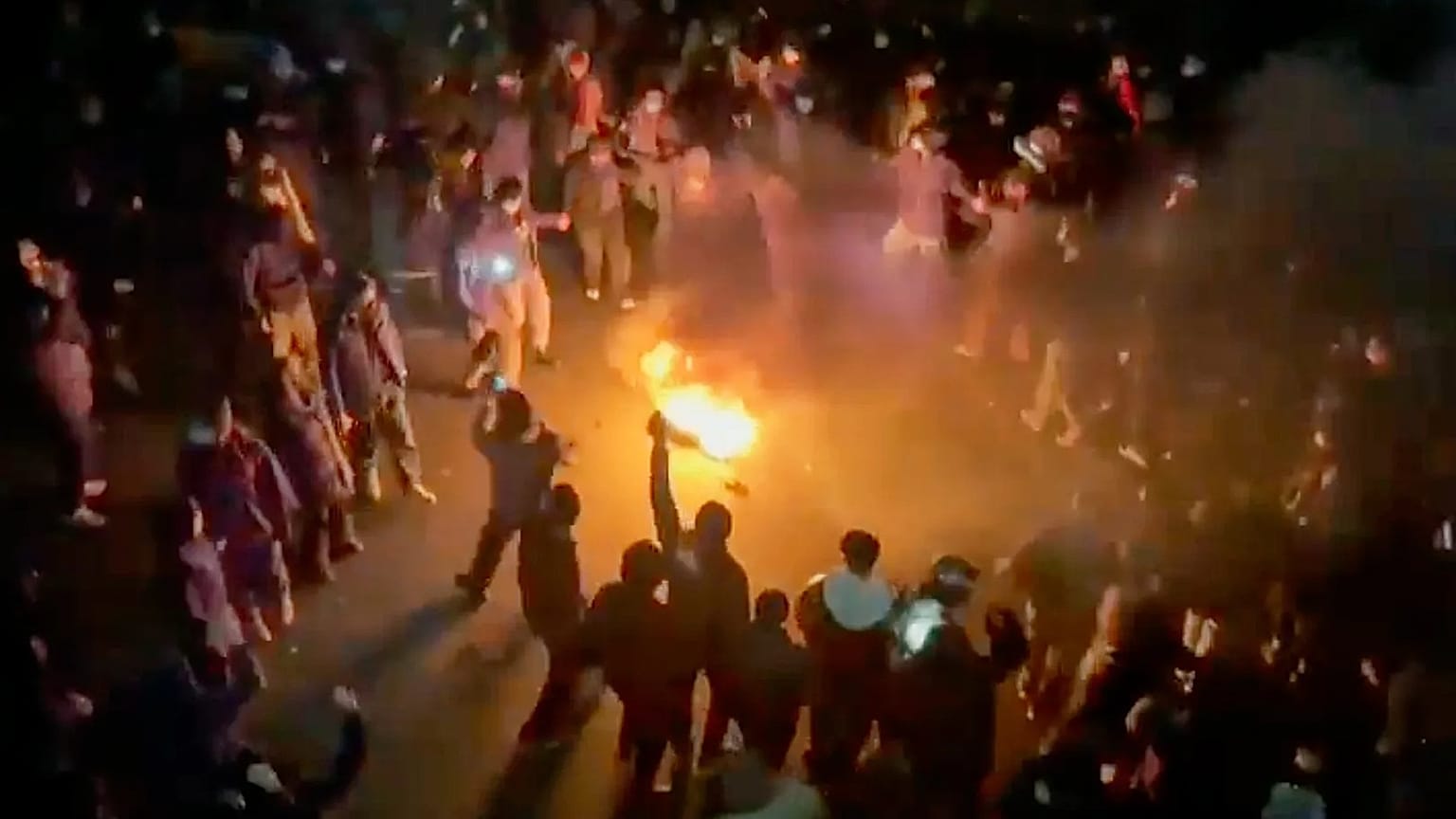













Analysts agree Iran's regime decided on mass killings to survive protests driven by economic collapse, with clear orders for lethal force against unarmed demonstrators.
When protests erupted across Iran in late December over economic collapse, the regime's response was swift and deadly.
 ADVERTISEMENT
ADVERTISEMENT
ADVERTISEMENT
What followed was not crowd control but calculated slaughter. International human rights organisations now describe it as one of the largest mass killings of protesters in modern times.
The question facing Western capitals is no longer whether atrocities occurred, but whether the international community possesses the will to respond with anything beyond rhetoric.
"There is no doubt that the Islamic Republic has committed one of the largest mass killings of protesters of our time," said Mahmood Amiry-Moghaddam, head of the Oslo-based organisation Iran Human Rights, during an online European Parliament meeting.
Growing evidence suggests the Islamic Republic reached a strategic decision before protests began — protests that were themselves predictable given Iran's collapsing economic conditions. That decision was stark: survival through mass killing and the deliberate production of fear.
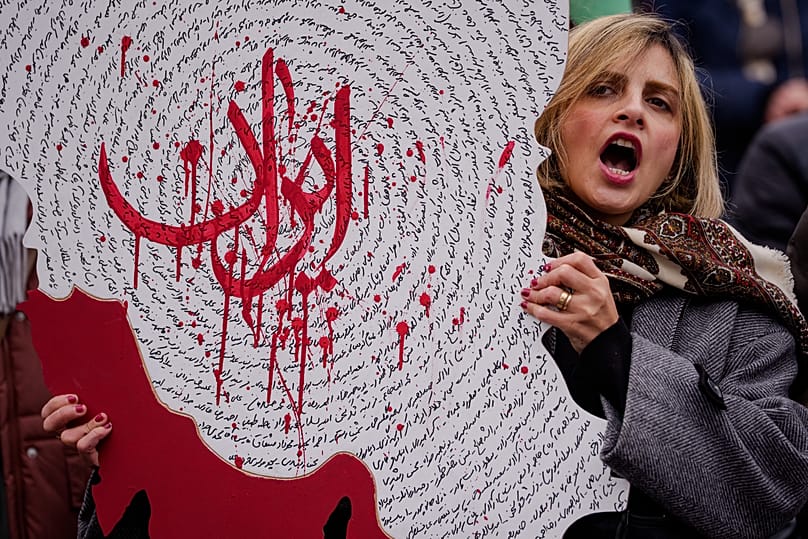
From this perspective, blaming opposition figures or foreign leaders — including President Donald Trump — for the deaths of unarmed protesters appears overly simplistic.
Whether protests were formally called for or not, security forces operated under clear orders to fire with lethal intent. Video evidence from across Iran shows a consistent, coordinated pattern of repression now under review by international legal bodies. The violence was not spontaneous. It was premeditated.
According to credible documentation from international human rights organisations, casualty figures remain contested. Iran Human Rights documented at least 3,428 deaths by 14 January.
By late January, the US-based Human Rights Activists News Agency reported at least 6,126 deaths. Time magazine and Iran International cited hospital records suggesting between 30,000 and 36,500 deaths on 8-9 January alone, though these higher figures remain unverified. Iran's government acknowledged 3,117 deaths by 21 January. However, on 16 January 2026, the UN Special Rapporteur on Iran, Mai Sato, said in a media interview that at least 5,000 people had been killed, noting that according to information she received from medical sources, the death toll might be as high as 20,000.
Iran's leadership was acutely aware that a 12-day conflict involving the United States and Israel in mid-2025 had ended inconclusively. From Tehran's perspective, renewed confrontation remained a real possibility. Buying time became a priority.
Decision-makers calculated that if another military escalation occurred, the public would no longer remain passive.
Unlike previous crises, worsening economic conditions meant that a significant segment of society could move from silent endurance to active resistance — potentially becoming what the regime views as internal "enemy forces."
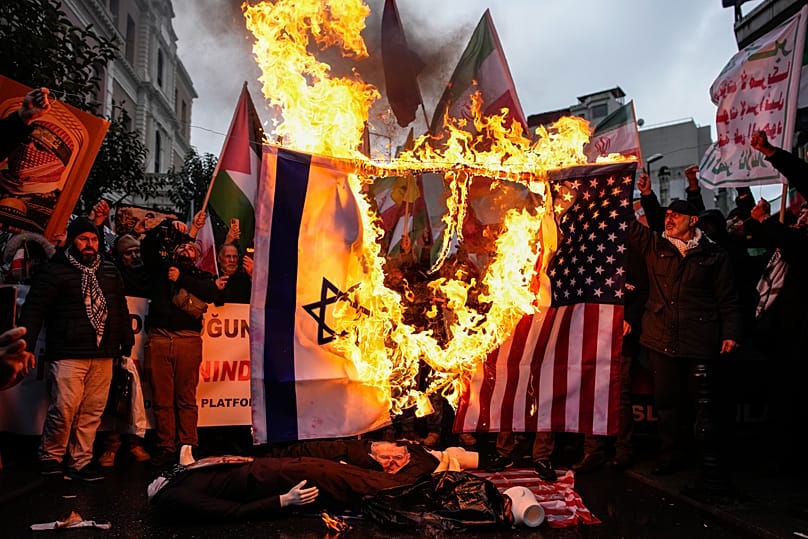
Many protesters who took to the streets, especially on 8 and 9 January, appear to have been encouraged by repeated public messages from Trump.
He explicitly urged Iranians to remain in the streets in multiple social media posts, writing "help is on its way" and "Iranian patriots, keep protesting - take over your institutions."
On 2 January, he posted on Truth Social: "We are locked and loaded and ready to go."
Military positioning and strategic ambiguity
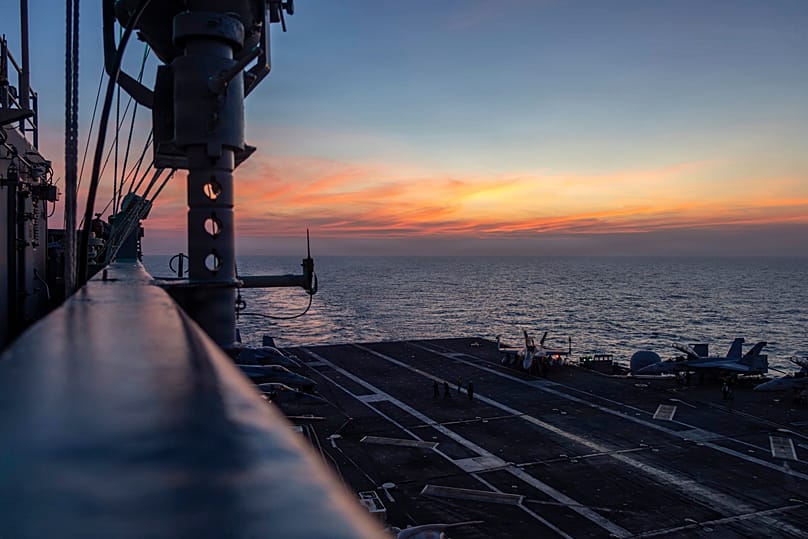
The deployment of the USS Abraham Lincoln carrier strike group toward the Persian Gulf has intensified speculation about Washington's intentions.
The carrier entered the Persian Gulf on 26 January, according to the US Navy. Many analysts consider a US military strike on Iran plausible — some even inevitable. The uncertainty lies not in whether, but in how and to what end.
Scenarios discussed by regional and US sources range from limited strikes or targeted eliminations of senior regime figures to attacks on military infrastructure and repression apparatuses, or a combination of these options. What remains opaque is whether Washington's objective would be regime change or merely regime weakening.
The carrier's deployment suggests long-term positioning rather than short-term signalling. According to the New York Times, Trump has received intelligence reports indicating the Islamic Republic's hold on power is at its weakest point since the 1979 Islamic Revolution deposed Shah Mohammad Reza Pahlavi.
Weakening the regime — and who pays the price
If the US strategy focuses solely on weakening the Islamic Republic rather than facilitating a political transition, analysts warn that civilians will bear the highest cost. While some regional economies or energy markets could benefit in the short term, the social and economic collapse inside Iran would deepen.
Several economic experts note that a democratic, Western-oriented Iran would not necessarily align with the interests of all regional actors. Alongside China, several regional powers have benefited materially from Iran's isolation under sanctions.
Yet from a longer-term Western perspective, analysts argue that a stable, democratic Iran would better serve shared interests — economically, politically, and in terms of regional energy cooperation — than a perpetually weakened state drifting further into dependence on Beijing and Moscow.
Strategic ambiguity may offer flexibility, but it also creates space for rival powers to consolidate influence in the absence of decisive Western engagement.
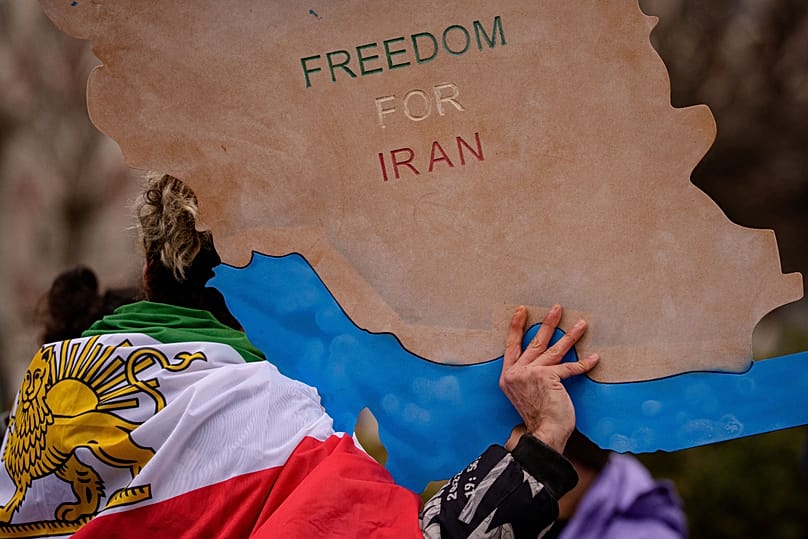
This evolving landscape carries a message for the Iranian opposition in the diaspora. This is increasingly seen as a moment that calls for restraint rather than retaliation, and coordination rather than internal rivalry.
Surveys suggest a meaningful shift in public sentiment toward opposition figures like Reza Pahlavi since last year's 12-day conflict.
By early 2026, that picture appears to have changed. The emergence of slogans such as "This is the last battle, Pahlavi is coming back," voiced by a younger generation with no lived memory of the pre-1979 era, signals a political reassessment shaped by present realities rather than historical nostalgia. It reflects an echo of voices from inside Iran rather than a projection imposed from outside.
This shift does not imply consensus on Iran's future system of governance, nor does it imply unconditional endorsement of any individual. Instead, it points to growing acceptance of a pragmatic arrangement for a transitional period — a minimum political understanding rather than full agreement — that can engage the international community as a credible interlocutor.
At a time when fragmentation risks weakening the broader cause, coherence may matter more than ideological precision.
Responsibility is not limited to political actors. It also lies with those who choose silence in order to avoid making a mistake — those who prefer not to "write the test" so there can be no errors. At some point, politeness must give way to responsibility.
History is not shaped by those who watch from the sidelines. Iranian-origin lawmakers, legal experts, artists, athletes and cultural figures bear particular responsibility.
Their credibility and reach allow them to frame Iran not as an abstract geopolitical problem, but as an urgent human rights crisis requiring action.
Europe: A test of unity and human rights credibility
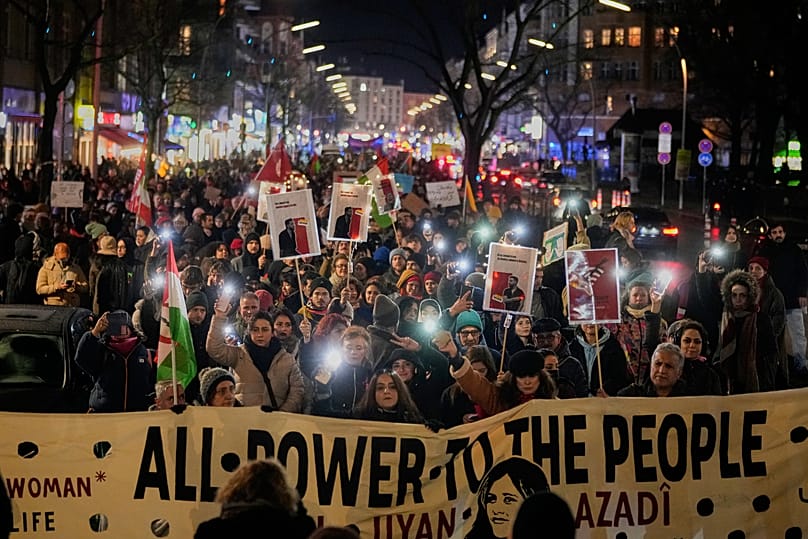
These questions have reached European institutions as well. On Monday, the European Parliament's delegation for relations with Iran convened a session chaired by Hannah Neumann, with participation from MEPs, European Commission representatives, the EU External Action Service, and Iranian human rights activists.
Participants reiterated calls to designate Iran's Islamic Revolutionary Guard Corps (IRGC) as a terrorist organisation under EU law. EU officials stressed, however, that such a decision lies with the European Council and would require unanimous agreement among all 27 member states.
Diplomatic sources say that while several countries support the designation, others — including France and Spain — remain opposed, citing legal precedent and diplomatic consequences. The EU's foreign policy apparatus continues to stress maintaining channels of dialogue with Tehran.
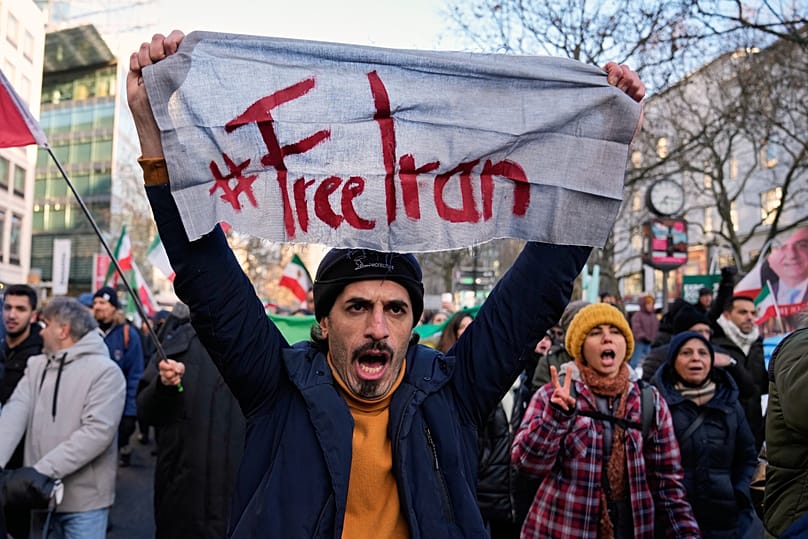
These developments are unfolding under close global scrutiny. Rising repression in Iran, growing military movements in the region, and Europe's limited response are being observed alongside another reality: at the same time, senior European officials are engaged in major trade negotiations in India, the world's most populous country.
For many observers, this contrast raises questions about priorities and risks undermining Europe's credibility on human rights at a moment when its voice could matter most.
The Iranian regime has shown no hesitation in using the death penalty to crush dissent, instil fear, and punish marginalised communities.
European Parliament President Roberta Metsola has called for Europe to act — and act fast. Responding to the reported scale of casualties, Neumann described the violence as deeply alarming and urged Europe to move beyond declarations toward concrete action — a position echoed by many within the Iranian diaspora.
Accountability beyond symbolism
Analysts caution that symbolic gestures alone are unlikely to alter realities on the ground. Statements, condemnations, and demonstrations — while understandable — often consume political energy that could otherwise be directed toward accountability mechanisms.
International legal tools remain underused: UN special procedures, fact-finding missions, cases based on universal jurisdiction, targeted sanctions, and international judicial processes. From this perspective, the priority for actors outside Iran should be increasing the global cost of repression — not offering guidance to protesters who already face existential risk.
Responsibility does not rest solely with political leaders. It also extends to those who choose silence out of caution — preferring inaction to the risk of being wrong. At a certain point, restraint becomes disengagement.
The central issue is not consensus on Iran's eventual political system, but whether political and civic actors are willing to acknowledge realities and act within them. Transitional periods often require imperfect but workable frameworks. Rejecting all flawed options may delay accountability rather than safeguard democratic values.
Iran is neither Syria nor Venezuela. Its people are not passive observers but a society that has paid a heavy price.
The question is no longer whether Iran is ready for change. It is whether the international community is ready to respond — clearly, decisively, and with accountability at its core.