














Rising temperatures are having a direct impact on male frogs’ mating calls, and females are taking note.
Climate change has become the secret wingman to male frogs, as experts discover a noticeable shift in their mating calls.
 ADVERTISEMENT
ADVERTISEMENT
ADVERTISEMENT
Around 41 per cent of amphibian species are threatened with extinction, meaning they’re the most endangered vertebrate class. It makes understanding their breeding patterns even more important in the face of worsening deforestation that devastates their habitats.
Now, researchers from the University of California, Davis have observed how global warming is affecting the sound and quality of frog ‘love songs’ which are used by males to attract a female. These melodic croaks are also used to inform females that the environmental conditions are suitable for reproduction – otherwise their eggs won’t survive.
How climate change impacts frog love songs
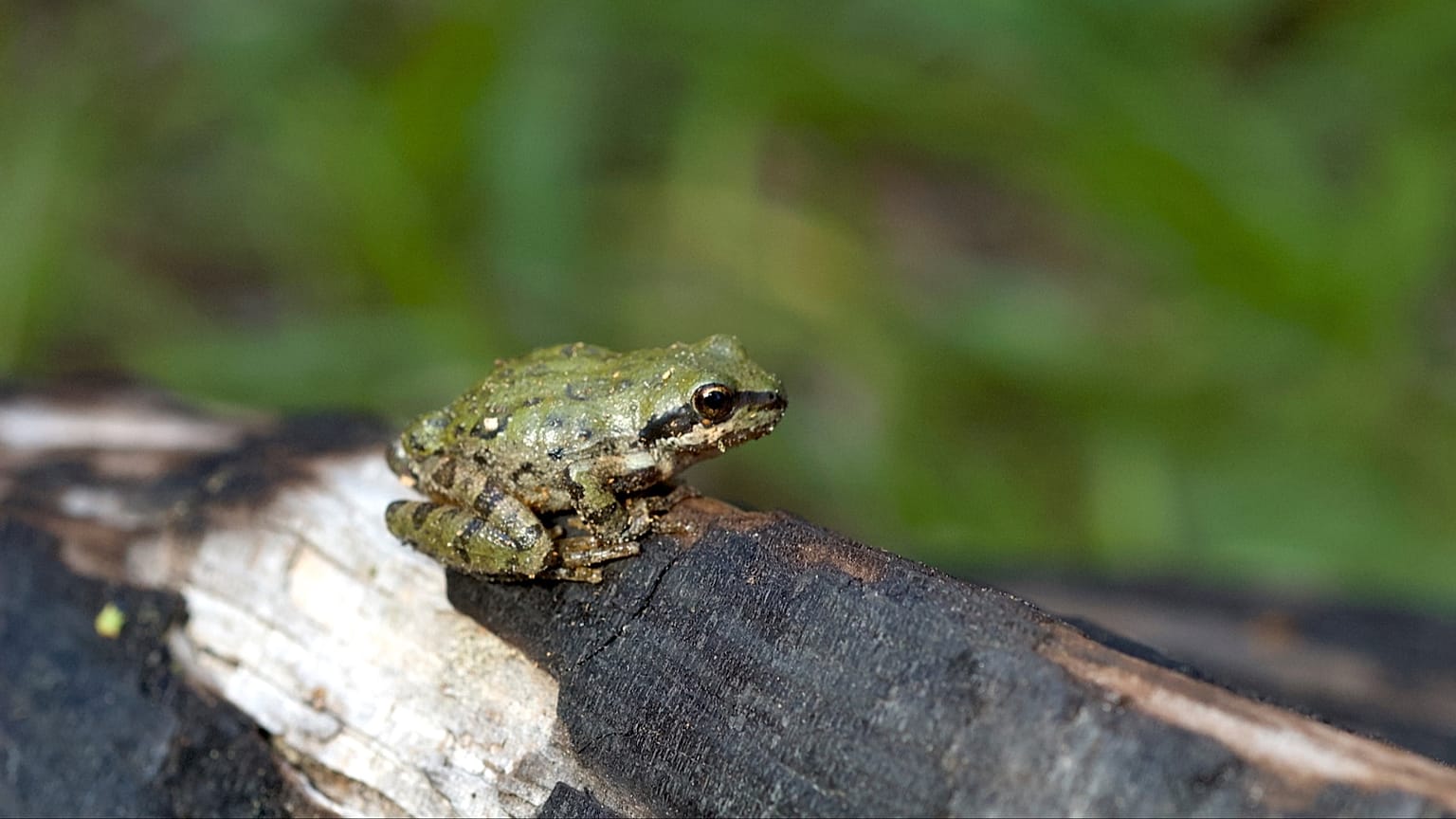
Lead author Julianne Pekny, who is now the director of conservation science with the Amphibian and Reptile Conservancy in North Carolina, took to the water’s edges of Quail Ridge Ecological Reserve and Lassen Field Station in California to record mating calls of the Sierran treefrog.
“The song of frogs really depends on the temperature of the environment,” she says. “As ponds warm, male frogs go from sounding slow and sluggish to faster and almost desperate. I can hear it with my human ears, and female frogs are also paying attention.”
Female frogs typically prefer faster love songs, which males produce in warmer temperatures.
“What’s interesting to me is this could be a process by which females are tracking how seasonality is changing over time,” Pekny says. “As the pond warms, the sexier male calls come earlier, too.”
Changing breeding patterns
As breeding time nears, male frogs congregate in large groups around ponds and other aquatic areas. They arrive earlier than female frogs to warm up their “voices”.
“It’s in the best interest for males to get to the pond as early as possible, before other males,” says co-author and herpetologist Brian Todd. “But it’s in the best interest of females to get there when it’s actually time to go and lay their eggs.”
UC Davis Professor Eric Post argues that the findings could potentially “revolutionise” the study of phenological responses to climate change.
“Males may be unwittingly signalling nuances about the appropriateness of environmental conditions for breeding, and females interpret these signals beyond the intentions of males,” he adds.
The study, published in the science journal Frontiers in Ecology and the Environment, may also apply to insects that produce mating calls, but more research is required to confirm this theory.