












These changes would be "irreversible over the coming decades and centuries", the researchers say.
Climate change is endangering the health of Europe’s oceans, and it’s not just marine life that is affected.
 ADVERTISEMENT
ADVERTISEMENT
ADVERTISEMENT
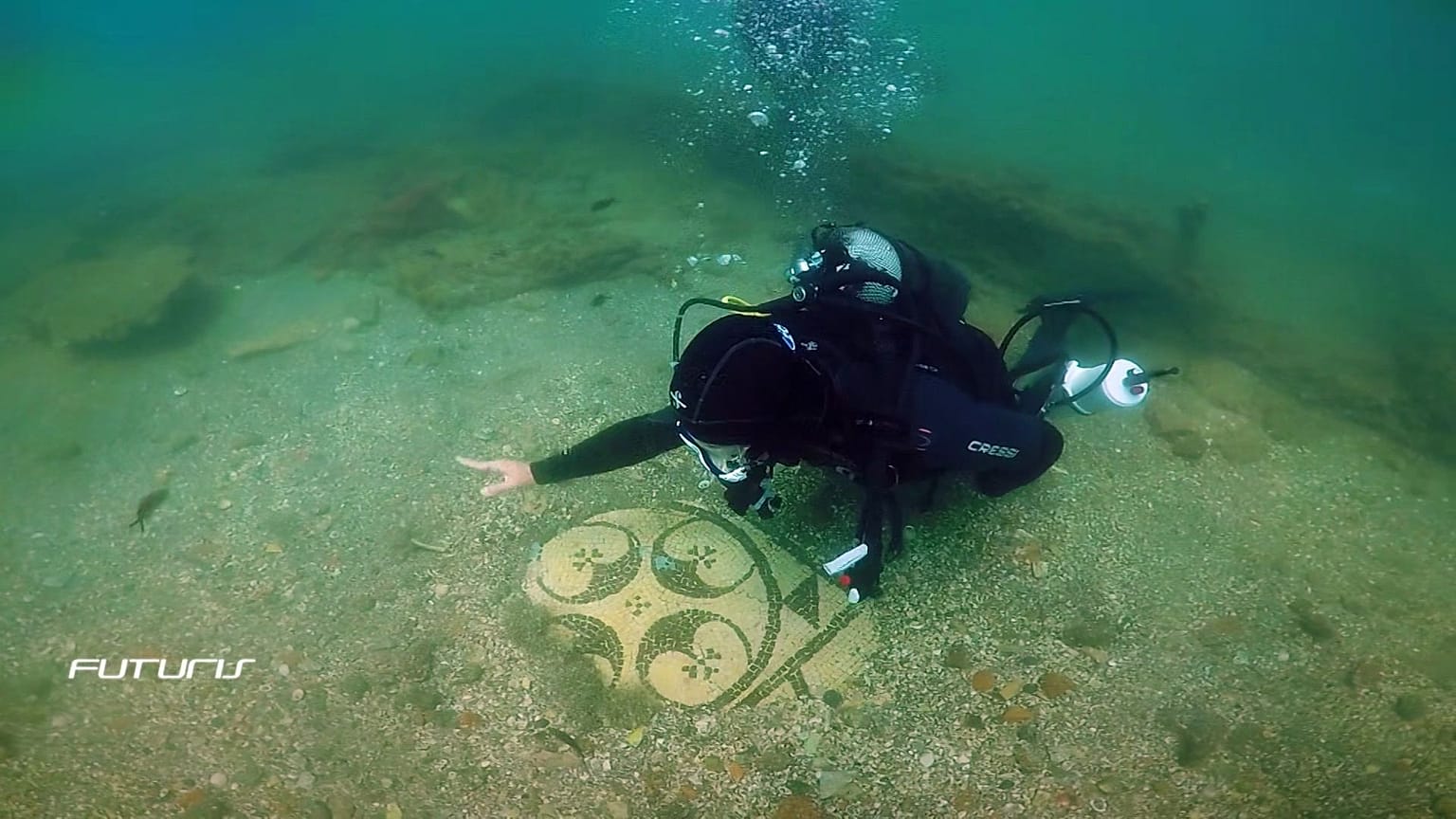
A new study warns that precious underwater cultural heritage is being threatened by ocean acidification.
The research found that materials that make up many archaeological treasures are at risk of deterioration when water pH levels drop.
‘Ocean acidification poses a severe challenge to protecting underwater cultural heritage’
The research, coordinated by the University of Padua in Italy, examined how ocean acidification, a direct consequence of climate change, can accelerate the decay of submerged archaeological sites.
The scientists studied how quickly historical materials deteriorate through dissolution and biological decay in marine environments, and then integrated these findings with large-scale climate models, lead researcher Luigi Germinario explains.
The results were concerning. While stone degradation was minimal in pre-industrial times and remains relatively limited today, rising emissions could trigger an exponential increase in deterioration rates.
These changes would be "irreversible over the coming decades and centuries, influenced by the materials' properties and shifting dynamics of biocolonisation” - the growth of microorganisms on the surfaces of submerged structures - Germinario told Italian national newspaper La Repubblica.
The study, published in Communications Earth & Environment, warned that "ocean acidification will pose a severe challenge to protecting underwater cultural heritage, making conservation and adaptation policies more urgent than ever."
Simulations in naturally acidic waters show deterioration risk
The researchers conducted field testing underwater to simulate future scenarios of acidification.
The team worked in the waters off the Italian island of Ischia, where the volcanic subsoil creates natural CO₂ ‘vents’ that emit nearly pure carbon dioxide at ambient temperature, making it a living laboratory for studying ocean acidification.
"It's a natural setting that lets us see what scenarios predicted for the coming decades and centuries actually look like, even at extreme acidification levels," Germinario explained.
The team submerged panels containing samples of various stone materials commonly found in cultural heritage.
These panels were placed at different points around the CO₂ vents, exposing them to a wide range of pH levels and acidification conditions.
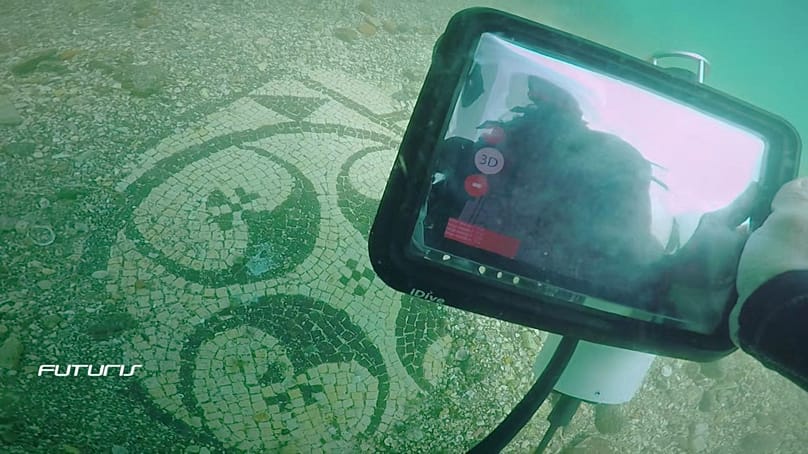
Back in the lab, the researchers used an optical profilometer - a high-resolution instrument that creates three-dimensional surface models - to visualise and measure the effects of different pH levels on dissolution and erosion.
“This allowed us to simulate what could happen to a stone artefact in a submerged archaeological site, both now and in the future," Germinario said.
‘Even minor surface degradation can mean irreversible loss of information’
The findings paint a worrying future for Europe’s underwater cultural heritage.
The most vulnerable artefacts are those rich in calcium carbonate - like marble and limestone - especially when they're highly porous or fine-grained.
"These materials have a chemical composition similar to coral, whose vulnerability to climate change has long been recognised by scientists and the public," the researchers note.
The study found that artefacts at greatest risk are those whose historical or artistic value depends on minute, refined details, like sculptural elements, engravings and mosaics.
Italy is home to some spectacular underwater treasures, such as the Baia Archaeological Park, with mosaics and marble floors from an ancient Roman city, and the Roman port of Egnazia in Puglia.
“Even seemingly minor surface degradation can mean irreversible loss of information," said Germinario.