

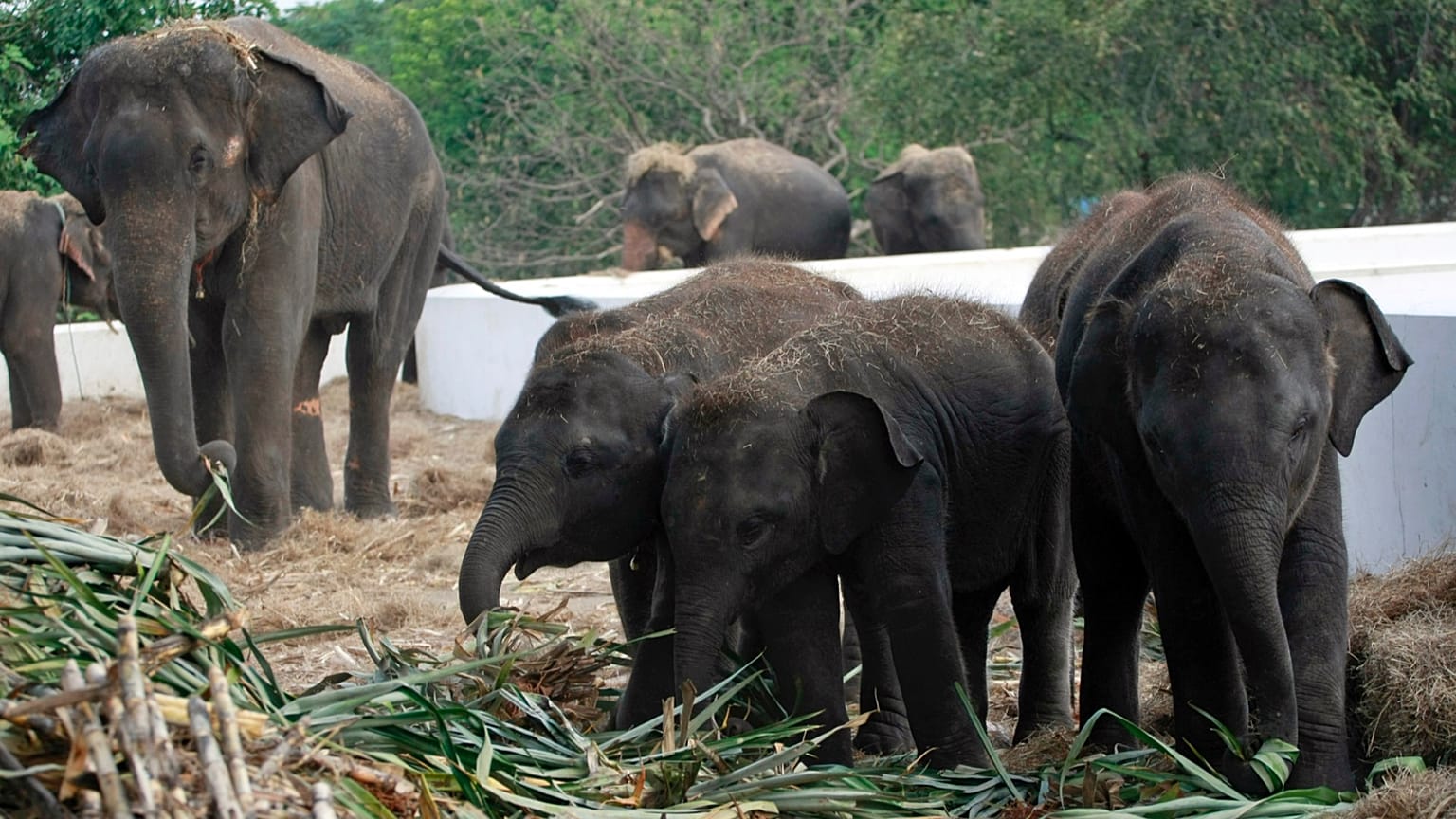













In a bid to prevent human confrontations, which can turn deadly, Thailand is administering birth control vaccines to wild elephants.
Thailand is using a birth control vaccine on elephants in the wild to try and curb a growing problem where human and animal populations encroach on each other.
 ADVERTISEMENT
ADVERTISEMENT
ADVERTISEMENT
It's an issue in areas where farms spread into forests, meaning elephants are squeezed out of their natural habitat.
The initiative is part of efforts to address confrontations that can turn deadly. As farmers cut down forests to make more farmland, elephants are forced to venture out of their shrinking habitats in search of food.
Last year, wild elephants killed 30 people and injured 29 in Thailand, according to official figures, which also noted more than 2,000 incidents of elephants damaging crops.
Sukhee Boonsang, director of the Wildlife Conservation Office, recently told news agency AP that controlling the wild elephant population has become necessary as numbers of elephants living near residential areas rises sharply, increasing the risk of confrontations.
Thailand's elephant issue: Is birth control the solution?
The office obtained 25 doses of a US-made vaccine and conducted a two-year trial on seven domesticated elephants - using up seven doses of the vaccine - which yielded promising results. Boonsang says that the vaccine doesn’t stop female elephants from ovulating but prevents eggs from being fertilised.
Then, in late January, the vaccine was administered to three wild elephants in eastern Trat province, he explains, adding that authorities are now determining which areas to target next as they prepare to use up the remaining 15 doses.
The vaccine can prevent pregnancy for seven years and the elephants will be able to reproduce again if they don’t receive a booster after that time expires. Experts will closely monitor the vaccinated elephants throughout the seven-year period.
'Undermining' conservation efforts
The vaccination drive has drawn criticism that it might undermine conservation efforts.
Thailand has a centuries-old tradition of using domesticated elephants in farming and transportation. Elephants are also a big part of Thailand’s national identity and have been officially proclaimed a symbol of the nation.
Boonsang says that the programme only targets wild elephants in areas with the highest rates of violent human-elephant conflict. Official statistics show a birth rate of wild elephants in these regions at approximately 8.2 per cent per year, more than double the national average of around 3.5 per cent.
It is believed that around 800 out of the nation’s approximately 4,400 wild elephants live in these conflict-prone areas.
“If we don’t take action, the impact on people living in these areas will continue to grow until it becomes unmanageable,” Boonsang says.
Reducing elephant-human conflict
In addition to the contraception vaccine, authorities are said to be implementing other measures to reduce conflict, such as creating additional water and food sources within the forests where elephants live, constructing protective fencing, and deploying rangers to guide elephants that stray into residential areas back into the wild.
A court-ordered operation earlier this month to remove wild elephants that have repeatedly clashed with locals in northeastern Khon Kaen province sparked a public outcry after one elephant died during the relocation process.
An initial autopsy revealed that the elephant died from choking after anaesthesia was administered ahead of the move, officials said.
The Department of National Parks, Wildlife and Plant Conservation carried out the relocation effort, and its director general, Athapol Charoenshunsa, expressed regret over the incident while insisting that protocol was followed properly. He said an investigation was underway to prevent such incidents from happening again.