















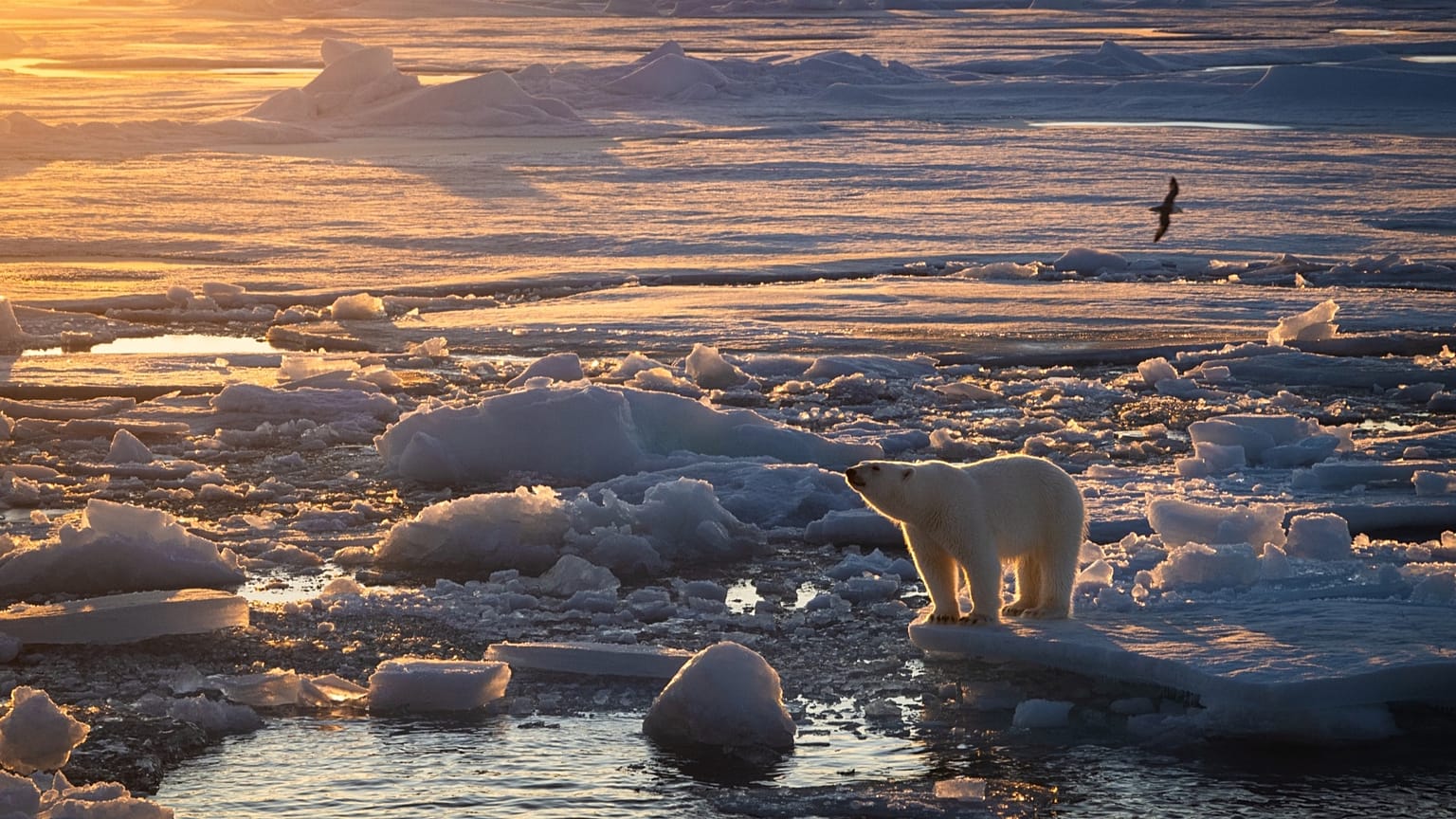













Ice melt could be temporarily helping polar bears hunt more efficiently, but scientists say it may soon hinder populations.
In 2015, a terrifying image of a “horribly thin” polar bear took the world by storm - sparking conversation on how human-driven climate change was pushing the species toward extinction.
 ADVERTISEMENT
ADVERTISEMENT
ADVERTISEMENT
While there was no evidence that the emaciated bear - which was shared more than 52,000 times in the first two months of being published - was underweight specifically due to global warming, polar bears are classed as a vulnerable species by the IUCN.
A 2020 study predicts that by 2100, it is likely that there will be local extinctions of polar bears from some parts of the Arctic, even if greenhouse gas emissions are reduced.
But for polar bear populations living around the Norwegian island of Svalbard, things are looking quite different.
Are Svalbard polar bears getting fatter?
A new study published in Scientific Reports found that the “body conditions” of Svalbard polar bears have improved despite significant sea ice losses in surrounding waters. This differs from previously published observations of polar bear population declines coinciding with melting ice.
The temperature in the Barents Sea region around Svalbard has increased by up to 2℃ per decade since 1980. However, following a 2004 census, the Barents Sea polar bear population numbered around 2,650 individuals - and until recently appeared not to shrink in size.
Researcher Jon Aars and colleagues investigated the potential cause of the stable population using body measurement records between 1992 and 2019. They compared changes in the bears’ body composition index (BCI), which is often used as an indicator of fat reserves and body condition.
The study found that although the number of ice-free days increased by approximately 100 over a 27-year period, the mean BCI of the adult polar bears increased following the year 2000. In layman’s terms, the bears’ fat reserves increased as ice levels decreased.
How ice melt is impacting polar bears
Scientists say this could be attributed to the recovery of land-based prey sources that were previously over-exploited by humans (such as reindeer and walrus).
Another theory is that sea ice loss may lead to prey animals such as ringed seals concentrating in smaller areas of sea ice - which makes hunting much more efficient for the bears.
However, the authors warn that further reductions in sea ice may start to negatively impact the Svalbard populations by increasing the distances they have to travel to access hunting grounds. This has already been observed in other polar bear populations.
It means scientists are keen to conduct more research to understand how different polar bear populations will adapt to a warming Arctic.