












Passengers cannot wear seat belts to allow for fast exit in case of an accident.
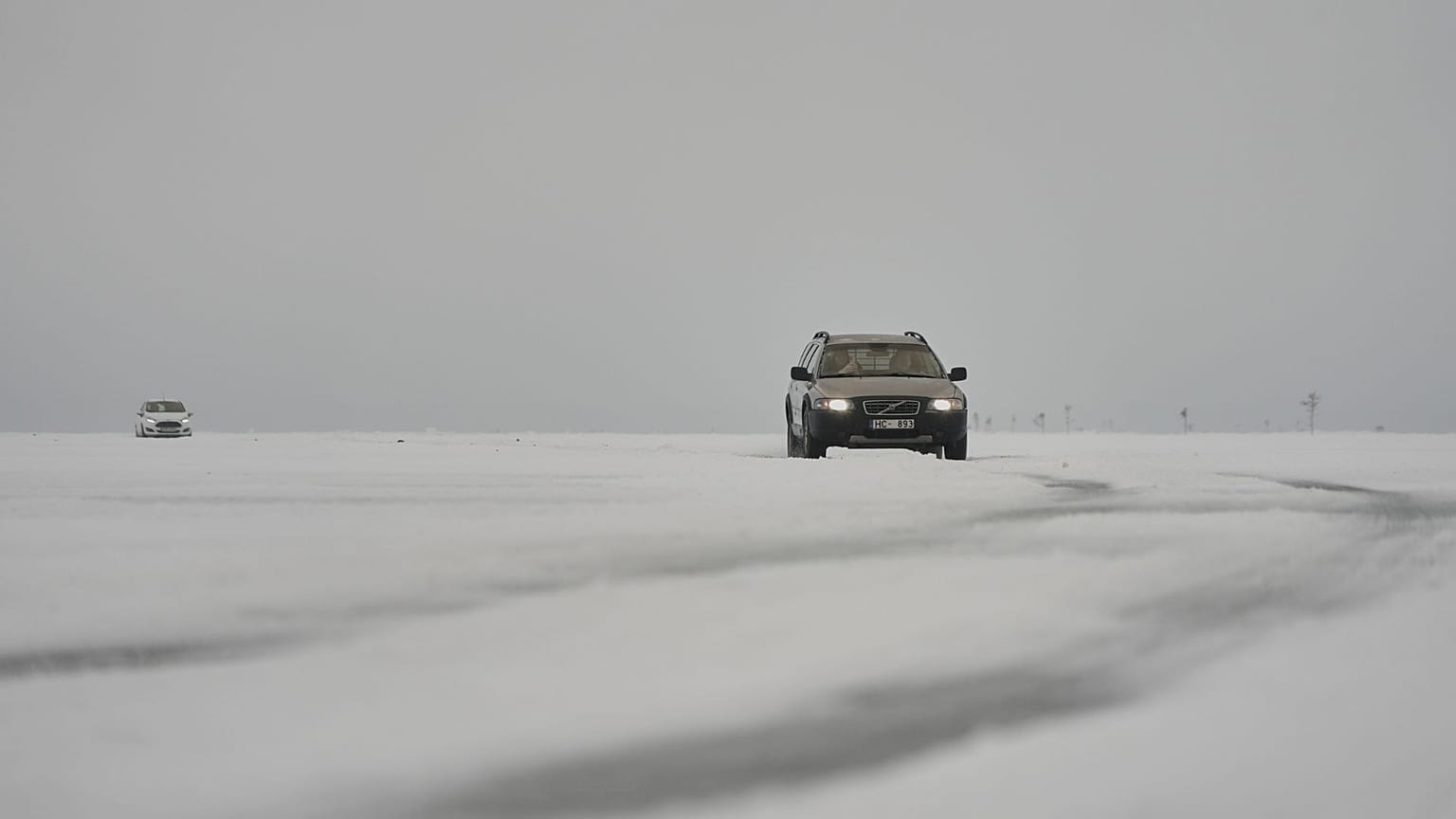
Temperatures in northern Europe have been so low that citizens of Estonia can now drive across a 20-kilometre stretch of frozen sea linking the country's two main islands.
 ADVERTISEMENT
ADVERTISEMENT
ADVERTISEMENT
The so-called 'ice road' connecting the islands of Saaremaa and Hiiumaa, located in western Estonia between the Baltic Sea and the Gulf of Riga, was officially opened on Sunday (8 February) with a line of cars waiting to use it that afternoon.
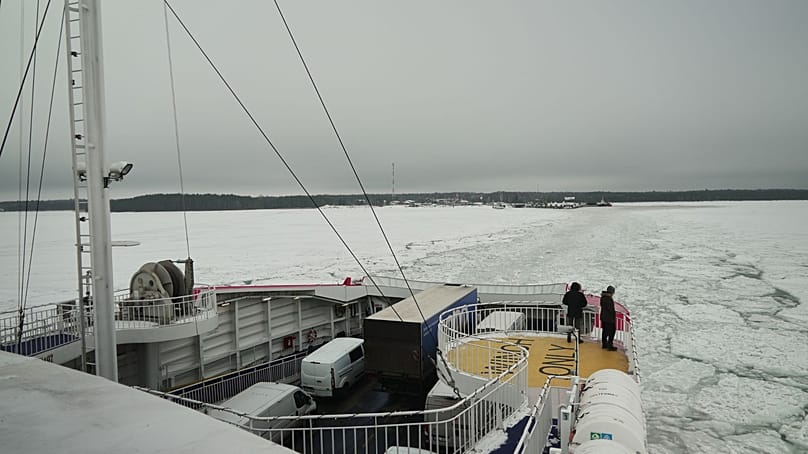
Authorities decided to open the ice road after locals had spontaneously began driving across the frozen sea, exposing themselves to serious risks. Ferries had struggled to keep up regular service in the frozen sea following weeks of temperatures dropping to minus 10 degrees Celsius.
What's behind Northern Europe's cold snap?
Warm Arctic conditions and shifting atmospheric patterns are associated with a disruption of the polar vortex – the ring of strong winds that normally traps the coldest air over the North Pole. Sometimes when the vortex weakens or becomes distorted, Arctic air can spill southward – as is being seen in Northern and Central Europe, as well as parts of the United States.
Scientists say persistent high-pressure 'blocking' systems have helped lock this cold air in place, preventing milder Atlantic air from moving in. Some researchers also suggest that record-low Arctic sea ice and a reduced temperature difference between the Arctic and lower latitudes may be contributing to a weaker, more meandering jet stream – a pattern that can make cold spells both more likely and longer lasting, though this link remains debated.
As temperatures well below the seasonal average hit western Estonia, the freezing of the Baltic Sea has further reinforced the chill. Normally, the water releases heat that warms the air – but instead, the ice is now helping to sustain the deep freeze.
Come snow or shine: Going to sea is 'part of our culture'
People living on the smaller island of Hiiumaa, with a population of 9,000, travel to Saaremaa, population 31,000, for shopping, a cup of coffee, or to drop off kids at school. Getting to the larger island also ensures connection to mainland Estonia.
While opening the ice road came out of necessity, Hergo Tasuja, the mayor of Hiiumaa, says it's also “part of our culture.”
“For generations and generations, local people who live here, especially those who live near the sea, swim and use boats in the summertime,” Tasuja told news agency The Associated Press. “And in winter, it's in their blood to go to the sea" and step out on the ice, he said.
Is Estonia's ice road safe to use?
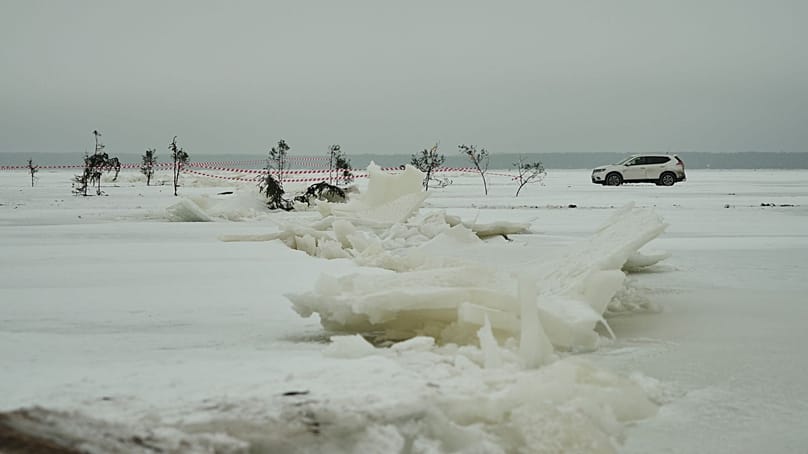
The road is essentially a marked corridor on the frozen sea where specialists have determined the ice is thick enough to sustain the weight of driving cars.
Yet preparing the road is not easy, said Marek Koppel, a road maintenance supervisor at Verston Eesti, the Estonian construction company in charge of building and managing the ice road. Workers have to measure ice thickness every 100 metres to determine the areas with more than 24 centimetres of ice, the minimum required for safety. They also smooth over ridged ice and cracks. Weather conditions and the solidity of ice are monitored around the clock and the route amended accordingly.
A vehicle cannot be heavier than 2.5 tonnes and it has to drive either below 20 kph, or between 40 and 70 kph – anything in between can create a vibration that damages the ice. Cars are not allowed to stop and need to maintain a safe distance from one other. Passengers cannot wear seat belts and doors must be easy to open, to allow for fast exit in case of an accident.
“The road was pretty good, it was easy to ride,” said Alexei Ulyvanov, who lives in nearby Tallinn and traveled to the islands to show his children “that it's possible to ride a car over the sea”.
According to Tasuja, an ice road was last used to connect the islands some eight years ago. Since then, the winters have been too warm.
Verston, the construction company, said authorities contracted them to open two more ice routes this week, this time linking mainland Estonia to two smaller islands.