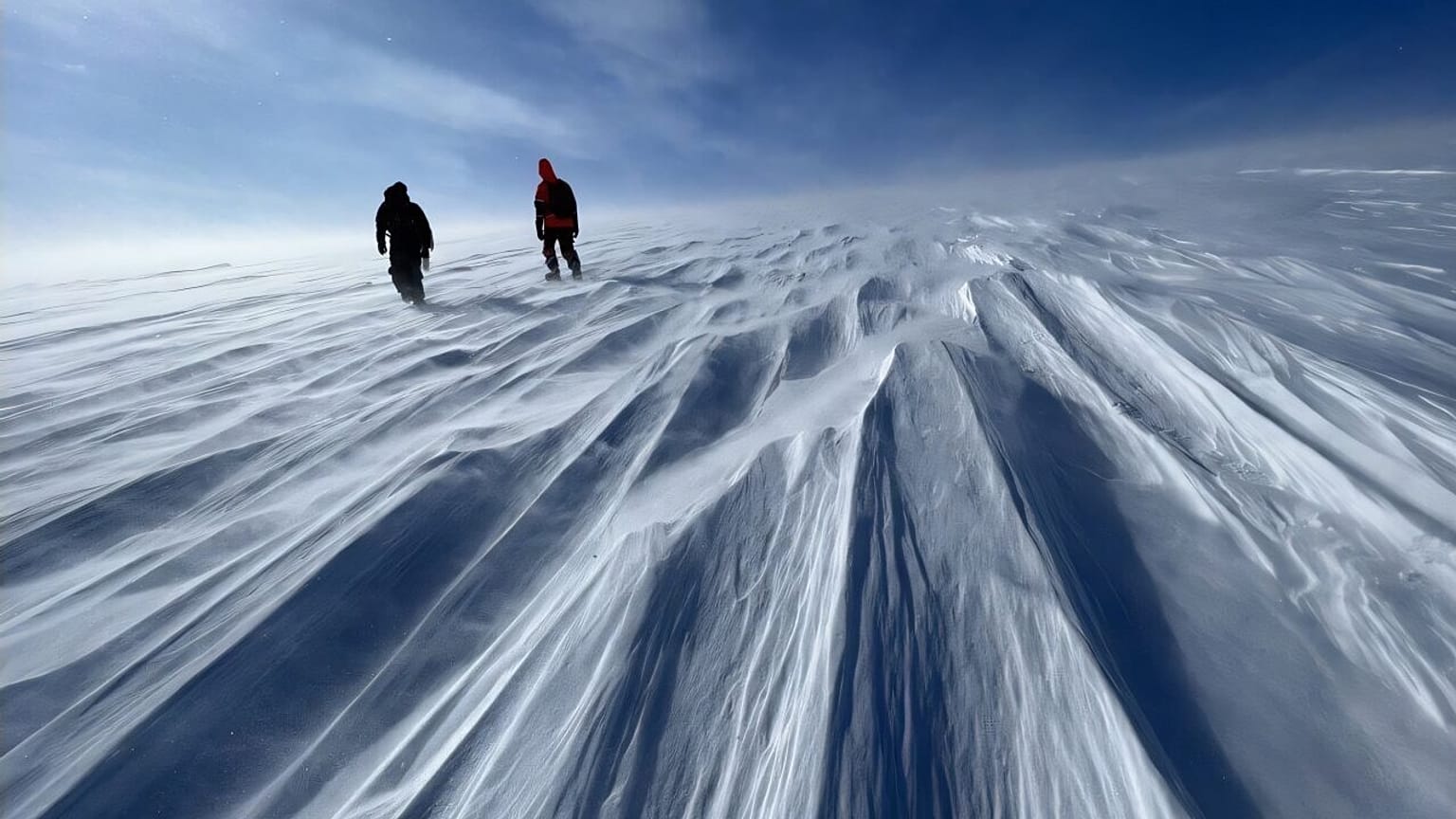













An ice dome the size of Luxembourg melted around 7,000 years ago. Is history about to repeat itself?
Scientists warn that it is “only a matter of time” until Greenland’s Prudhoe Dome starts to melt away – as heat-trapping emissions continue to bake the planet.
 ADVERTISEMENT
ADVERTISEMENT
ADVERTISEMENT
The huge 500 metre thick ice cap is roughly the same size as Luxembourg, covering around 2,500 square kilometres. Its demise would unleash catastrophic consequences around the world, capable of pushing sea level rise by up to 73 centimetres.
To put this in perspective, Copernicus states that for every centimetre of sea level rise, around six million more people are exposed to coastal flooding.
Greenland’s Prudhoe Dome melted before
The warning follows a 2023 project led by GreenDrill and the University at Buffalo to collect rocks and sediments buried beneath the Greenland Ice Sheet. Their findings have been published in Nature Geoscience.
Researchers pulled samples from 508 metres below the surface and used a technique called luminescence dating. When sediment is buried, electrons can become trapped inside until the sediment is exposed to light again, allowing scientists to estimate the last time they were exposed to daylight.
They found that the ice dome had last melted around 7,000 years ago, during the early Holocene period. This is much more recent than previously known and suggests the dome is “highly sensitive to mild temperatures”.
The Holocene period spans the last 11,7000 years, beginning after the last major ice age. It is characterised by a relatively warm climate, with temperatures around 3-5℃ higher than they are today.
‘Human-induced climate change’
Some projections warn that, unless emissionsare slashed, the world could reach those levels of warming by the year 2100. The research team hopes to drill on the Ice Sheet again to help them predict the rate of melting and estimate exactly how much warming in the past led to the ice melting away.
“This is a time known for climate stability, when humans first began developing farming practices and taking steps toward civilisation,” says Jason Briner, professor and associate chair of Earth sciences, who co-led the study.
“So, for natural, mild climate change of that era to have melted Prudhoe Dome and kept it retreated for potentially thousands of years, it may only be a matter of time before it begins peeling back again from today’s human-induced climate change.”