












Air frying high-fat foods such as bacon produces fewer volatile organic compounds and other airborne particles than deep-fat frying.
Your air fryer may be secretly helping the planet, even if you have a penchant for fatty foods.
 ADVERTISEMENT
ADVERTISEMENT
ADVERTISEMENT
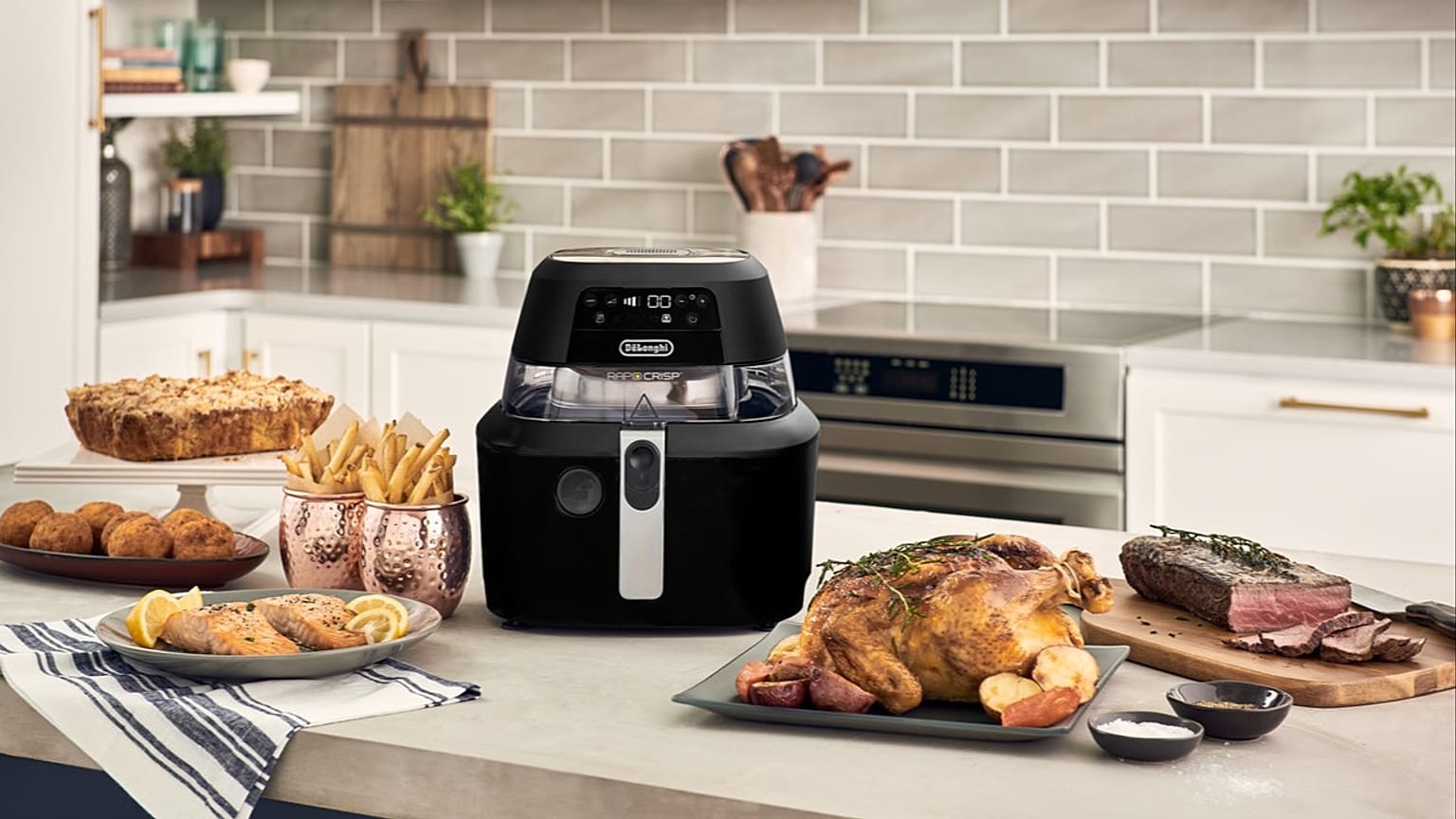
The mini-appliances have boomed in popularity in recent years, quickly becoming a mainstay in kitchens across Europe. Air fryers often use less electricity compared to conventional ovens, meaning they’re a great way to keep energy bills low in the face of spiralling costs.
Now, new research says air fryers may be better for indoor air quality too - with one key condition.
Air fryers produce fewer VOCs
Researchers from the University of Birmingham have used custom-made air quality chambers to measure volatile organic compounds (VOCs) and other airborne particles that are emitted during cooking. VOCs are carbon-based chemicals emitted from items such as paint, cleaning products and materials that are often found in greater concentrations indoors.
The team used a commercially available 4.7 litre air fryer for the experiments, cooking batches of frozen fried, fresh low-fat and fresh high-fat foods to compare emissions.
Published in the American Chemical Society’s journal ES&T Air, the study is one of the first of its kinds exploring the spectrum of pollutants emitted from these mini-machines.
Scientists found that frozen onion rings, smoked bacon and unsmoked bacon produced the highest levels of cooking-related emissions. It is thought this is due to their high-fat content.
However, cooking high-fat foods in a deep-fat fryer produces 10 to 100 times higher levels of VOCs.
“This study is the latest that shows the potential benefits for indoor air quality of using air fryers for cooking,” says lead author Professor Christian Pfrang.
“While our previous study only looked at one type of food (lean chicken) we wanted to look at a greater range of foodstuffs including ones with higher fat content to see how they compare specifically when cooked in an air fryer.”
Why you should always clean your air fryer
Food residue on air fryers can increase the amount of harmful particles they emit, making it essential to keep your appliance clean.
However, even after cleaning, researchers found that the air fryers began emitting VOCs and ultra-fine particles during an empty tray test to look at residual emissions. Tests with an air fryer that had been used more than 70 times revealed 23 per cent more cooking-related VOCs and more than twice as many ultra-fine particles emitted compared to new fryers.
This has been attributed to the build-up of residues such as grease on the air fryer that the team could not reach for cleaning.
“Repeated use of air fryers without being able to clean the more inaccessible cooking surfaces can negate some of the benefits for indoor air quality,” Pfrang adds.
“While the effects are not producing emissions that families should be concerned about, this finding does make a case for air fryer design that allows for a deep clean to keep emissions low in the long term.”