

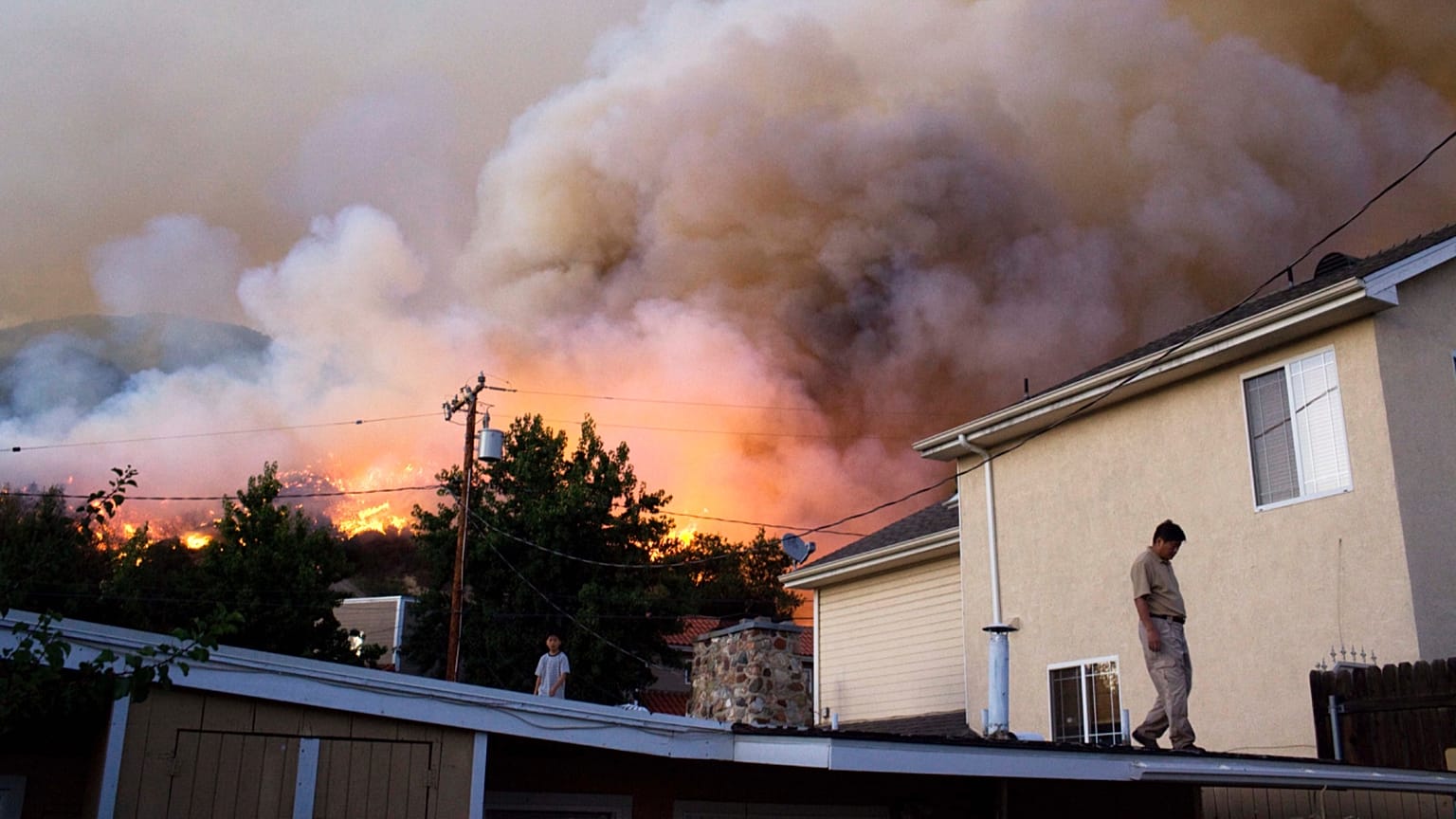













Residents who return to their homes following wildfires may be unknowingly exposing themselves to harmful chemicals.
The dangers of wildfires do not end when the flames are extinguished, and the long-term threat may be putting thousands at risk.
 ADVERTISEMENT
ADVERTISEMENT
ADVERTISEMENT
Last year saw deadly blazes tear through Europe, burning more than a million hectares of land. This is four times as much land as in 2024 and equates to a surface area larger than the whole of Corsica.
More than 1,800 forest fires were declared, emitting more than 38 million tonnes of CO₂. Deadly blazes in Portugal and Spain accounted for over two-thirds of EU devastation, and attribution experts say they were made 40 times more likely due to climate change.
Now, researchers warn that even after fires are extinguished, residents who return to their homes may still be at risk of exposure to known carcinogens.
The aftermath of wildfires
A new study, published in Environmental Science & Technology Letters, analysed the impact of the 2025 Los Angeles County Wildfires, which destroyed more than 18,000 homes, killed at least 31 people, and resulted in around 200,000 people being evacuated.
On the second day of the blaze, researchers started collecting air samples indoors and outdoors. They continued through the post-fire period, ending their fieldwork on 18 February – 18 days after the fires were extinguished.
After analysing the samples, scientists found that the levels of volatile organic compounds (VOCs) were significantly higher in the post-fire period compared to when the fire was burning. They were particularly evident in uninhabited homeswithin burn zones, suggesting ongoing indoor emissions from smoke-impacted materials.
How harmful are VOCs?
Exposure to VOCS such as benzene, toluene, ethylbenzene and xylenes (BTEX) has been linked to a series of health conditions, ranging from short-term irritation to cancer and organ damage. However, this depends on the concentration and duration of exposure, as well as individual sensitivity.
Indoor concentrations of VOCs can be up to ten times higher than outdoors, according to the American Lung Association. They can be found in common household products, such as cleaning sprays, paints, and solvents.
"Some of these are carcinogenic and definitely harmful to human health," says Yifang Zhu, professor in the department of environmental health sciences and a co-author of the study.
"What made these urban wildfires particularly concerning was the potential toxicity of the resulting smoke, because VOCs are ubiquitous in residential areas, with common sources including building materials and household products, like cooking and cleaning supplies."
The study argues that regularly opening windows, operating central heating, ventilation and air conditioning systems with filters rated at least Minimum Efficiency Reporting Value (MERV) 13 can help reduce one's exposure to VOCs. Using purifiers with charcoal filters can also help.