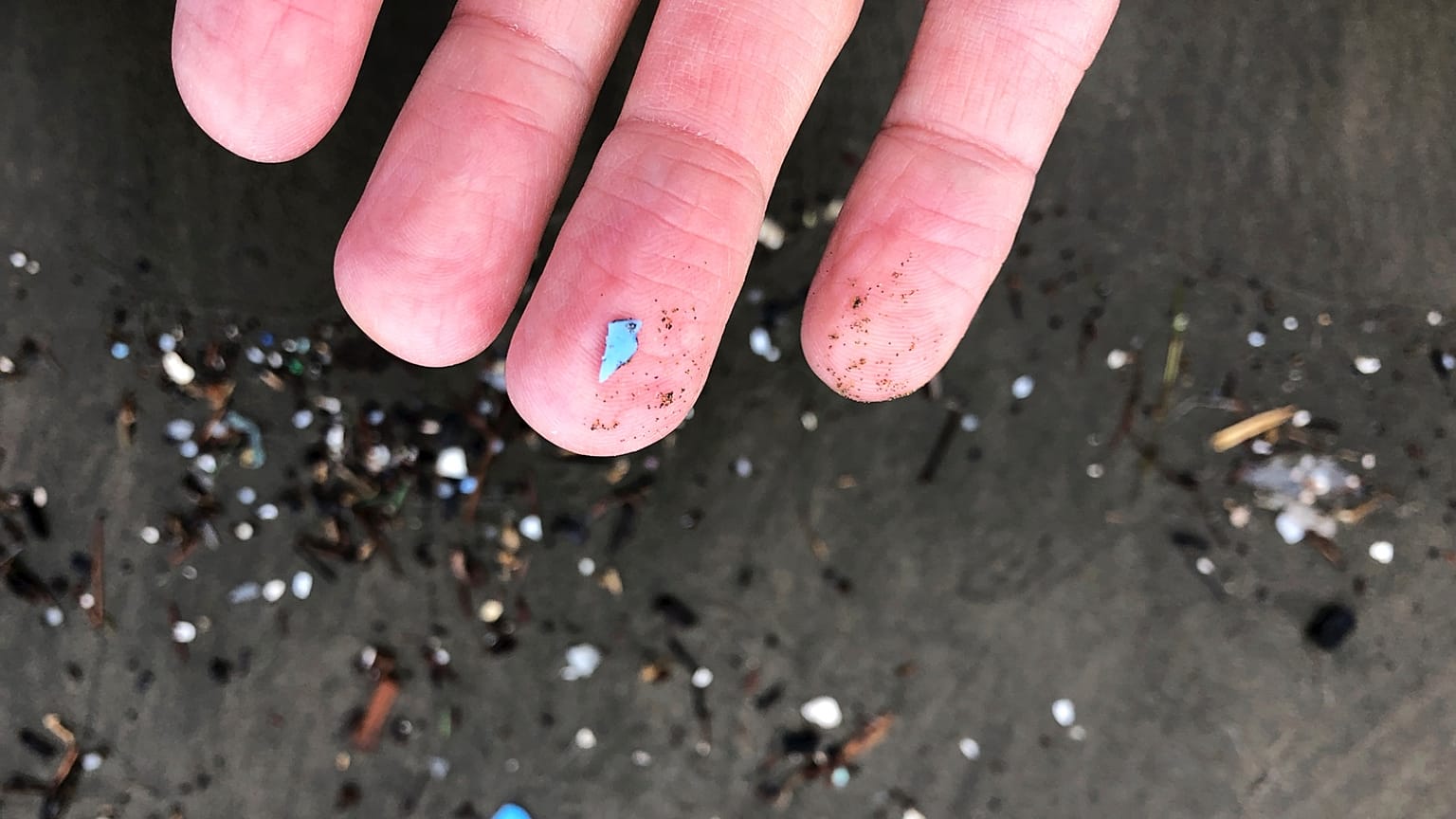













Microplastics are interfering with the ocean’s role in regulating Earth’s temperature, researchers warn.
Microplastics are impairing the ocean’s ability to absorb heat-trapping gases from the atmosphere. Scientists are calling for “urgent global action”.
 ADVERTISEMENT
ADVERTISEMENT
ADVERTISEMENT
According to the United Nations, the ocean generates 50 per cent of the oxygen we need, sequesters 30 per cent of all carbon dioxide emissions and captures 90 per cent of the excess heat generated by these emissions. This makes it the planet’s largest carbon sink, acting as a vital buffer against global warming.
However, a new study, published in the Journal of Hazardous Materials: Plastic, warns that the link between microplastics and the ocean’s role in regulating Earth’s temperature has long been overlooked.
How do microplastics affect the ocean?
Researchers from the University of Sharjah in the United Arab Emirates analysed a total of 89 studies to “critically synthesise” knowledge on microplastics and ocean health.
They found that microplastics can disrupt marine life, release greenhouse gases when they degrade and can even weaken the “biological carbon pump”. This term refers to a natural process in the ocean which transfers carbon from the atmosphere into the deep-sea layers.
The study found that microplastics interfere with this process by reducing phytoplankton photosynthesis (where tiny marine organisms use sunlight, water and CO2 to create energy for themselves, releasing oxygen) and impairing zooplankton metabolism (where zooplankton like krill eat algae and bacteria, which are then eaten by other zooplankton, insects and fish).
“Over time, these changes could lead to ocean warming, acidification, and biodiversity loss, threatening food security and coastal communities worldwide,” warns Dr Ihnsanullah Obaidullah, associate professor of integrated water processing technologies and the study's corresponding author.
If the ocean loses its power to absorb carbon dioxide and excess heat, it could end up releasing emissions back into the atmosphere – switching from a carbon sink to a carbon producer. This has already happened to all of the planet’s main rainforest regions in South America, Southeast Asia and Africa.
It comes as scientists predict that 2026 is likely to become the fourth year on record where temperatures hit 1.4°C above preindustrial levels, edging dangerously close to the 1.5°C limit outlined in the Paris Agreement.
An ‘integrated approach’ to ending microplastic pollution
A 2025 UN report estimates that annual plastic production exceeds 400 million tonnes, half of which is designed for single use. Without intervention, annual plastic production could triple by 2060.
While plastics are seen as essential for certain items such as plane parts, electronics and consumer goods, researchers warn that excessive consumption poses serious threats to environmental sustainability and food safety.
As a result, the study calls for an integrated approach, stressing that microplastic pollutionand climate change cannot be addressed in isolation.
“In this way, the effects of climate change could be lessened by taking appropriate action to slow down the production of microplastics,” it states.
Dr Obaidullah adds that the team’s next step will be to quantify the climate impact of microplastics and develop “integrated solutions.