





























From plummeting house prices to insurable homes, climate change is impacting the property market around the world.
Climate change-fuelled risks have now become a “crucial factor in home-buying decisions” for more than 80 per cent of potential buyers.
 ADVERTISEMENT
ADVERTISEMENT
ADVERTISEMENT
That’s what Zillow, the US’s largest real estate listings site, said in September last year as it launched a new online tool in collaboration with environmental nonprofit First Street.
The Zillow climate risk score allowed potential buyers to assess the risk of wildfire, flood, extreme heat, wind and poor air quality for around one million properties through a colour-coded interactive map.
But, 14 months later, Zillow has hidden the feature on its site following reported complaints from real estate agents and homeowners that it was harming house sales. The listings now contain outbound links to First Street, rather than showing the information directly on specific sale listings.
It highlights how fragile the property market has become amid one of its biggest threats yet: the climate crisis.
Wildfires trigger rent gouging accusations
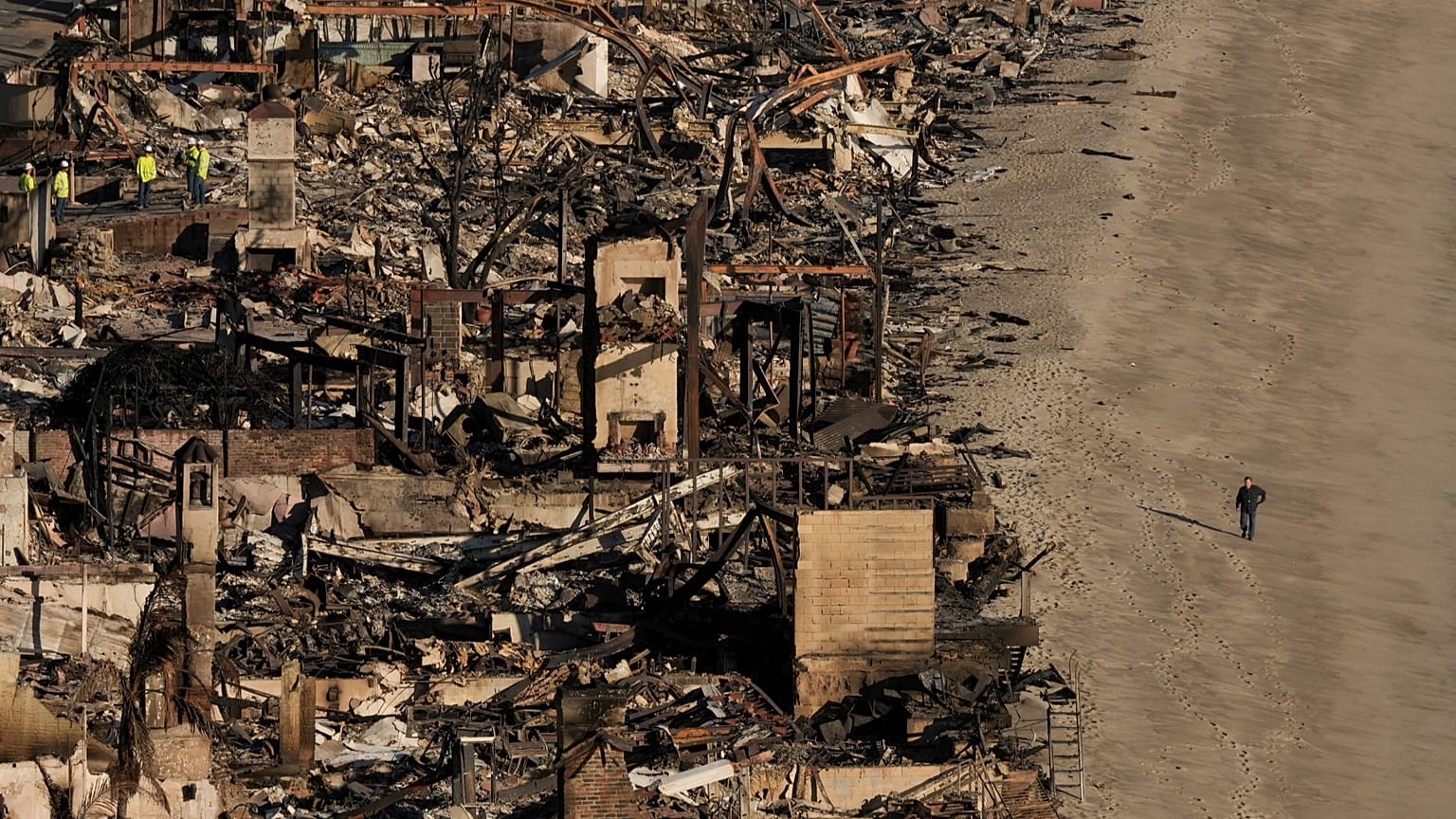
2025 kicked off with record-breaking blazesthat ripped through Los Angeles, California, destroying more than 10,000 homes and killing at least 28 people.
Fanned by strong Santa Ana winds and burning through tinder-dry vegetation, the blaze rapidly spread into urban areas and racked up more than $30 billion (around €25.85 billion) worth of damage.
Researchers have since confirmed that the hot, dry and windy conditions that fuelled the extreme fires were about 35 per cent more likely due to climate change.
Despite state law banning price increases of more than 10 per cent on essentials such as food and housing during national emergencies, hundreds of landlords were accused of “rent gouging”.
This is where rents for a property are set too high, or existing tenants face harsh rent hikes due to higher demand.
Now, California has become the first US state to require sellers of homes built before 2010 to disclose the property’s fire risk as well as what measures they have taken to reduce vulnerabilities.
But such protections won’t help stabilise house prices or prevent residents from uprooting. Over in Florida, growing concerns over severe weather during the Atlantic hurricane season and soaring insurance costs have resulted in many residents moving.
The Florida Climate Survey found that 36 per cent of 1,4000 respondents statewide had moved or were considering moving in part or fully due to the threats of hurricanes, flooding and extreme heat.
How house prices are impacted by climate change
In Europe, climate change-fuelled disasters are also triggering volatile movements in the property market.
A recent study published in SSRN analysed sale and rental prices in mainland Spain’s 47 provincial capitals between 2009 and 2024 to discover the extent to which extreme heat is having an impact on property value.
It comes as Spain sweltered through its hottest summer on record, with temperatures reaching a dangerous 45.8℃ during a heatwave on 17 August. The scorching temperatures paved the way for raging wildfires, which burned through more than 380,000 hectares of land in the country this year.
Scientists warn that the hot, dry and windy conditions that fuelled the fires are now around 40 times more frequent and around 30 per cent more intense than they would be in a world without climate change.
Researchers found that each additional day where temperatures exceed 35℃ translated into a drop of €1.40 per square metre in sales prices, and €0.0059 in monthly rental prices within the same province.
With around 700,000 homes for sale in 2024, this equates to an annual loss of approximately €117.6 million per year in sales, and €500,000 in rental prices.
However, the study also found that in the cooler regions of Spain, rising temperatures have actually increased sales prices by €2.80 per square metre, and rentals by €0.012.
For every 1℃ of warming, the atmosphere can hold around seven per cent more water vapour – increasing the likelihood of intense rainfall.
In England, this means a staggering 6.3 million homes are now in areas at risk of flooding from rivers, the sea or surface water.
Uncertainty is ’rippling’ through the property market
Rachel Ollington, a property consultant and former estate agency owner, tells Euronews Green that climate change may feel like a “long-term issue” but is already shaping valuations and buyer behaviour across the UK.
“It’s becoming part of the conversation in ways we simply didn’t see ten or even five years ago,” she says.
Ollington explains that it’s no longer unusual for two similar homes that are located just a few streets apart to attract very different levels of interest simply because one sits within a higher-risk zone for floods or wildfires.
“Viewers are arriving with far more questions than they used to,” she adds. “They’re checking insurance costs before they even cost a second viewing. Some are bringing up climate risk reports, local flood data and even erosion predictions.”
While these threats aren’t deterring potential buyers completely, they are slowing decision-making and increasing fall-through rates (where buyers change their minds before the sale is completed).
Ollington has witnessed “perfectly good sales” fall through because owners were stung by excessive insurance premiums or because insurers withdrew from a postcode following a severe weather event.
“That uncertainty creates a ripple effect across chains,” she says.
Climate change is also rocking the rental market in the UK, with landlords shying away from investing in coastal or riverside areas. Others are considering selling up due to insurance risks and maintenance obligations.
Even in Australia, extreme weather is triggering huge black holes in the property market. The Climate Councilrecently found that flood-prone homes in Australia are, in total, worth $42.2 billion AUD (around €23.83 billion) less than what they could have been if it weren’t for growing flood risks.
Uninsurable homes
Research from Loughborough University argues that climate change is also becoming an “insurance crisis” in the UK and beyond – with claims surging from extreme weatherevents.
The Association of British Insurers, the UK’s insurance and long-term savings trade body, reported a record £585 million (around €609.85 million) in home weather-damage payouts for 2024. As a result, insurers are being pressured to sharply increase their premiums or withdraw coverage entirely.
“When insurance becomes unaffordable or unavailable, households are exposed, property values fall, mortgages become harder to secure, and the risk of a wider financial crisis grows,” researchers say.