












Beavers’ penchant for dam building has created natural fire breaks across Europe, which could help tackle deadly blazes.
Blistering heatwaves and scant rainfall have fuelled historic wildfires that have ripped through parts of France and Spain and show little sign of slowing down.
 ADVERTISEMENT
ADVERTISEMENT
ADVERTISEMENT
Hundreds of thousands of civilians have been forced to leave their homes, in one of Europe’s biggest evacuation efforts since World War II.
The European Commission has activated its emergency response system to support the two countries, as footage of thick plumes of smoke and uncontrollable flames reveals how much damage has already been caused.
But the bloc’s firefighting capacity is struggling to keep pace with the increasing intensity of the fires, which have already scorched more than 80,000 hectares in Spain and 42,000 hectares in France.
Yesterday (27 July) a wildfire in France grew so powerful that its own smoke column became a thunderstorm, generating lightning that struck the ground and ignited new fires beyond the original blaze. The thundercloud also produced “violent, erratic winds” capable of driving the fire in new directions, according to news agency AP.
How extreme heat fuels wildfires
Fears of flare-ups are also growing, as much of Europe braces for even more extreme heat.
Even a few days of high temperatures can increase the risk of wildfires due to moisture evaporating from grass, shrubs and other vegetation – making them easier to ignite.
Once vegetation is dried out, a small spark (such as from a barbecue or a discarded cigarette) can start a huge blaze which can spread quickly.
Soils parched by heatwave-driven droughts are adding to this problem and making fires harder to extinguish.
However, an animal once slaughtered for its meat and considered a pest could be a secret weapon in tackling these deadly blazes.
Can beavers help prevent wildfires?
In the autumn of 2020, a fire broke out in the drought-parched forests of Colorado. Fanned by strong winds, the blaze ripped through the Rocky Mountain National Park, closing major roads, destroying hundreds of homes and blanketing the area in a thick cloud of smoke.
Dubbed The East Troublesome, the fire torched almost 200,000 acres of land – making it one of the state’s largest blazes in history – and killed two people.
After the fire, aerial photos showed vast swathes of the forest burnt to ash. But surrounding the devastation remained a green oasis that managed to escape the blaze, all thanks to the humble beaver.
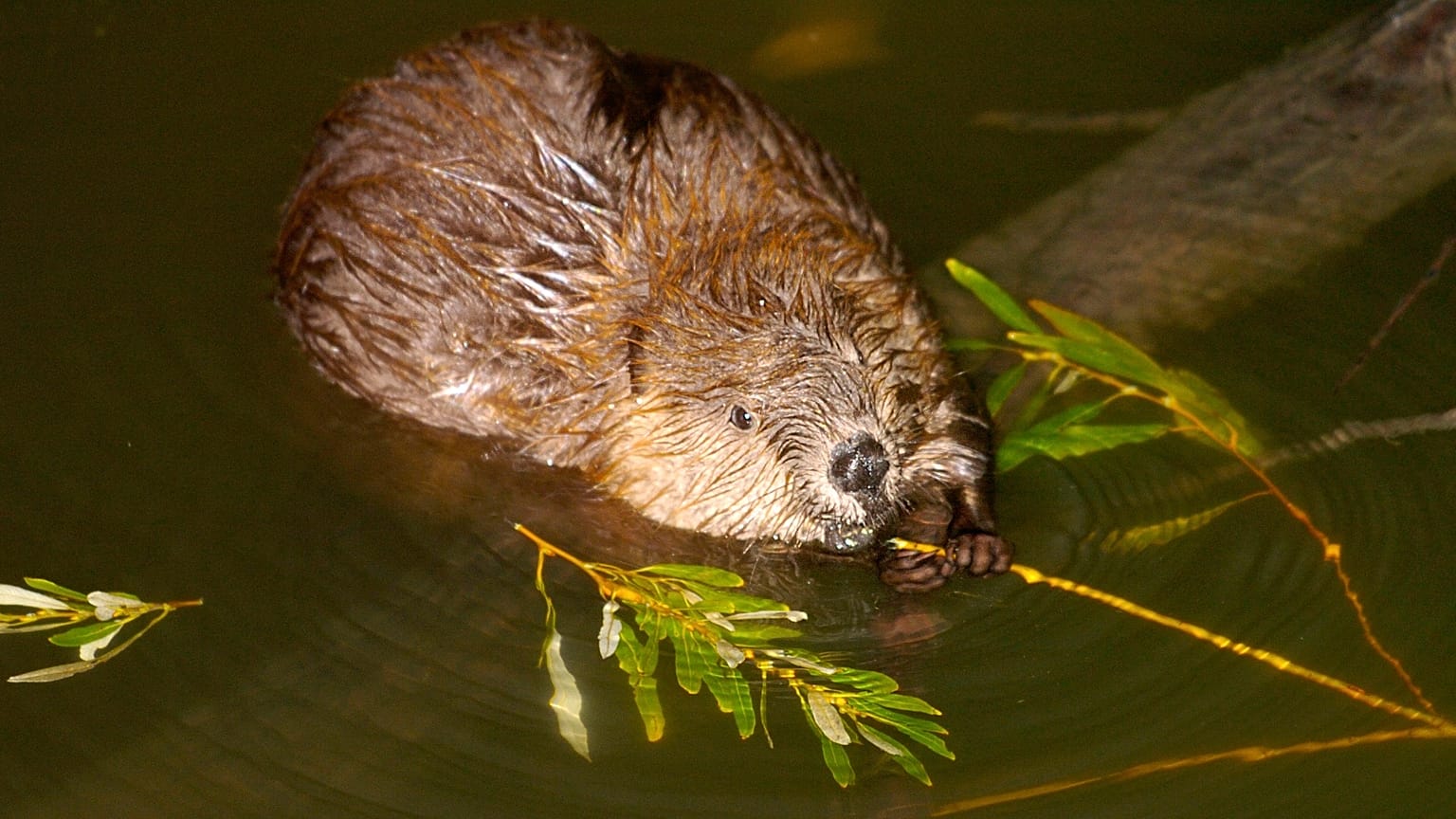
Beavers build dams, dig channels and transform small streams into broad wetland areas. This helps keep plants lush and green, even throughout long periods of drought.
It means when a wildfire ignites, the green vegetation near the beaver ponds will be much harder to burn compared to dried-out areas.
Experts say that fires will often take the path of least resistance, burning through dry vegetation away from beaver ponds instead of trying to smolder through the wet areas.
This creates a safe refuge for animals that may be unable to escape a wildfire, such as frogs, small mammals, and fish.
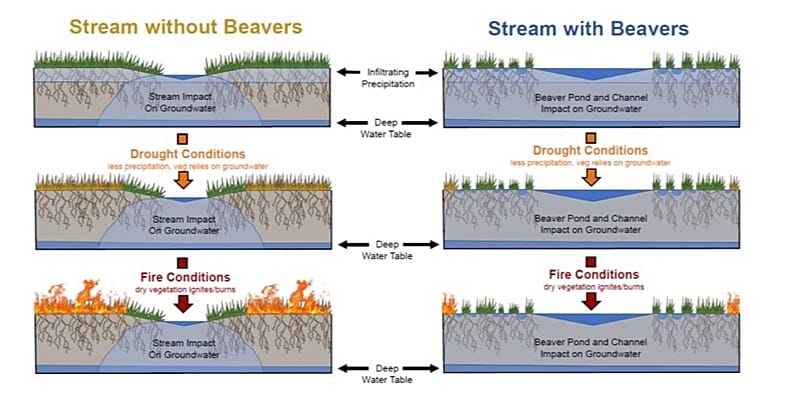
A 2020 study, aptly named Smokey the Beaver, used vegetation data from five large wildfires across the western US to explore how effectively beavers can build climate-resilient landscapes.
It found that beaver-dammed corridors are “relatively unaffected” by wildfire when compared to regions without beaver presence. On average, plant health in areas without beavers declined about three times more during wildfires than in areas with beavers.
A later study published in the National Library of Medicine last year modelled the potential impacts beavers could have in California’s Sierra Nevada, a region at high risk of drought and wildfire.
Researchers found that 51 per cent of beaver dam-building capacity remains in this region compared to historical levels, and “considerable” dam capacity remains in all watersheds. This is an area of land that channels rain and snowmelt to a common water body, effectively acting like a giant funnel.
The study “conservatively” estimates that beaver dams have the potential to store a total of 120 million cubic metres of surface water and create 2,200 square kilometres of fire resilience in high fire risk areas.
“Additionally, streams where beavers have the potential to create the greatest water and fire benefits due to physical landscape and habitat characteristics are frequently found within watersheds that are at high risk for both drought and fire,” the study says.
“Even in areas where fire and drought are less probable, the reestablishment of beavers will likely provide similar benefits.”
Can beavers ‘heal burn scars’ after wildfires?
Following research into how beavers can prevent the spread of wildfires, researchers set out to see whether the semiaquatic rodents can also help repair landscapes following a blaze.
Last year, researchers took to the mountains west of Fort Collins in Colorado to build fake beaver dams in burn scars (the charred land left behind after a wildfire) to study how wetlands created by dams impact ecosystem restoration and water quality following blazes.
“It’s kind of a brave new world for us with this type of work,” says lead researcher Tim Fegel, a doctoral candidate at Colorado State University.
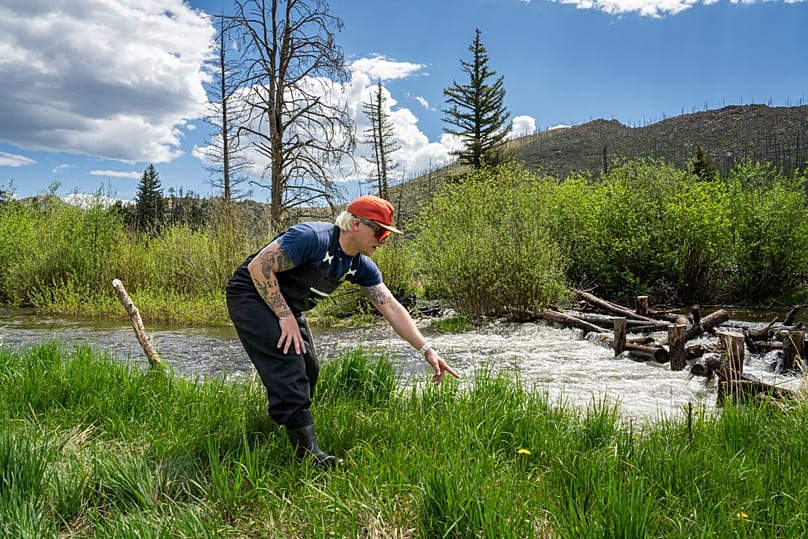
Wildfires destabilise soils and make them less capable of absorbing rain and snowmelt, resulting in higher runoff and increased flood probability. High volumes of water, combined with a lack of vegetation roots to hold soil in place, mean that more sediment and debris travel downstream, impacting water quality and water treatment systems.
But researchers hope that fake beaver dams will help slow water flow and instead spread the water over a floodplain. When obstructions slow down water, sediment in the water drops to the bottom of the channel instead of continuing downstream.
Fegel is also researching how slowed water that spreads across a floodplain might keep more carbon and nitrogen higher up in the water supply, instead of pushing it downstream, where it can disrupt aquatic ecosystems or create algal blooms.
While early results indicate that the beaver dams improve water quality, the team is now also assessing whether their use is practical at scale.
Europe’s beaver boom
Once hunted to near extinction, beavers have made an impressive comeback in recent years thanks to tougher legal protection and conservation efforts.
Between 1960 and 2016, European beavers have increased by a staggering 16,000 per cent (excluding Russia) – now totalling more than 1.2 million.
The rodents are also spreading further than ever before, covering a range that has expanded by around 835 per cent between 1955 and 2020. It means that more natural fire breaks will pop up across the continent, along with other benefits such as flood defences and purified water.
In 2023, beavers were introduced to Cairngorms National Park in Scotland, which is currently closed to tourists due to an ongoing fire incident.
“With wildfires increasing in frequency and intensity as a result of climate change, the value of beaver country cannot be underestimated,” says Rewilding Europe. “As a wise man once said: ‘water doesn’t burn!’”