
















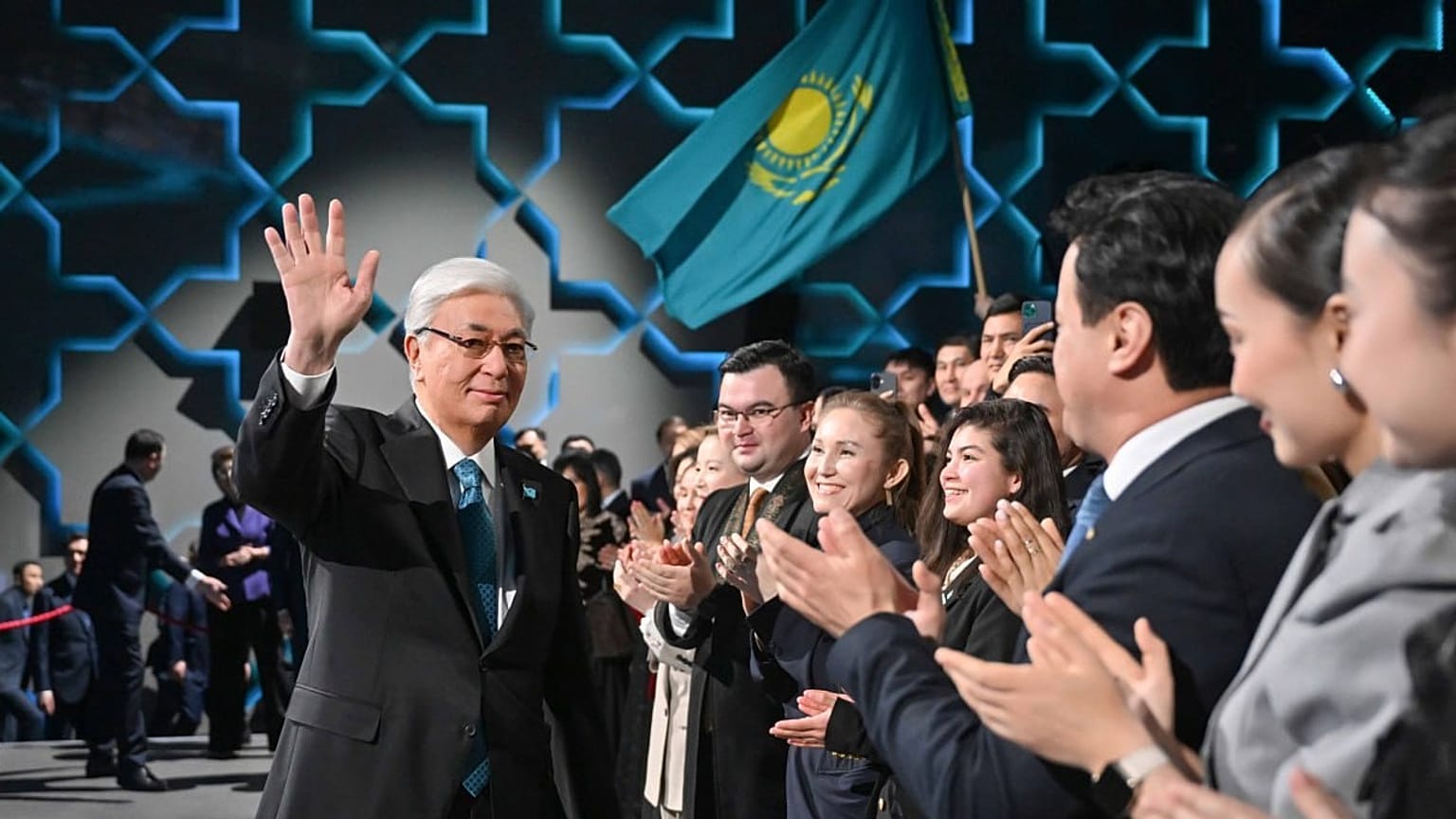














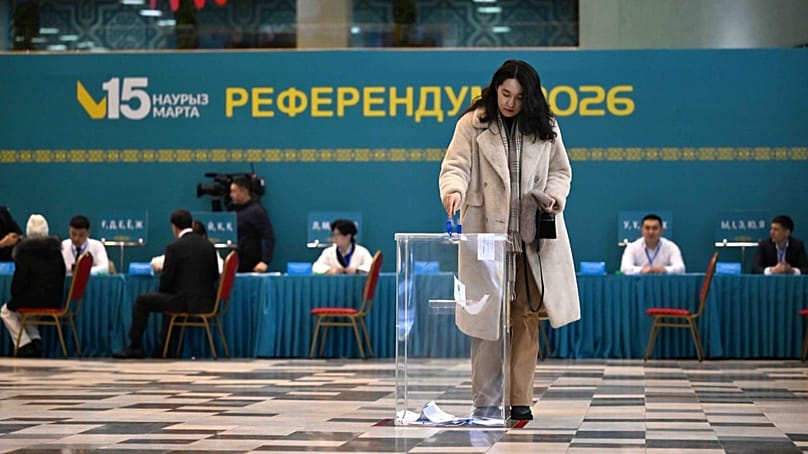
Citizens of Kazakhstan voted for a new constitution. According to preliminary results turnout was over 70% and 90% of votes supported the constitution. The new basic document expands presidential power, introduces post of vice-president and reforms the parliament.
Kazakhstan's new constitution was adopted by a majority of citizens on the day of the referendum, the Central Electoral Commission confirmed following President Kassym-Jomart Tokayev's announcement in his late-night address on Sunday.
 ADVERTISEMENT
ADVERTISEMENT
ADVERTISEMENT
"Today we witnessed a truly historic event for our country. The citizens of Kazakhstan participated in the referendum and supported the constitutional reform. They cast their vote for the future of our country," said Tokayev.
"The exit poll results have just been released, and we can confidently say that Kazakhstan has made its historic choice in favour of the new constitution. Thus, our people, through their vote, determined the future course of history and the fate of Kazakhstan," he announced.
"As one nation, we have taken an important step toward building a just society where law and order prevail and where responsible and creative citizens live," Tokayev said.
In the days before the referendum, the president, who initiated the change, said that the existing constitution had played an important role during the difficult years of establishing Kazakhstan’s independence after the collapse of the Soviet Union, but that times had changed and the country needed a new basic document.
Changes brought by the new Constitution
The role of the president is strengthened in the new constitution. Currently, the president, with the approval of the Senate, can appoint the chairs of the Constitutional Court, the Supreme Judicial Council, the National Bank, the National Security Committee, and the Prosecutor General.
The new constitution gives him the power to also appoint the heads of the Supreme Court, the Central Electoral Commission, the Supreme Audit Chamber, the State Security Service, and the Human Rights Commissioner.
The president will also be able to appoint 10 judges of the Constitutional Court, six members of the Central Electoral Commission and eight members of the Supreme Audit Chamber – all with the approval of the new unicameral parliament, Kurultai.
However, a provision states that if Kazakhstan's Kurultai refused these candidacies twice, the president would have the right to dissolve the parliament.
In its temporary absence, he would hold the power to “issue decrees that have the force of constitutional laws or laws of the Republic of Kazakhstan.”
The Kurultai chairperson and the vice president would also be subject to this rule.
Return of the vice president position
The reform would also reinstate the position of vice president. The country had the office between 1991 and 1996, but it was later abolished.
Now his duties would include representing the country abroad, representing the president at parliamentary and other meetings, and interacting with social, cultural and scientific communities at home and abroad. The rest of his powers and duties would be determined by the president.
Other provisions
The wording on freedom of speech provisions has been amended as well: the current constitution says that "freedom of speech and art is guaranteed."
However, the proposed version has expanded these guarantees to "scientific, technical and artistic creativity" as well.
One of the most discussed provisions is a minor change in the wording on the use of the Kazakh and Russian languages. Instead of being used on "equal grounds," the two will be used "alongside," implying that Kazakh would take precedence, according to experts.
"Official documents in the Kazakh language will have the highest authenticity. This means that if versions of the same document in different languages contradict each other, the version in Kazakh will be considered the correct one," said political scientist Gaziz Abishev.
The scope of protection of personal data is expanded. It is now also clearly stated that religion is separate from the state.
Marriage will no longer be a union of two people, but a union of a man and a woman, which comes on the heels of the recent ban on LGBTQ+ propaganda.
Kazakhstan is a member of many international organisations and a signatory to agreements, such as the UN and the Paris Agreement. Under the current constitution, Kazakhstan's international commitments take precedence over domestic law. The new version no longer makes this promise.
While the constitution still requires respect for international law, and the main principles of foreign policy will remain friendly relations, dialogue, and non-interference in the internal affairs of other countries, Kazakhstan wants to exclude the provision that requires it to "renounce the first use of armed force."
Non-profits and political parties financed by international sources will have to openly disclose the money coming not only from foreign governments and organisations, but also from foreign companies and companies with foreign participation.