


















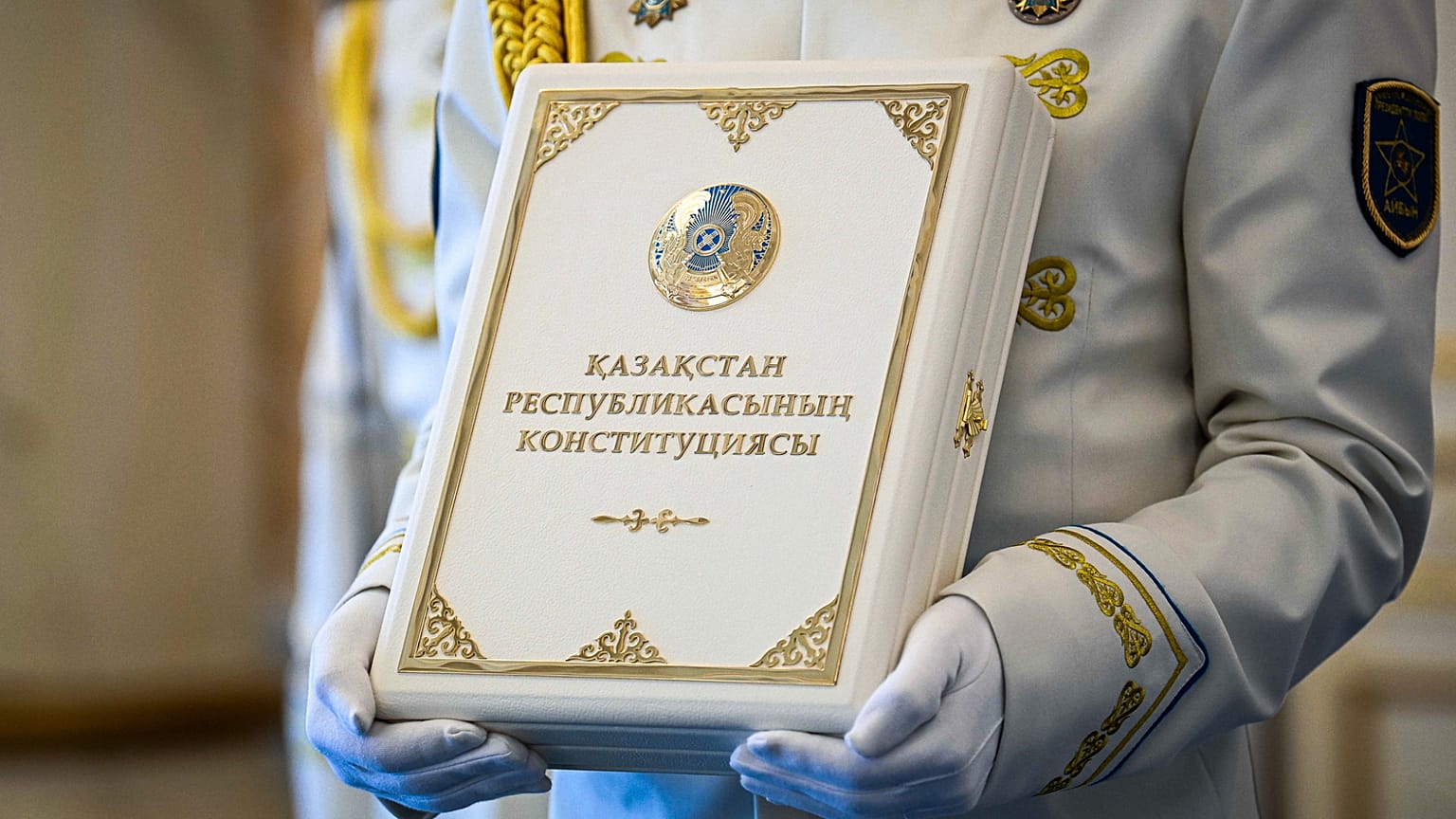














Kazakhstan has adopted a new constitution following a nationwide referendum backed by a strong majority, marking a pivotal moment in the country’s political evolution.
March 15th will now be marked in the history of Kazakhstan – the country voted for its new constitution in a national referendum.
 ADVERTISEMENT
ADVERTISEMENT
ADVERTISEMENT
“The Kazakh people have made a fundamental historical choice. Today, our people voted and determined the history and fate of Kazakhstan,” said President of Kazakhstan Kassym-Jomart Tokayev on the voting day.
According to the Central Election Committee, more than nine million people voted across 10,000 polling stations in Kazakhstan and abroad. The turnout amounted to 73%, and 87% of them voted “yes,” making the referendum pass.
“The Constitution is a historical document that defines the long-term goals and objectives of our state and directly affects the future destiny of our nation. It is truly the People's Constitution,” highlighted the president during the official signing ceremony on March 17.
Why change the Constitution?
The desire to change the constitution stemmed from Tokayev’s decree to shift from bicameral parliamentary system to unicameral.
“Due to changes in social relations, the question of parliamentary reform was initially broached,” explains professor of law and member of the Constitutional Commission Marat Bashimov.
“The fact is that unitary states have a unicameral parliament, while in Kazakhstan in 1995, despite this, a bicameral parliament was established. Laws must be passed quickly, efficiently, and on time, which is why the need for a unicameral parliament became apparent.”
Initially, the government planned to amend around 40 articles as part of the parliamentary reform but soon realised that they would have to change more than 80% of the document. Since it would effectively mean a new constitution, the president decided to take the issue to the national referendum.
Besides the unicameral parliament, other main changes that will have the biggest effect on the country’s political life include the re-establishment of the position of the vice president, as well as giving the newly formed People’s Council the power to initiate laws.
“Looking back, the constitution is a logical continuation of the reforms that began in 2019. Everything that has been going on, the consistent political modernisation, has led to the need to adopt a new constitution,” sharedDinara Sadvakassova, Advisor to the Chairman of the Senate.
She noted that nearly 12,000 people participated in the discussion of the draft through various channels.
Kazakhstan has been using the previous constitution for the past 30 years. To move away from the Soviet past, the country adopted a new constitution in 1993 and then changed it again in 1995.
Now, the country has decided to take another step into the future and adjust its constitution to align with the current geopolitical and technological challenges.
“One of the reasons for revising the Constitution is to take into account digital human rights, which are extremely relevant today,” says Yekaterina Smyshlyayeva, member of the Lower House of the Parliament.
She explains that the growing amount of personal and biometrical data will now be protected at the constitutional level.
The voting day
On March 15 the bulletin had only one question: are you for or against the new constitution? Some voters showed up as early as seven in the morning, while others turned voting into a family activity, showing their children the significance of exercising their right to vote.
“If we want to introduce change, if we want things to be good in our country, then each person must start with themselves. If we ourselves take action to change, we will make a great contribution to the development of Kazakhstan in the future,” shared one of the morning votersYerassyl Kairatuly.
Observers from 34 countries found that the referendum was in accordance with both Kazakhstan's legislation, constitution and laws, as well as international standards.
“In the United States, as you know, there are a lot of issues focused on human rights, democracy, civil society, the rule of law, transparency and accountability in the legal process. Having these issues addressed in the referendum reflects the knowledge, the belief that Kazakhstan understands how important it is to have a transparent and open legal process,” saidRalph Winnie, an international observer from the America-Eurasia Business Coalition.
He and others noted active participation of civil society and the willingness of Kazakh citizens to become local observers.
“I was quite impressed about the number of these observers, said Malgorzata Samojedny, President of Poland’s Opportunity Institute of Foreign Affairs/
“Regularly in Poland there is one, two, maybe three people, and here is like crowds, around ten people on each polling station. That is a sign that the society is aware how important this referendum is.”
The new constitution will take effect on July 1. Until then, the current parliament will have to adopt five new constitutional laws and amend eight existing, after which it will be dissolved.
The country will have new parliamentary elections after that, which should be finished by the time the new political season starts in September.