




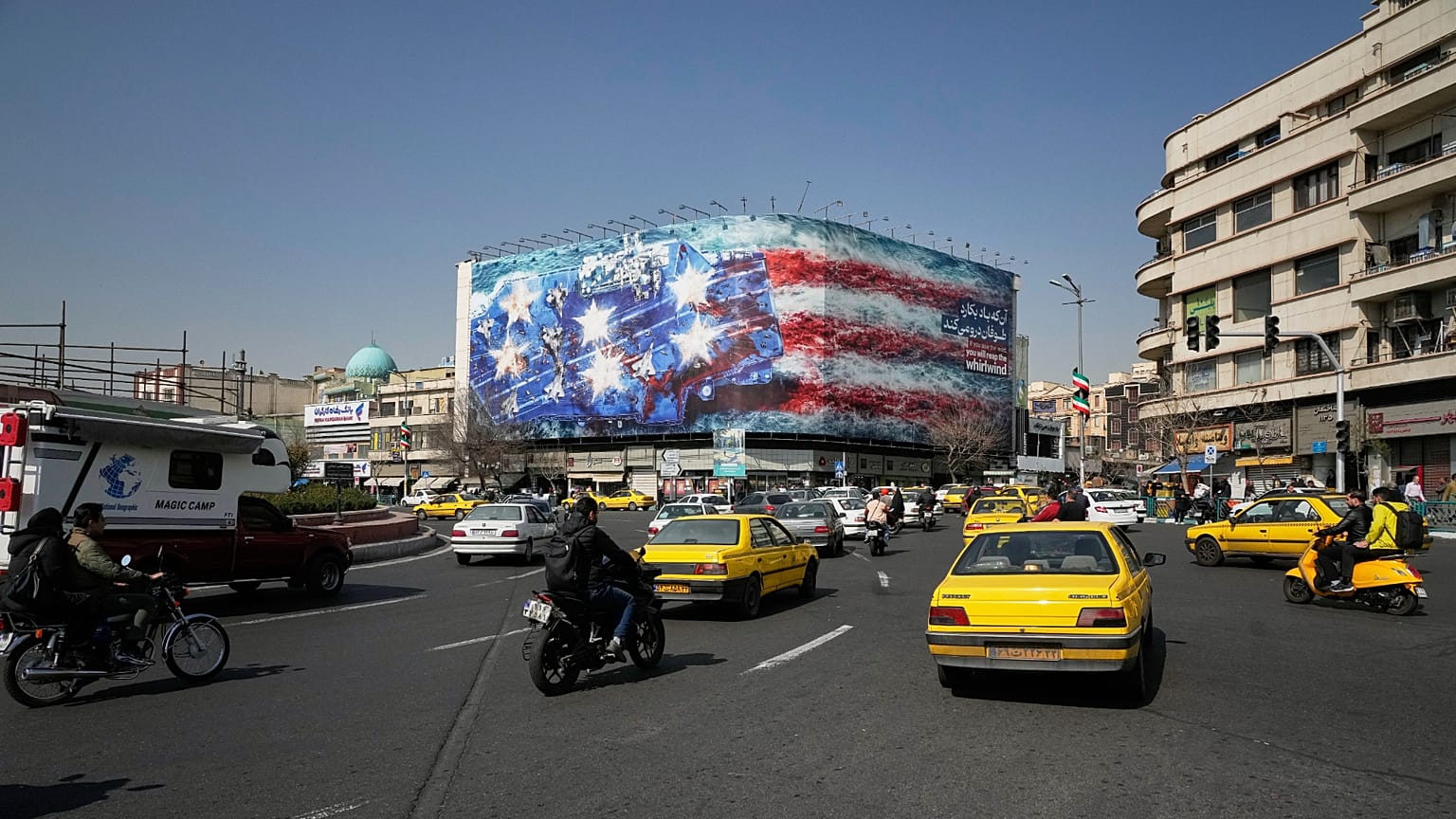














US President Donald Trump warned on Friday that limited strikes against Iran are possible, and both Iran and the US have signalled they are prepared for war if the talks on Tehran’s nuclear programme fail.
The United States and Iran will hold their next round of nuclear talks Thursday in Geneva, facilitator Oman confirmed on Sunday, signalling hope for progress despite US military buildup and renewed protests in Tehran.
 ADVERTISEMENT
ADVERTISEMENT
ADVERTISEMENT
Oman's foreign minister, Badr al-Busaidi, confirmed the talks. Oman previously hosted the indirect talks on the Islamic Republic’s nuclear programme and facilitated the latest round in Geneva last week.
Shortly before Oman's announcement, Iran's Foreign Minister Abbas Araghchi told CBS in an interview that he expected to meet US envoy Steve Witkoff in Geneva on Thursday, and said a “good chance” remained for a diplomatic solution on the nuclear issue.
The US has sent two aircraft carriers to the Middle East in recent weeks, along with other jets and ships, and has also shored up its air defences in the region to back up its threats of military intervention.
US threats of military action have multiplied since a nationwide protest movement in Iran sparked a crackdown that rights groups say killed thousands.
On Sunday, Iranian students gathered for fresh pro- and anti-government rallies commemorating those killed following similar gatherings the day before.
Araghchi said Iran was still working on a draft proposal for an agreement that would avert military action.
The nuclear issue, he added, is the only matter being discussed — even though both the United States and Israel also want to address Iran's missile programme and its support for armed proxies in the Middle East.
US President Donald Trump warned on Friday that limited strikes against Iran are possible, and both Iran and the US have signalled they are prepared for war if the talks on Tehran’s nuclear programme fail.
Fears of war
Minutes after Oman’s confirmation of the talks, Iranian President Masoud Pezeshkian said on social media that negotiations had involved “the exchange of practical proposals and yielded encouraging signals,” but added that Tehran has "made all necessary preparations for any potential scenario.”
The US has said Iran cannot have nuclear weapons or the capacity to build them and that it cannot enrich uranium. Araghchi, however, told CBS that Iran has the right to enrich uranium.
On Friday, he said his US counterparts had not asked for zero enrichment as part of the latest round of talks, which is not what US officials have said publicly. He also said talks focused on how to ensure that Iran's nuclear programme, including enrichment, "will remain peaceful forever." He said that in return, Iran will implement confidence-building measures in exchange for relief on economic sanctions.
Witkoff said in a Fox News interview broadcast Saturday that the president was questioning why Iran had not yet given in to the pressure.
"He's curious as to why they haven't... I don't want to use the word 'capitulated', but why they haven't capitulated," he said.
"Why haven't they come to us and said, 'We profess we don't want a weapon, so here's what we're prepared to do'?"
Although Iran insists its nuclear programme is peaceful, the US and others suspect it is aimed at eventually developing weapons. Iran says it hasn’t been enriching uranium since US and Israeli strikes on Iranian nuclear sites in June.
At that time, Trump said the strikes had “obliterated” Iran’s nuclear sites, but the exact damage is unknown because Tehran has barred international inspectors.
Meanwhile, Araghchi asserted to CBS that “we have a very good capability of missiles, and now we are even in a better situation" than before the strikes in June.
Nuclear talks had been deadlocked for years after Trump’s decision in 2018 to unilaterally withdraw the US from Iran’s 2015 nuclear deal with world powers.