




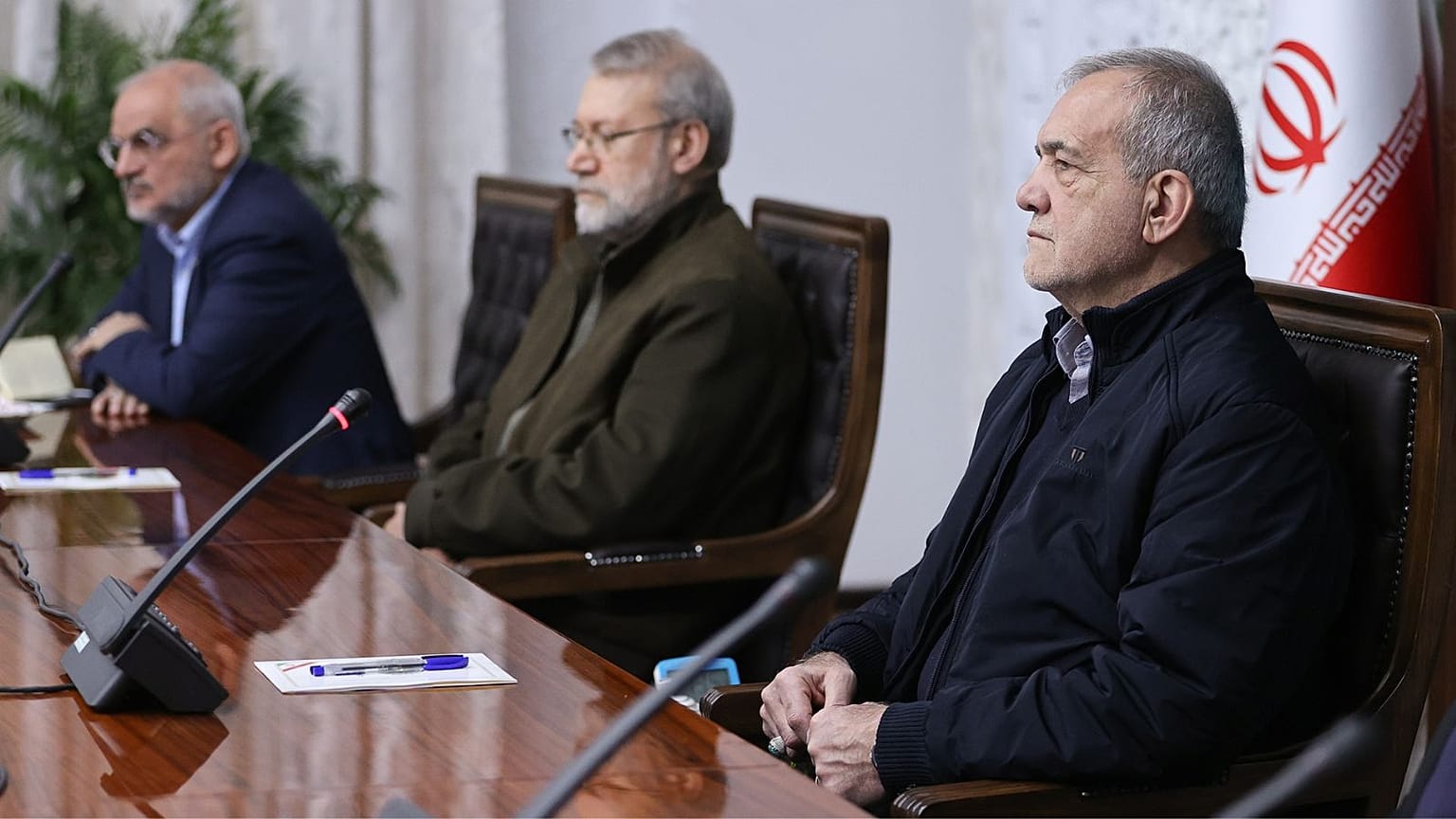













There has been key changes to Iran's management and defence structure in the wake of a possible war with the United States, according to an article by the New York Times.
As the possibility of military conflict with the US grew, Iranian leader Ali Khamenei has delegated the mission of ensuring the survival of the political structure and managing war conditions to Ali Larijani, the secretary of the Supreme National Security Council, according to The New York Times.
 ADVERTISEMENT
ADVERTISEMENT
ADVERTISEMENT
“Since early January and in the wake of internal protests and threats from the United States, Ali Larijani, a 67-year-old politician and former commander of the IRGC, has virtually taken over the direction of key affairs of the country,” said the newspaper, citing statements by six knowledgeable Iranian officials and a number of members of the Revolutionary Guard Corps.
The report said Mr. Larijani's rise has led to the evident marginalization of Iran's president, Masoud Pezharkian, who continues to emphasize his professional identity as a physician and refuses to accept responsibility for solving macro-crises. Quoting Iran's domestic media, the New York Times wrote: “The medics have even resorted to Larijani for issues such as unfiltering, which marks the superior hand of the secretary of the Supreme National Security Council in the current structure.”
The newspaper went on to address the security aspects of issuing the new guidelines in Tehran, adding: “Iran's leader has instructed Ali Larijani and a circle of military-political loyalists to determine the various layers of succession for all key positions. These measures have been taken to ensure that the system does not collapse in the event of an assassination or interruption of communications in wartime.”
“The leadership has full confidence in Larijani and considers him a sensitive and critical man of this time because of his political record and rich intelligence,” the American newspaper wrote, quoting Nasser Imani, an analyst close to the principled spectrum.
Another part of the report is devoted to Iran's field preparations. The New York Times claimed: “Based on the assumption that American military strikes are imminent, Iran has deployed its ballistic missile launchers on the western borders (close to Israel) and the southern shores of the Persian Gulf (within range of American bases), and all armed forces are on the highest level of readiness.”
At the end of the report, the newspaper quoted Ali Vaez, director of the Iran division at the International Crisis Group, as noting that despite all the succession and crisis management plans, the role of the person leader remains irreplaceable as “the main driving force and blocking force of the system” and the system will face unforeseeable challenges without their presence.