




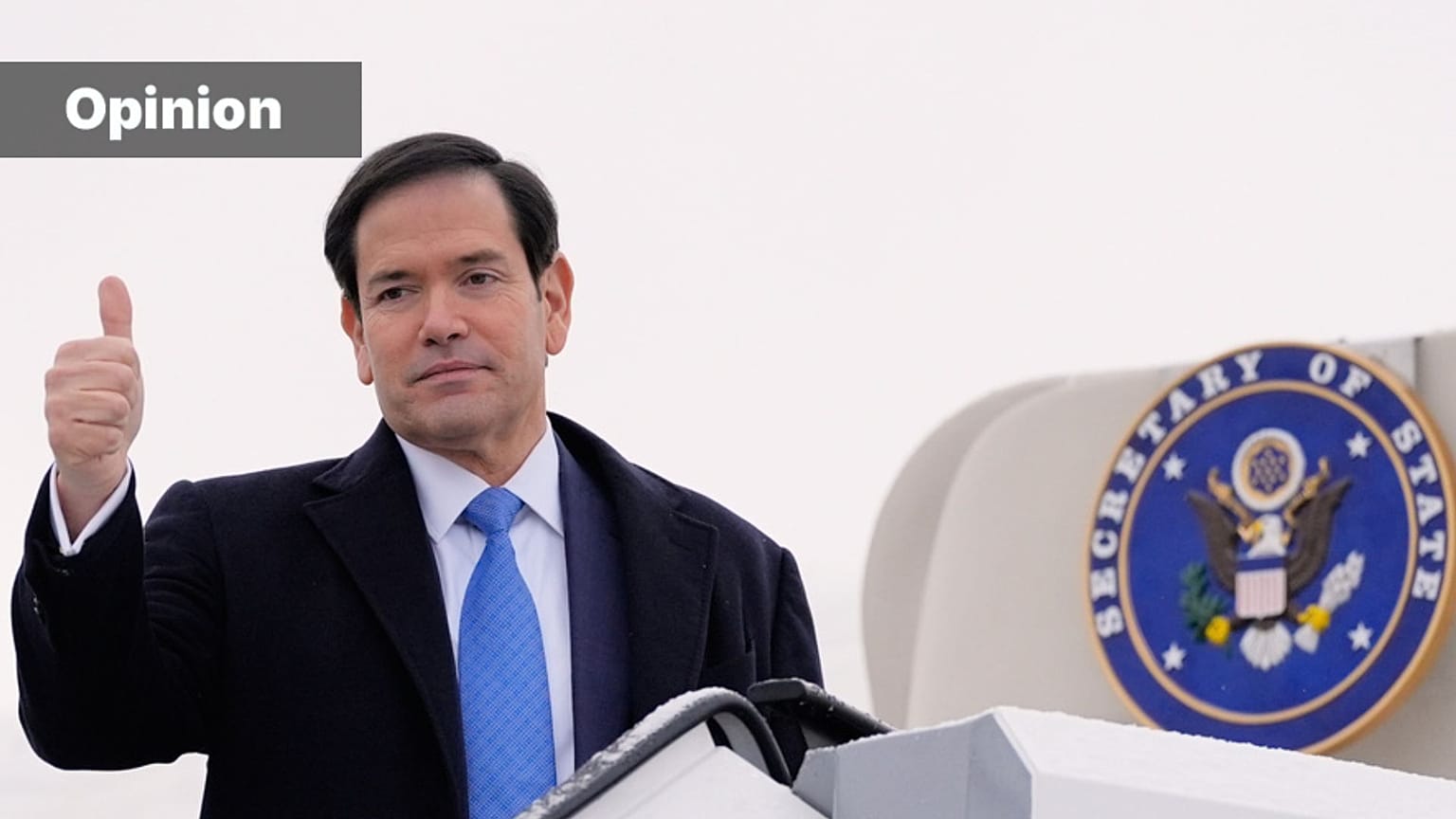













The security precautions outside the MSC were as usual: barriers, a heavy police presence, meticulous checks. But as the conference draws to a close on Sunday evening, one irritating realisation remains: inside, nothing was the same, Dr Alexander Wolf writes in an opinion article for Euronews.
When the first "wind of change" blew in 1989, it symbolised the promise of a united, liberal world order.
 ADVERTISEMENT
ADVERTISEMENT
ADVERTISEMENT
The end of bipolarity seemed to mark the triumph of democracy and the beginning of an era in which the West would determine the global rules of the game. For three decades, this optimism was Europe's tailwind.
Today, at the end of the 62nd Munich Security Conference, the wind has changed. It is hitting us head-on - and it is no longer just coming from the East.
It is coming from within the West itself and is shaking the foundations of our security structure more than ever before.
For the first time since NATO's founding, there is no consensus about its essence. In the past, people argued about the "how" of cooperation. Today, the question is "whether".
German Chancellor Friedrich Merz put it in a nutshell in Munich, stating that the United States' claim to leadership was "contested, perhaps already gambled away".
It was the clearest diagnosis yet from Berlin about a world that is increasingly characterised by the raw rivalry of the superpowers.
What remained striking was how little space the debate on China took up this year - as if the West, in a state of shock, was focusing almost exclusively on the erosion of its own axis.
To survive in this new era, Europe must shed three dangerous illusions.
Illusion 1: Transatlantic euphoria instead of strategic reality
The standing ovation for US Secretary of State Marco Rubio on Saturday morning satisfied the deep longing of many Europeans for reliability.
His charming confession that the US is a "child of Europe" and that Washington wants a "strong, independent Europe" triggered an almost desperate sigh of relief. But nostalgia is not a security policy concept.
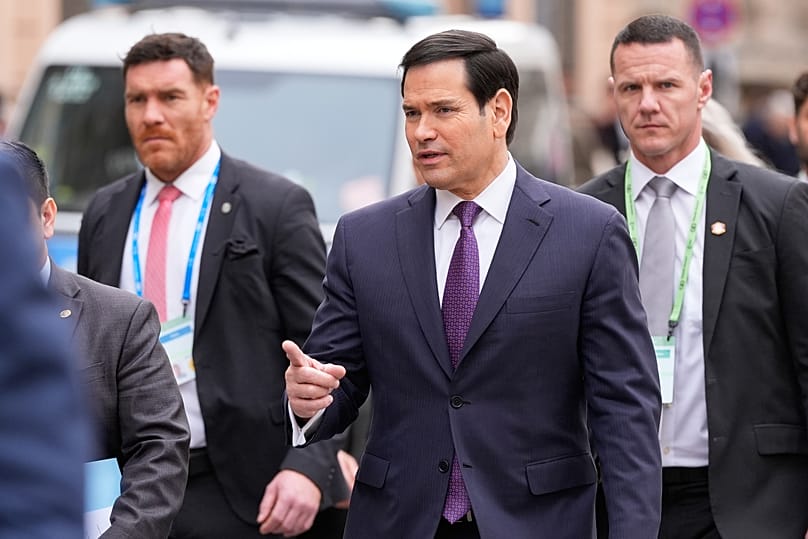
Rubio's words should not obscure the reality: US foreign policy today follows a cool, transactional logic. And in the current administration, one simple truth applies: in the end, only one person is decisive - President Donald Trump.
What government representatives assert on international stages is of secondary importance. The final decision-making power and unpredictability lie solely in the Oval Office.
Anyone talking about friendship in Munich today is overlooking the fact that diplomatic sentimentality immediately gives way to uncompromising "America First" logic when it comes to issues such as trade tariffs, technology competition or subsidies.
In a US election year, friendly tones are often symbolic politics, not a guarantee. Europe should welcome the more polite style - but press ahead with its strategic autonomy with undiminished consistency. Fine words do not secure borders; only our own strength does.
Illusion 2: Europe marches together - or not at all
The second self-deception is the idea that European capacity to act can only be achieved through unanimity.
In Munich, Merz rightly called for an end to "self-inflicted immaturity" and for Europe's claim to leadership to finally be taken seriously.
However, the reality of the EU is dynamic: changing government majorities mean that there will always be ricochets.
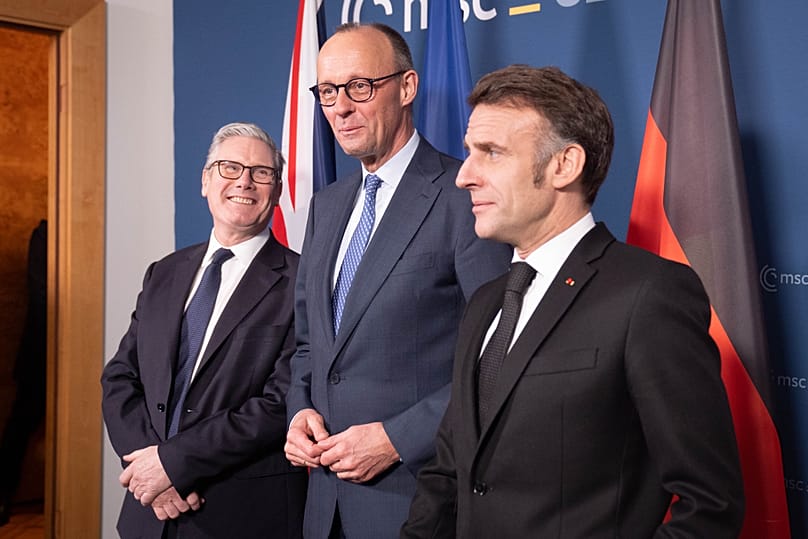
Those who wait for the lowest common denominator in this situation will never lead in the era of the great powers. Europe needs a core of states that are prepared to drive forward strategic autonomy - a multi-speed Europe capable of taking action.
Today, such an engine must above all seek partnership with the states of northeast Europe. Where the threat is felt most directly, there is the greatest strategic clarity.
This nucleus must create facts: militarily, technologically and in terms of industrial policy. This is not a romantic vision, but the sober condition for the viability of the European idea.
Illusion 3: Alliances are forever
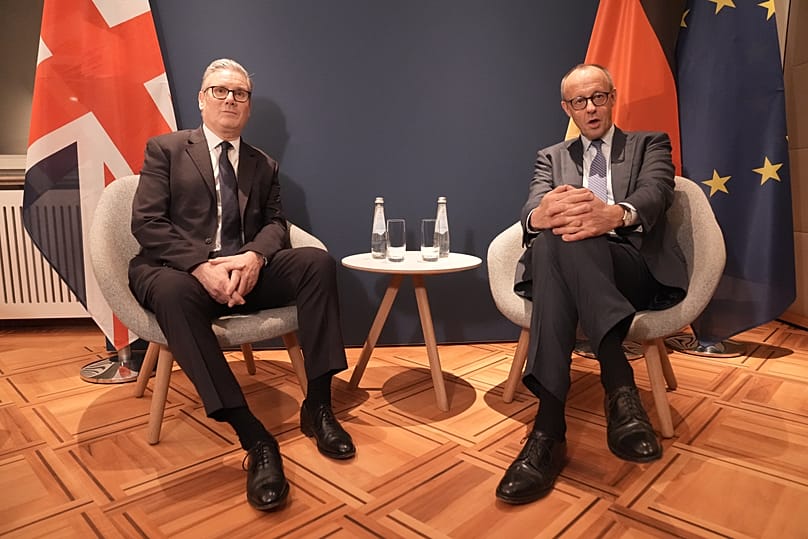
An alliance used to be a promise. Today it is a temporary deal. We need to move away from sentimental nostalgia and recognise alliances for what they have become: alliances of convenience driven by interests.
Alliances only survive if they offer clear strategic added value and are based on shared realpolitik.
Chancellor Merz extended his hand to Washington, but made it unmistakably dependent on compliance with the rule of law and civil liberties - values that are now openly open to question on the other side of the Atlantic.
Alliances are tools, not moral comfort zones. Those who understand them differently will be the first to be left disappointed and vulnerable.
Courage to face reality
The biggest geopolitical change in the past was the collapse of the Eastern bloc. The biggest change today is the transformation of the West within itself.
The wind has changed - and it is coming from directions that we long believed to be safe.
Europe has enormous resources at its disposal: economic power, intellectual capital, and diplomatic experience. However, this potential must not only be utilised rhetorically but also put to real use.
We live in a time when reliability is no longer a constant but is renegotiated daily.
Regardless of the rhetoric in Munich, the US' strategic focus remains the Indo-Pacific. In 2026, leadership means expecting this truth from our own people: We are largely on our own. This is not a reason for pessimism, but a wake-up call.
We are not defenceless - provided we muster the courage to push ahead with our defence capabilities and strategic autonomy with the consistency that we have forgotten over decades.
By increasing its defence spending to 5%, Germany is sending an unmistakable signal.
Those who wait for yesterday's wind will capsize in this storm. Those who use it to set their own course can survive.
It is time for a "Wind of Change 2.0".
Dr Alexander Wolf serves as Head of the Berlin Office of the Hanns-Seidel-Stiftung.