




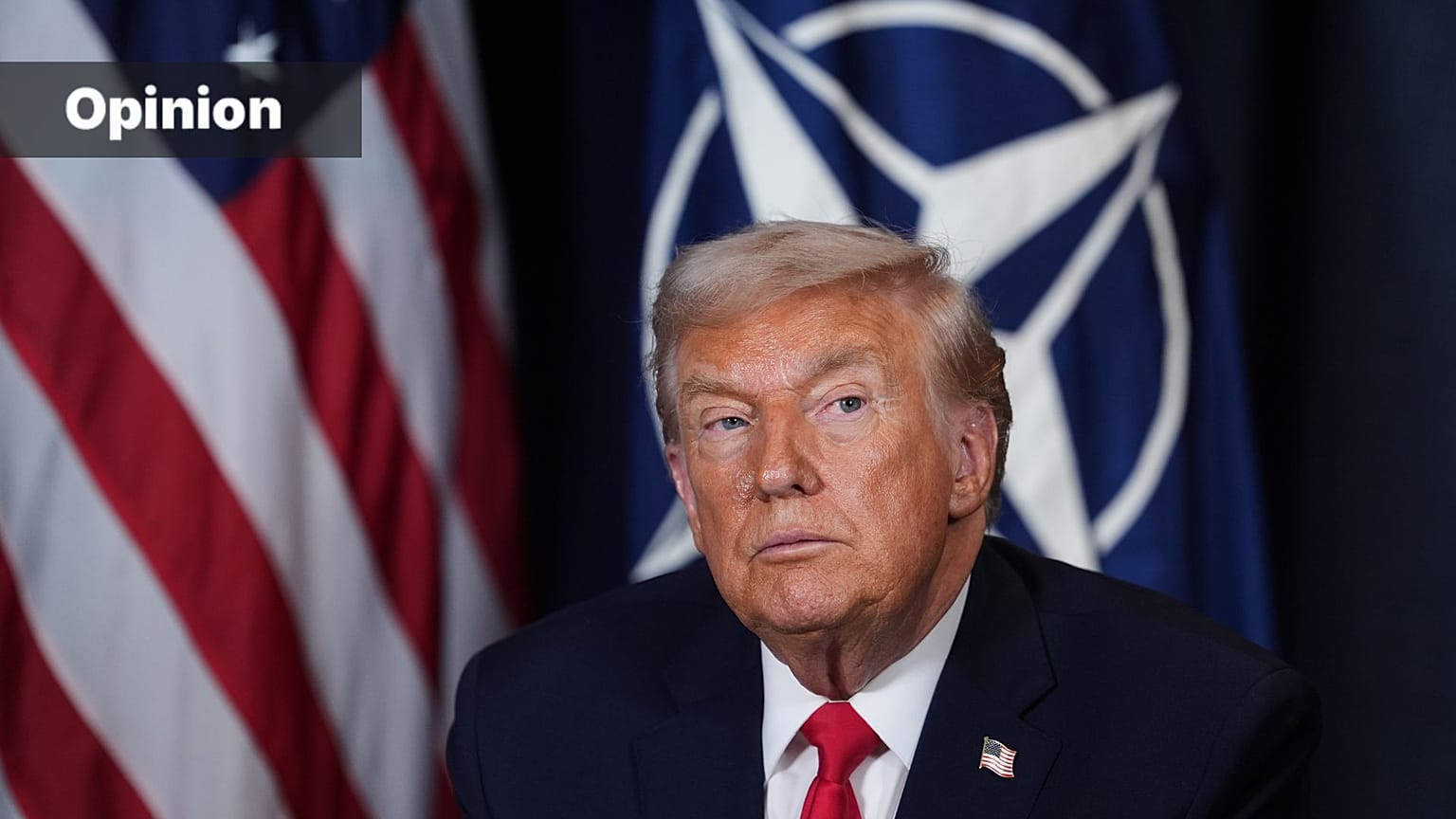













The latest rifts in the transatlantic relationship show that Europe's security can no longer rest on the assumption of US reliability, writes Dr Hans-Dieter Lucas, former German ambassador to NATO, in an opinion article for Euronews.
It did not take US President Donald Trump's push for the acquisition of Greenland to recognise that the transatlantic relationship itself has entered a period of profound change.
 ADVERTISEMENT
ADVERTISEMENT
ADVERTISEMENT
Vice President JD Vance's speech at the 2025 Munich Security Conference had already set the tone for a new US approach to Europe – one that at times treats Europe less as an ally bound by shared values and interests than as a rival.
The aggressive, zero-sum tariff policy directed at the EU, compounded by the implicit linkage of trade demands to Washington's security guarantees, was a clear expression of this mindset.
The same applied to the so-called US-Russian 28-point peace plan for Ukraine, which included provisions that came at the expense of European security.
Finally, the new US national security strategy also illustrates this shift: with its focus on the western hemisphere and its portrayal of Europe as a continent on the brink of civilisational decline, it reveals where the Trump administration believes America’s long-term interests lie.
Notably, NATO is scarcely mentioned as a defence alliance; Russia and China barely feature as security threats to either the United States or Europe.
Deep rifts in the transatlantic relationship
The depth of today's rifts in the transatlantic relationship was laid bare by Trump's unprecedented bid to seize control of Greenland against the will of Denmark and all European allies.
That a military option was initially left on the table, and that trade threats were used as leverage, speaks volumes about the administration's respect for both the spirit and the letter of the North Atlantic treaty.
The treaty binds all allies to uphold international law, including respect for territorial integrity. Even if a compromise now appears to be taking shape – one that, by granting extensive US basing rights while preserving Danish sovereignty, would likely be in the alliance's interest – trust in the United States as a dependable partner, and in the overall direction of US alliance and Europe policy, has been badly shaken.
That trust has long been the glue holding NATO together, its centre of gravity and the foundation of credible deterrence.
The Greenland episode is therefore likely to confirm Russian President Vladimir Putin in his belief that NATO may ultimately unravel under the strain of its own internal contradictions – and may encourage him to test the alliance's unity and resolve.
A double challenge for Europe
Europe faces a double challenge this year. It must continue to support Ukraine and push back against Russia’s imperial ambitions – something that will be extremely hard to sustain without substantial US backing.
At the same time, it must preserve NATO's cohesion and credibility, the bedrock of European security. In the coming months, debate within the alliance will focus on three questions: how efforts to end the war in Ukraine should proceed, what role the United States intends to play militarily in Europe in future, and how to deal with the "Greenland question".
All three will shape the NATO summit due to take place in Turkey this summer.
On Greenland, recent events have shown that European unity, coupled with a willingness to combine diplomacy with pressure – including the threat of counter-tariffs – can have an effect.
Europeans can also take some reassurance from the fact that a clear majority in the US Congress remains committed to NATO, and that Trump's Greenland demands have met resistance across party lines.
That includes many Republicans, as well as the wider US public. Yet even if the Greenland issue has been temporarily contained, the damage to the alliance's credibility is real.
The risk of NATO being hollowed out from within by the US president's policies has not gone away – and Europe should expect further unwelcome surprises from Washington.
This is all the more troubling because Europe has a clear and enduring interest in preserving NATO with the United States as a co-guarantor of European security. This is particularly true of the extended nuclear deterrence, which remains irreplaceable for the foreseeable future.
Safeguarding it must therefore remain a central objective of European policy.
At the same time, Europe has to take seriously both the swings of American domestic politics and the long-evident trend towards a gradual US disengagement from Europe in favour of Asia.
It remains to be seen which concrete conclusions will be drawn in that respect from the new US defence strategy. That makes it all the more urgent for Europe to accelerate efforts to strengthen its own defence capabilities – on land, in the air, at sea, in cyberspace and in space.
Given the US president's sometimes unclear statements on America's nuclear guarantee, Europe must also confront the question of how the French and UK nuclear arsenals could, over time, make a greater contribution to deterrence.
These are complex and politically sensitive issues. Yet the agreement between Paris and London to deepen nuclear cooperation, as well as the ongoing Franco-German dialogue on nuclear matters, mark tentative but important steps forward.
Finally, as efforts to end the war gather pace, Europe must work to prevent a US-Russian deal struck at the expense of Ukraine – and of Europe's own security.
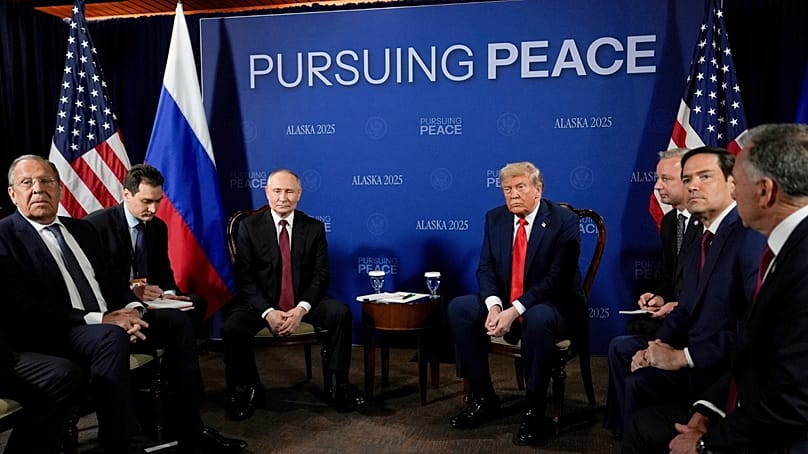
Europeans must therefore continue to engage proactively in these talks in order to safeguard both their own interests and those of Ukraine.
What is at stake is not merely the terms on which the war may end, but the foundations of Europe’s future security.
This requires a shared understanding of Europe's "red lines": the conditions under which the conflict could be brought to an end, and the respective European and American roles in securing either a peace settlement or a ceasefire.
At the same time, Europeans need to develop a clearer view of the basic contours of a future European security order.
Europe is in the midst of its most profound upheaval since the end of the Cold War. Unlike in 1989–90, this moment is not defined by hopes of peace and stability, but by the return of hard power politics.
Yet European defeatism would be misplaced. It is not the case that Europe has no cards to play.
The more united Europe is in its words and actions – and the more effectively it mobilises its own strength – the greater the chances that its security and its future will not be negotiated or decided over its head.
Dr Hans-Dieter Lucas is former permanent representative of Germany to NATO and former German ambassador to France, Monaco, Italy and San Marino.