




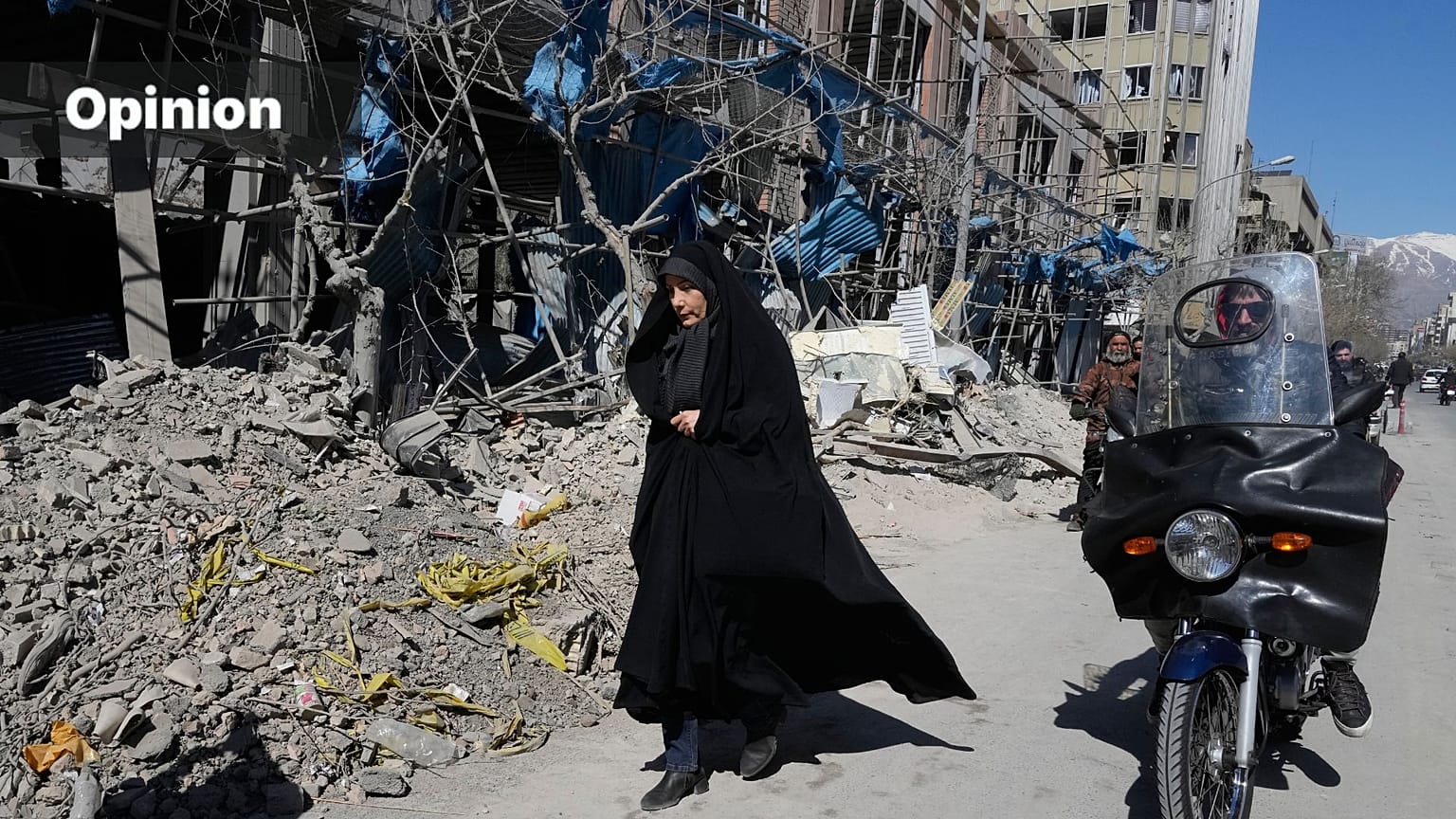













In an opinion article for Euronews, Saeid Golkar, associate professor at the University of Tennessee, warns that weakening Iran's regime militarily without a transition plan could leave a more radicalised system in place.
Since February 28, the United States and Israel have moved from deterrence to intervention.
 ADVERTISEMENT
ADVERTISEMENT
ADVERTISEMENT
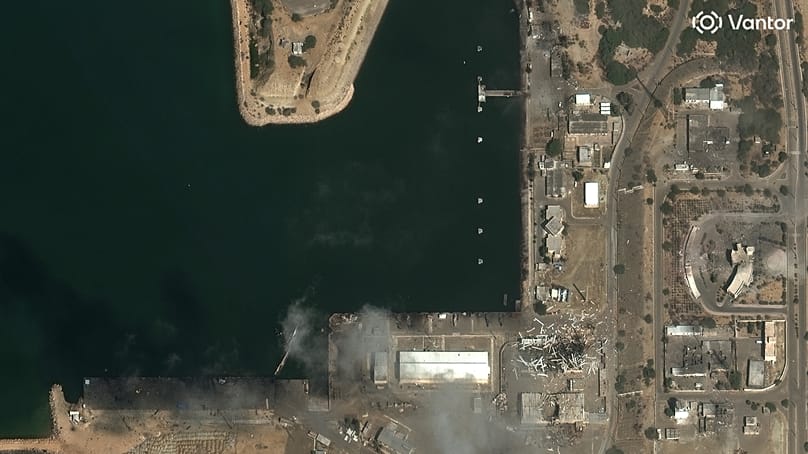
They have targeted Iran's leadership and the pillars of its coercive system, reportedly killing Ayatollah Ali Khamenei and many senior commanders, while also degrading nuclear and missile infrastructure.
This is not a routine escalation cycle. It is an effort to change Iran's strategic trajectory by weakening the regime's capacity to coerce at home and project power abroad.
What do they want Iran to become after the strikes?
Washington presents the campaign as a military effort, focusing on expanding operations and pressuring Iran's security capacities.
The goals are mainly to prevent nuclear weapons, limit missile and naval capabilities, and weaken Iran's proxy network. Israel describes its actions as targeting the Iranian "octopus" and dismantling its "tentacles," referring to missile, militia, and infrastructure networks.
This messaging aims to keep the war politically justifiable, signalling restraint to domestic and allied audiences wary of regional chaos. The lessons from Iraq and Afghanistan show that costly occupations and unrealistic promises lead to obligations the US can't fulfil.
That's why officials prefer discussing capability dismantling over regime change, and why the US remains cautious about ground troops, favouring limited special operations over invasion.
Both Washington and Jerusalem hint at a bigger idea: the campaign aims not just at nuclear sites but also at forcing political change. The plan is to weaken the leadership, pressure the security forces, and let Iranians handle the rest.
This reveals a contradiction: the US and Israel want a weakened or fallen regime but want to avoid the messy transition, which is a major issue in Iran.
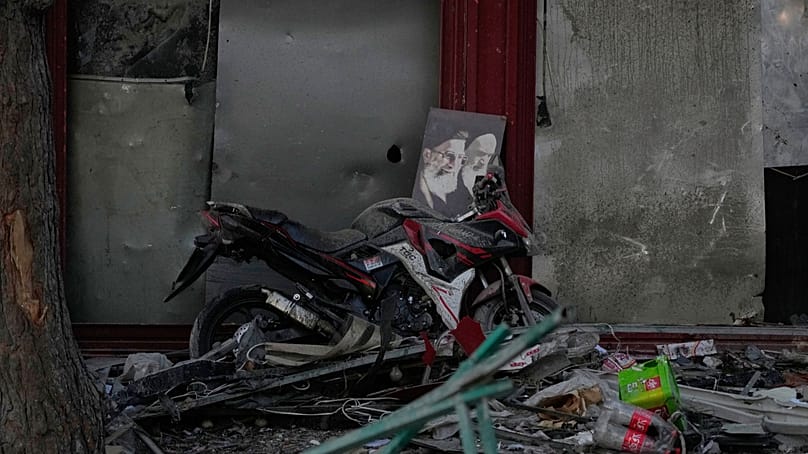
Khamenei is dead, but the system is not only one person. It is an onion of institutions: the clerical network, the IRGC, the security forces, and the state bureaucracy. Even under heavy attack, the Islamic Republic can still activate mechanisms of constitutional continuity.
Article 111 was designed specifically for a leadership vacancy and creates an interim leadership council that can govern while the Assembly of Experts delays a final choice under wartime conditions. In other words, decapitation can produce shock, but it does not automatically produce a vacuum.
It can also accelerate securitisation, because a wounded regime tends to rely even more on coercion and elite coordination.
This is where the "avoid Iraq" logic can backfire. If Washington and Israel focus only on degrading nuclear and military capabilities and then stop, the most likely political outcome is not a democratic transition. It is a consolidation by the surviving security elite.
Partial removal is dangerous. A sudden pause can invite rapid reprisals, and it can also strengthen the argument inside the regime that only nuclear weapons deter foreign attack. That is the classic "what does not kill the regime makes it stronger" dynamic, but with a nuclear dimension.
Three risks shape US and Israeli calculations
Fragmentation and warlordism are the riskiest but least likely scenarios, with central authority more stable due to Iran's long history as a unified state.
Iran's diverse ethnic makeup is unified by a strong national identity and political culture emphasising law, justice, and representation, reinforced by modern education and secularisation.
Unlike Afghanistan, Iran's disintegration is less probable, especially since instability in Iraq and Afghanistan was partly driven by Tehran's support for militias. If the Islamic Republic falls, that external catalyst for chaos would vanish, lowering the chance of similar outcomes.
The second risk is an open-ended campaign that bleeds into regional escalation. Tehran's instinct under pressure is survival, even if it means reckless expansion of the conflict to pressure Gulf states and, indirectly, force de-escalation.
This is precisely the kind of entanglement Washington says it wants to avoid. The longer the war continues, the more space there is for miscalculation, retaliation, and widening fronts, even if neither side originally intended it.
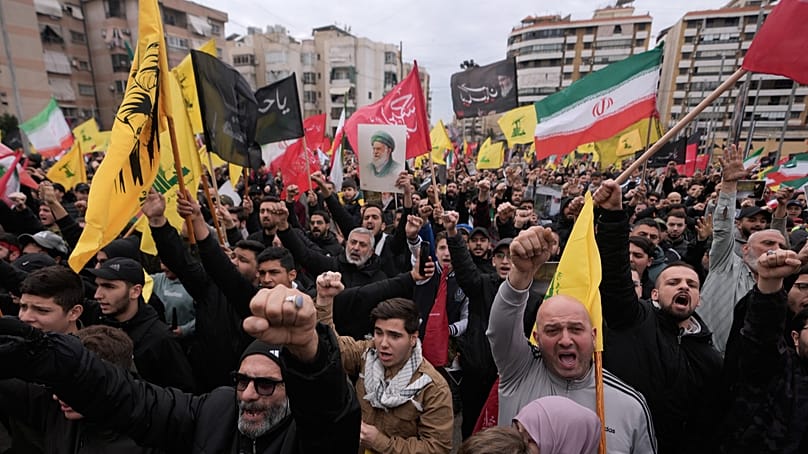
Second, an open-ended campaign that bleeds into regional escalation. Tehran's instinct under pressure is survival, even if it means reckless expansion of the conflict to pressure Gulf states and, indirectly, force de-escalation.
This is precisely the kind of entanglement Washington says it wants to avoid. The longer the war continues, the more space there is for miscalculation, retaliation, and widening fronts, even if neither side originally intended it.
Third, a post-strike environment where the street is not safe. Many Iranians may want the regime to fall, but they are disarmed. If the security apparatus remains able to fire on crowds, mass mobilisation can quickly become another massacre.
The regime's coercive infrastructure is decentralised down to neighbourhoods, which means that even if senior headquarters are hit, repression can continue through local networks. Without a credible "safe moment," Iran risks a limbo: the regime is wounded, but still lethal.
It seems that Washington and Jerusalem's plan for collapse is more visible than a plan for transition. The theory is quite simple. They are targeting leadership and the main coercive points and creating uncertainty within the chain of command.
The goal is to make loyalty riskier than leaving and encourage defections by indicating that stepping aside can be safe. If this plan is successful, it opens the door to emerging political alternatives.
Transition is more than hope
If the outside coalition wants a stable, non-nuclear, and non-hostile political outcome, it must look beyond targets and timelines.
First, it must prioritise Iran's territorial integrity and state continuity. Any flirtation with separatist projects would create more problems than it solves, because it would invite civil conflict and regional intervention.
Second, it must confront where real power sits. In Iran, power extends not only to constitutional bodies but also to security elite networks that control coercion and coordination. Any transition will be shaped by whether these networks are disarmed, fragmented, co-opted, or left intact.
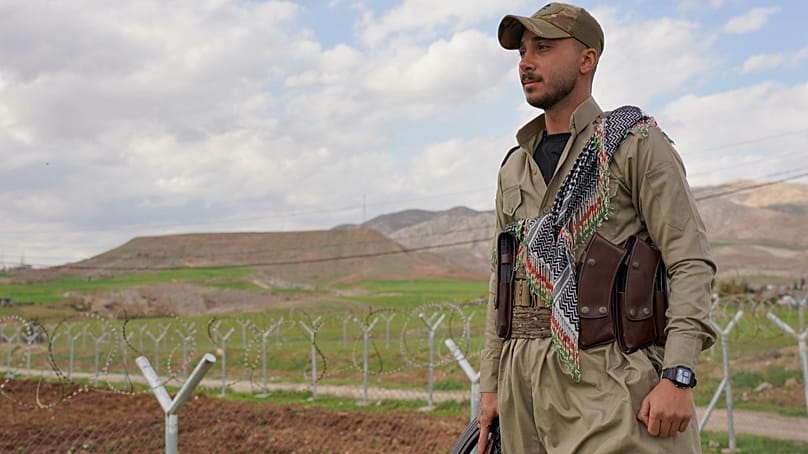
Third, defections are essential, but large-scale defection will not happen if mid-level commanders believe there is no exit ramp and only punishment awaits.
A transition framework must therefore combine conditional amnesty with accountability, offering a pathway out for those not implicated in major crimes while isolating the core architects of repression.
The intervention has already reshaped Iran's political calendar. But unless the United States and Israel pair military pressure with a credible transition concept, they risk the worst outcome: a wounded regime that survives, radicalises, and rebuilds around revenge, repression, and a faster sprint toward nuclear weapons.
Saeid Golkar is an Iranian-American political scientist, UC Foundation associate Professor at the University of Tennessee at Chattanooga, Senior Fellow at the Tony Blair Institute for Global Change, and Senior Policy Advisor at United Against Nuclear Iran (UANI).