




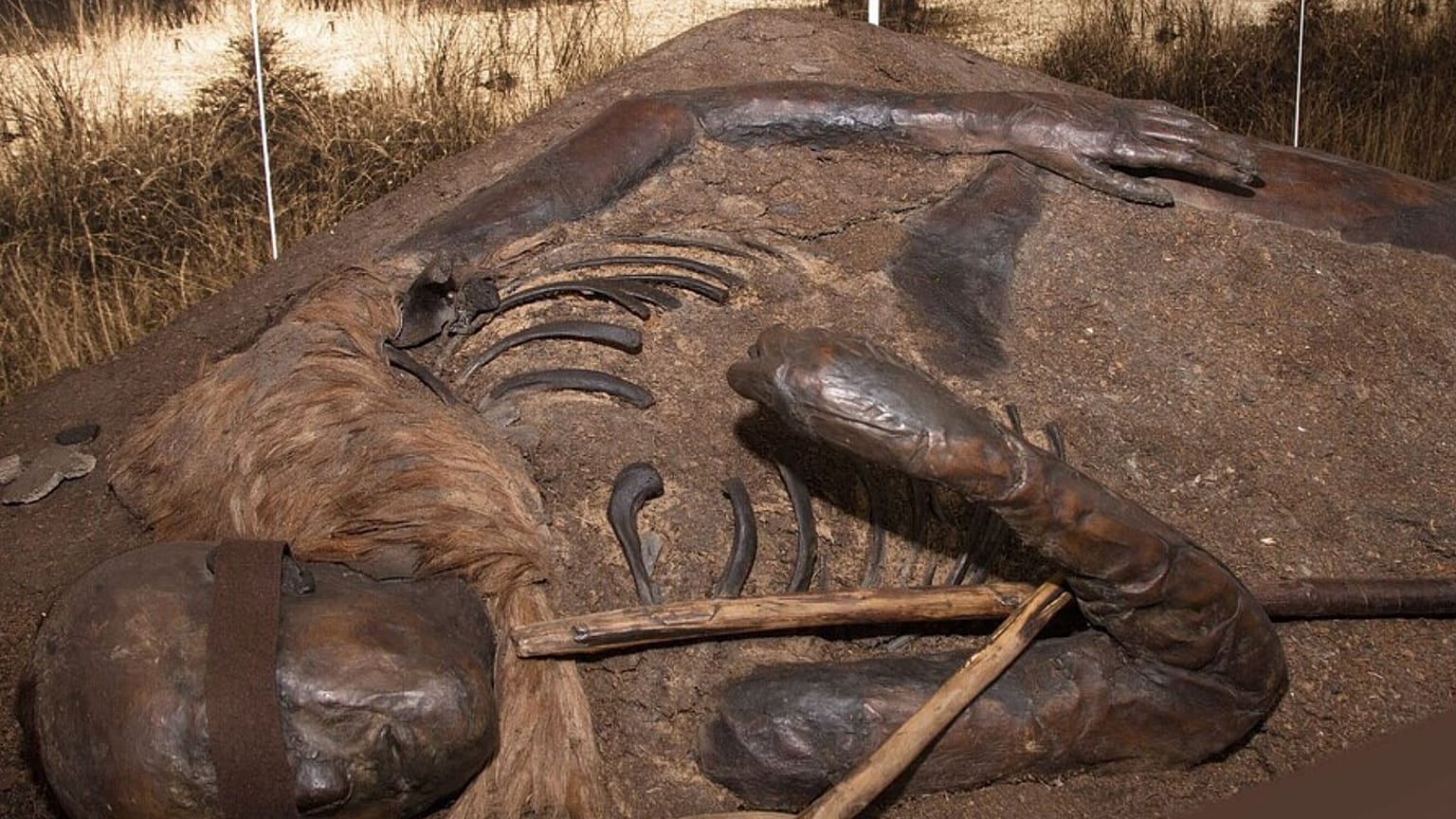













Was it murder, a burial, an accident or even a religious sacrifice? Around 60 bog bodies in Germany tell stories from long ago. Some of the details are astonishing and science was not always entirely correct.
The child from Windeby, the man from Dahmendorf, the skull from Osterby - all have one thing in common: they have been dead for around 2,000 years, and we only know that they exist because they died or were buried in the bog.
 ADVERTISEMENT
ADVERTISEMENT
ADVERTISEMENT
The wet, peaty environment has led to some of these Iron Age people being mummified. As so-called bog mummies, they now lie in museums in northern Germany, Denmark and the Netherlands and tell stories from long ago.
According to the Federal Agency for Nature Conservation, more than 90 per cent of Germany's moors have been drained and are now bearing the consequences of climate change while accelerating it. This is because the dry areas release carbon dioxide into the atmosphere.
However, most of the finds come from earlier times when peat was still being mined. Around 60 bog bodies have been found under this special soil in Germany. They are well preserved by the bog - and leave behind untold stories.
Bog body found: A cold case for science
There are many reasons why a corpse ends up in a bog: It could be an attempt to conceal a murder, a burial, an accident, a punishment or a religious sacrifice. Each individual finding must therefore be interpreted on a case-by-case basis. The cause of death, possible injuries and the position of the body help archaeologists with the interpretation, but the answer is not always clear.
In 1871, peat workers discovered a body in Heidmoor. More than bones, even parts of clothing were still recognisable. Investigations then revealed that it must have been a man aged 40 to 50. The researchers later named him the Man of Rendswühren, after the place where he was found.
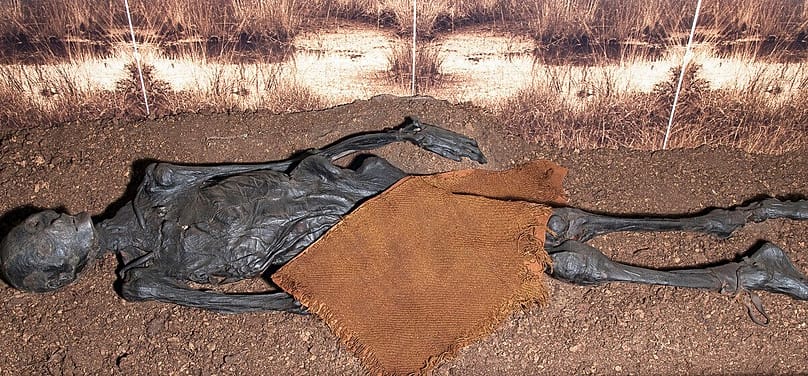
On his foot was a bandage made of cowhide. The body was forensically examined immediately after it was recovered. A triangular wound in the skull could still be recognised above the right eye. The back of the head and parietal bone were shattered.
The fact that the skull was missing was revealed only by a computed tomography scan of the bog body, carried out in 2005. It is assumed to have been removed during the initial examination in 1871. The scalp was probably stiffened by other substances at the time.
According to the clothing and after finalising the investigations, the scientists dated the find to the second or third century AD. Nothing more is known about its origin, and its cause of death is also not definitively known.
In other cases, the investigations revealed more details, but the first assumption is not always the result of science.
How the 'girl from Windeby' became the 'Windeboy'
When peat workers were digging peat in the Domslandmoor on 19 May 1952, they came across human bones. They surmised that it was a thigh bone and stopped their work. The police later consulted the archaeologists at Gottorf Castle. Eventually, the body is recovered intact, and the find ends up in the museum.
It is probably the most famous bog body in Germany. Partly because her gender had initially been wrongly determined. She was accused of being an adulteress, and the corpse was labelled the "Windeboy".
Moor preserves the human being, so the dead person was well preserved, an incredibly interesting project for researchers. Several investigations revealed that it must have been a person from the Iron Age, and the radiocarbon method dated the time of death to between 41 BC and 118 AD.
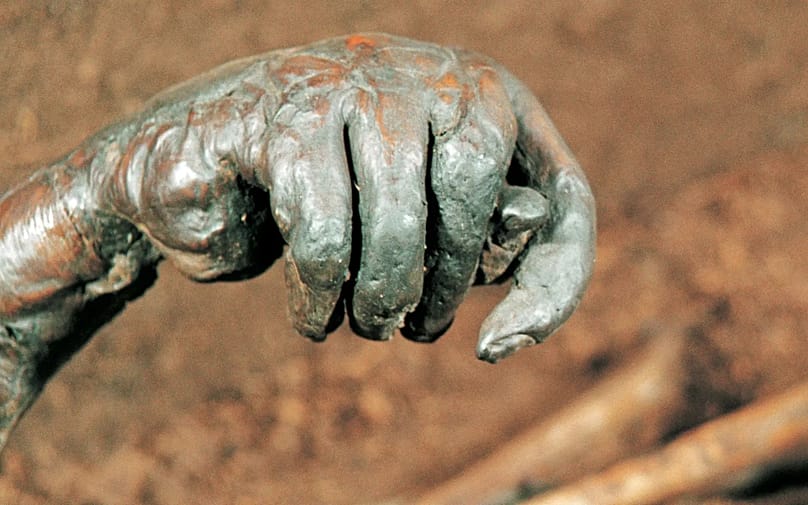
Because the bones appear so graceful, she is henceforth known as the "Girl of Windeby". Because of her posture and possible gestures, as well as a cloth over her eyes and the shaved left side of her head, scientists are puzzling over whether she could be a convicted adulteress from Germanic times.
A second body found a few weeks later seems to support this theory. The remains of a less well-preserved man could indicate that he had been strangled.
Years later, researchers began to doubt the story. And found out that the two bog bodies had probably not lived at the same time. The body that was found later must have been around 150 to 300 years older.
In 2006, further investigations also revealed that the "girl from Windeby" could have been a 16-year-old boy. "I'm calling him Windeboy," jokes anthropologist and forensic scientist Heather Gill-Robinson after her discovery. The child apparently acquired his stature because he is said to have often suffered from hunger and malnutrition.
Bog bodies currently in Denmark
For modernisation work at Schloss Gottorf Schleswig, the mummies travelled to a location 200 kilometres away and even crossed a national border.
"These are unique treasures, and the fact that we have been entrusted with these irreplaceable treasures is an expression of the great trust and goodwill between our museums and countries," emphasises Ole Nielsen, Director of the Danish Silkeborg Museum.
Since October 2025, the exhibition in Silkeborg has included the world's largest collection of well-preserved bog bodies. It also includes examples of bog bodies that exist only as skeletons because they were laid down in a type of bog other than a raised bog, where soft tissue can be preserved.