













A new study has revealed that two 7,000-year-old mummies found in the Sahara Desert belong to a previously unknown branch of the human family tree.
It has long been known that the Sahara Desert, today one of the driest and most inhospitable regions in the world, was quite the opposite thousands of years ago.
 ADVERTISEMENT
ADVERTISEMENT
ADVERTISEMENT
Around 14,800 to 5,500 years ago, during what is known as the "African Humid Period", the Sahara Desert was not the sea of sand it is today. Rather, it was a region of lakes, grasslands and savannas, favourable for agriculture and animal husbandry, and inhabited by human settlements.
A new genetic study suggests that a mysterious community that lived in this "Green Sahara" period may shake the established assumptions about African history. The genetic structure of a community living in the southwest of present-day Libya during this period presents an unexpected picture for archaeologists.
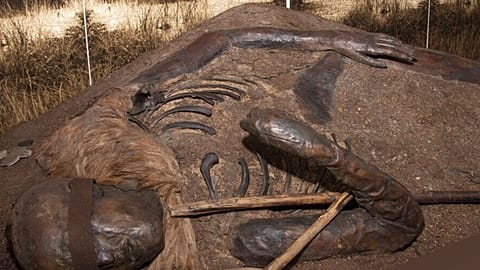
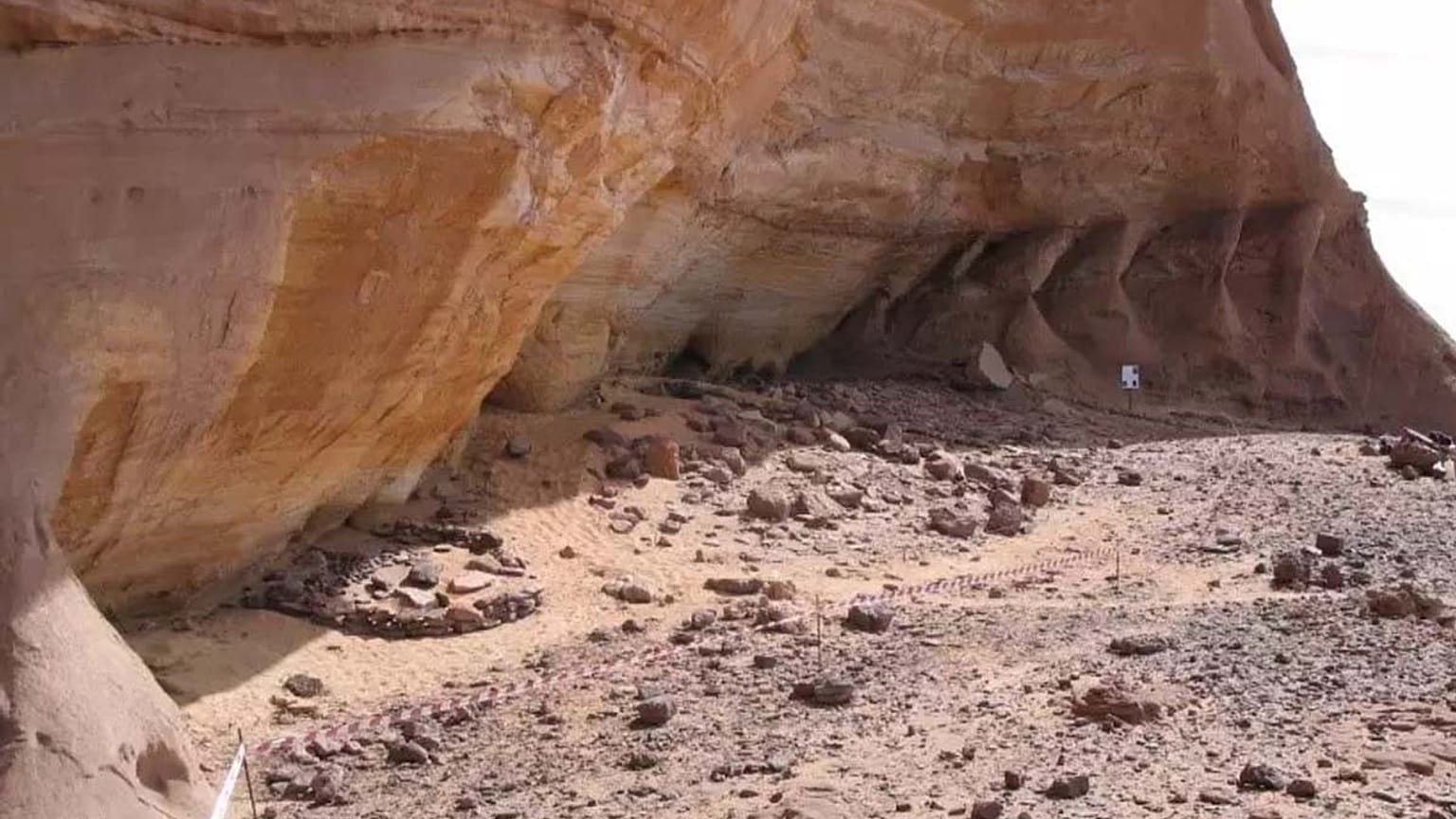
Research has revealed that two 7,000-year-old mummies found in the Takarkori rock shelter in the Sahara Desert belong to a previously unknown branch of the human family tree.
Nothing in common with modern humans
The team, led by archaeogeneticist Nada Salem from the Max Planck Institute for Evolutionary Anthropology, analysed the DNA of two naturally preserved 7,000-year-old Neolithic shepherdess mummies found in the Takarkori rock shelter.
Although the preservation of genetic material is very difficult in the Sahara due to the arid climate, the fragmentary DNA obtained provided important clues about ancient populations.
According to the study, both individuals are female and belong to what scientists call a "ghost population". This term is used for groups of people whose existence has so far only been surmised from faint genetic traces seen in modern humans, but whose physical remains have never been found.
Researchers say the genetic origin of Takarkori individuals is based on a hitherto unknown lineage line originating from North Africa, which separated from sub-Saharan African communities at a very early period. The analyses show that the ancestors of the Takarkori people separated from human communities in sub-Saharan Africa about 50,000 years ago. This coincides with the time when modern humans began to spread out of Africa.
The paper, published in the respected scientific journal Nature, also showed that the Takarkori people are closely related to 15,000-year-old hunter-gatherers from Taforalt Cave in Morocco. The genetic distance of both groups to sub-Saharan African communities is similar. This suggests that there was limited genetic interaction between North Africa and sub-Saharan Africa at that time.
Neanderthal genes
Another interesting point is Neanderthal genes. While Taforalt people are known to have about half as much Neanderthal DNA as modern humans outside Africa, this rate is 10 times lower in Takarkori individuals. Despite this, the Takarkori people still carry more Neanderthal genetic traces than sub-Saharan African communities that lived in the same period.
The researchers note that Takarkori had limited direct contact with Neanderthals, but may have had more indirect interactions than other groups in the region. Traces of limited genetic mixing with farmers from the Levant were also detected. Apart from this, the Takarkori community appears to have remained largely genetically isolated.
The spread of agriculture and animal husbandry
These findings lead to a new interpretation of the spread of agriculture and animal husbandry in the Green Sahara. For a long time, it was thought that these practices were carried to the region by human migration.
However, Salem and her team propose a different scenario. According to the research, shepherding and agriculture spread through cultural interaction rather than large population movements. The ancestors of the Takarkori people came from a hunter-gatherer community that lived before the domestication of animals. Nevertheless, they developed advanced skills in pottery, basket weaving, and tool making from wood and bone, and established long-term settlements in the same area.
Scientists believe that one of the reasons Takarkori remained isolated for so long was the extremely diverse ecosystems of the Green Sahara. Lakes, wetlands, forests, savannas and mountainous regions may have naturally limited the interaction between human communities.
According to the researchers, many more mummies and archaeological finds from this lost world may be hidden under the sands of the Sahara. These remains could complete the story of what life was like in the Sahara before the desert dried up and became what it is today.