




Science
 ADVERTISEMENT
Culture news
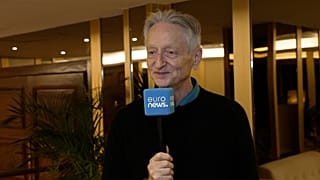
Think about the future: Nobel laureate Geoffrey Hinton on caring AI
Nobel Physics prize winner Geoffrey Hinton is widely regarded as one of the godfathers of artificial intelligence, but he's spent much of the last few years warning against its potential dangers. He discussed those ideas at Starmus and also revealed why 'The Terminator' is his favourite film.
Culture news
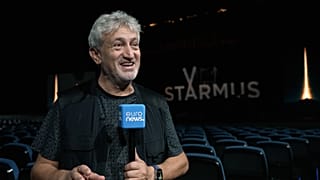
Reaching for the Starmus: Science and music festival back in Tenerife
Mixing Nobel prize-winners, astronauts and artists, the Starmus Festival has been uniting key figures over the past decade at one event to spark creativity, curiosity and a greater understanding of the universe. Its co-founder, Garik Israelian says its all about inspiring the next generation.
Culture news
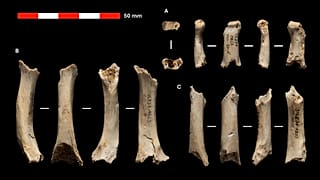
Neanderthal remains dating back 46,000 years identified in Abauntz cave, Navarra
Six bone fragments from Abauntz cave in Navarre belong to a 46,000-year-old male Neanderthal; DNA and radiocarbon dating reveal the last Neanderthals of the western Pyrenees.
Earth News
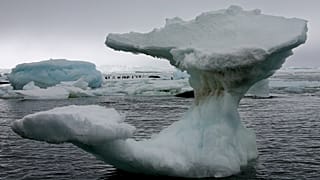
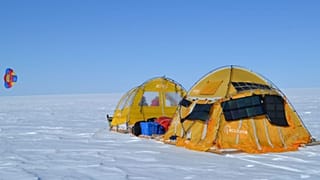
'Completely unique': Wind sled crosses Antarctica with zero emissions
Explorer Ramón Larramendi will lead an 80-day, 3,400 km South Pole expedition in a kite-powered vehicle that can travel up to 80kph.
ADVERTISEMENT
Earth News
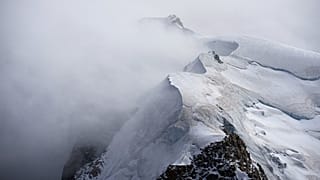
Mont Blanc: new French measurements, summit 'grows' to 4,807m
New measurements from Saint-Gervais-Mont-Blanc show Western Europe's highest peak at 4,807.47 metres, almost two metres higher than in 2023. Experts say the change is due to the thickness of the snow and ice cap.
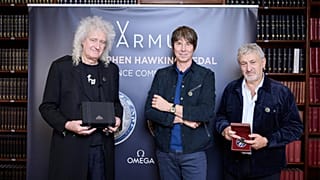
Brian Cox awarded 2026 Stephen Hawking Medal for Science Communication
Partner content presented by Starmus
British physicist and broadcaster Brian Cox has been awarded the 2026 Stephen Hawking Medal for Science Communication, recognising his work bringing complex scientific ideas to audiences around the world.
Nature
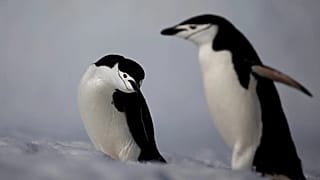
Antarctic penguins emit up to 7 million tonnes of methane a year
A study by CSIC and the University of Granada finds that chinstrap penguin colonies are a previously unmeasured natural source of methane, emitting up to 7 million tonnes a year.
USA
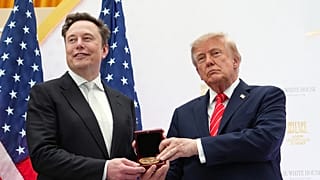
'Modern-day Thomas Edison': Trump awards Musk top US science medal
Despite the president's glowing words at the award ceremony, Trump and Musk have navigated a rather volatile relationship in recent years.
Health news
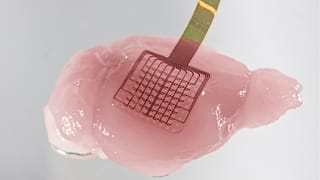
Graphene opens new way to detect brain damage after stroke
An international team of scientists involving Spain's CSIC has developed graphene sensors that pinpoint the brain regions most vulnerable after a stroke, tested in mice, opening the door to preventing further damage and improving treatment.
Tech News
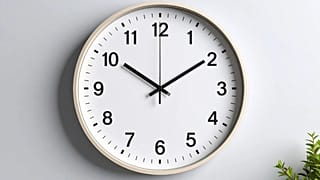
Nuclear timekeeping: Scientists build the most precise clocks ever
The new nuclear clocks measure time by using lasers to make subatomic particles.
Health news
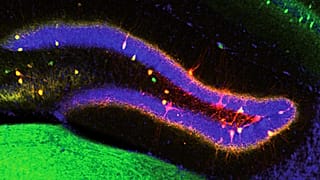
Researchers discover how the brain updates memories with new information
A joint study by three Spanish institutions shows how certain hippocampal neurons safeguard existing memories even as new information about events is stored.
Europe News
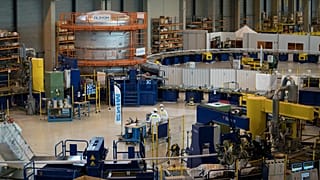
Europe has cut ties with Russia — But not in nuclear fusion
EU-Russia tensions collide with decades of scientific cooperation at ITER, the world’s largest nuclear fusion experiment. As fusion becomes a strategic EU priority, Brussels faces a dilemma over its continued reliance on Russian expertise and technology.
Culture news
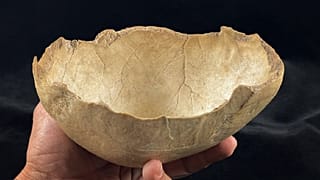
Possible massacre and cannibalism 7,000 years ago uncovered in Granada
Analysis of nearly 1,000 bones found in three caves in Granada shows that cannibalism was a recurring Neolithic practice, with signs of collective violence, possible rituals and skulls turned into containers.
Health news
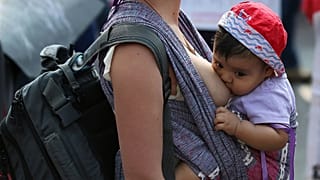
Breast milk shows benefit against antibiotic resistance
A CSIC-led study finds that certain components of breast milk are linked to fewer antibiotic-resistance genes in babies' gut microbiota.
Climate
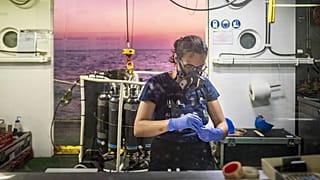
How is the Mediterranean changing? 40 years of data reveal climate change impact
Spanish scientists and researchers from Europe and the US compiled data from 46 oceanographic campaigns carried out between 1976 and 2018 to study changes in the Mediterranean and the impact of climate change.
Space
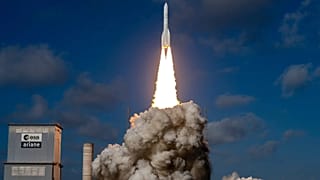
Excitement among spectators as Ariane 6 launches MTG-I2
Ariane 6 launched the MTG-I2 satellite from French Guiana, a new Meteosat that strengthens Europe's weather monitoring. Euronews spoke to attendees after the event to share their excitement.
Explore groundbreaking research, major discoveries, and cutting-edge innovations across all scientific fields. From technology and medicine to space exploration, gain insights into the advancements that are transforming our understanding of the world and beyond.