




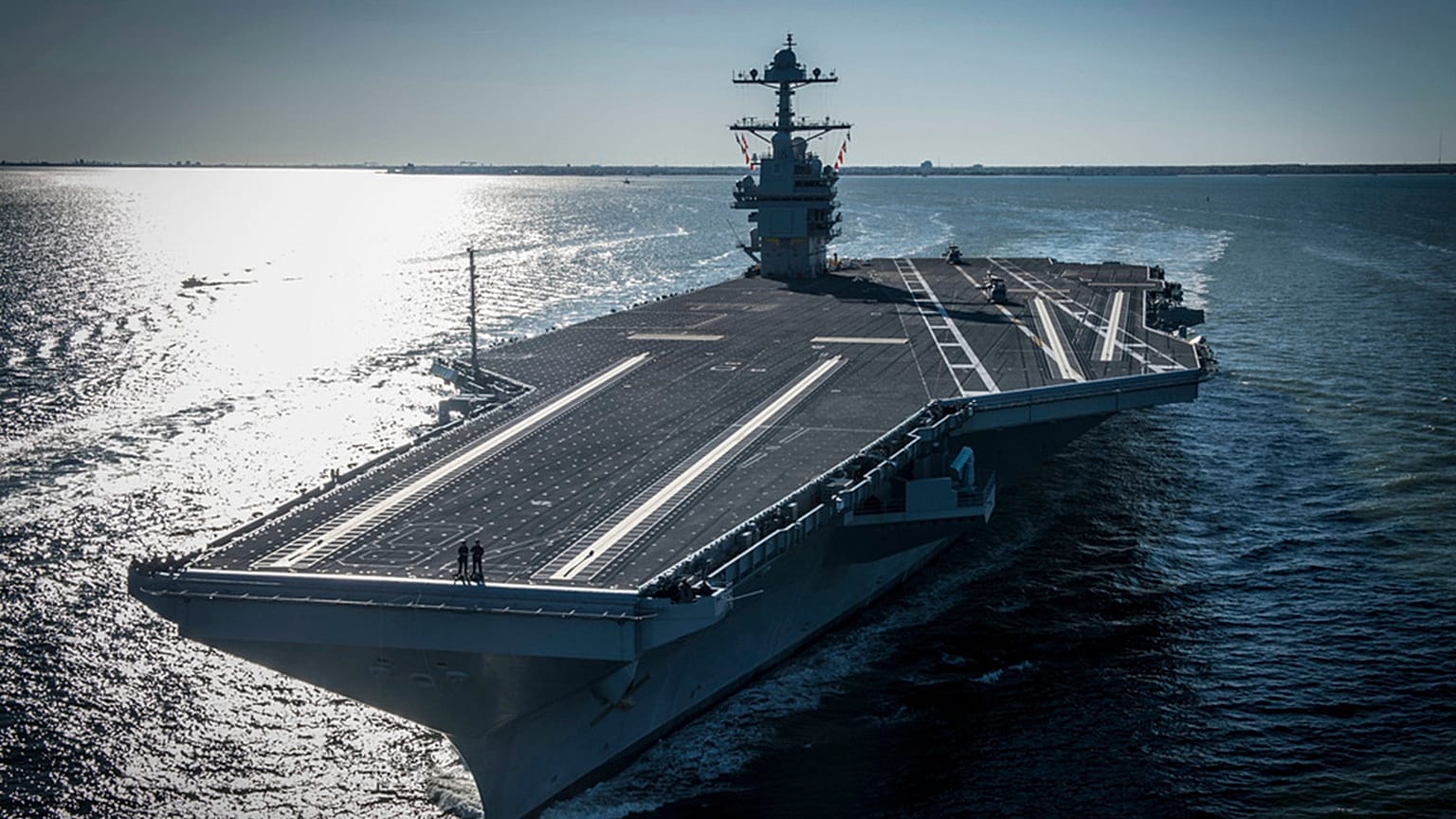














The USS Gerald R Ford, the world’s most advanced carrier, is redeployed to the Middle East as Washington signals it is keeping military options open on Iran.
The United States will deploy the USS Gerald R Ford aircraft carrier to the Middle East to join another carrier already in the region, an official said on Friday, as US President Donald Trump seeks to pressure Iran into negotiations over its nuclear programme.
 ADVERTISEMENT
ADVERTISEMENT
ADVERTISEMENT
The deployment will place two carriers and their accompanying warships in the area. The USS Abraham Lincoln and its guided-missile destroyers are already positioned in the Arabian Sea, according to a person familiar with the plans who spoke on condition of anonymity to discuss military movements.
The news of the deployment came as Trump warned Tehran on Thursday that failing to reach an agreement with his administration would prove "very traumatic," after the US and Iran held indirect talks in Oman last week.
"I guess over the next month, something like that," Trump said when asked about his timeline for reaching an agreement with Iran on its nuclear programme. "It should happen quickly. They should agree very quickly."
World's most powerful carrier
Widely considered the world's most powerful and advanced aircraft carrier, the Ford was dispatched from the Mediterranean to the Caribbean in October as the Trump administration assembled a substantial military presence ahead of last month's operation that resulted in the capture of Venezuela's Nicolás Maduro.
The carrier departed for deployment in late June 2025, meaning the crew of some 4,500 will have been at sea for eight months by the end of February.
With a displacement of 100,000 tonnes and a length of 334 metres, it features a flight deck capable of accommodating more than 75 aircraft, although it usually operates with an air wing of 60-70 aircraft.
The ship also features the Electromagnetic Aircraft Launch System (EMALS), meaning it can perform up to 160 sorties per day, compared to 120 on older carriers.
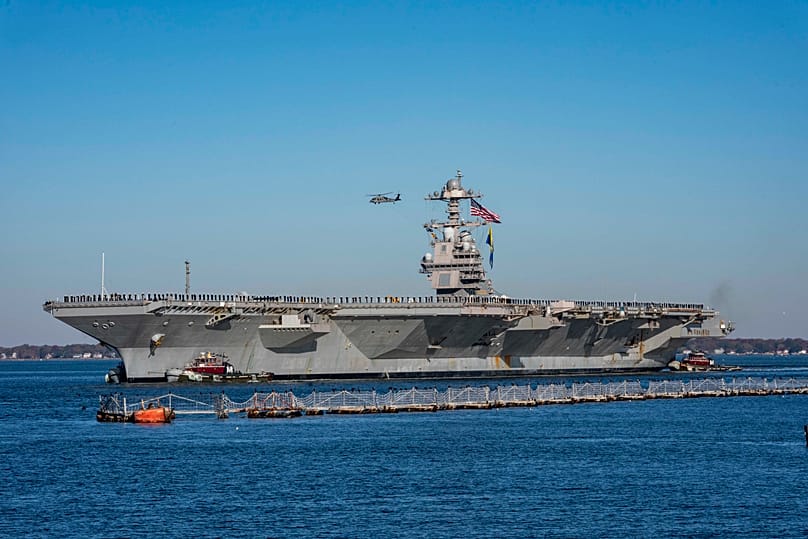
Its air wing includes F/A-18 Super Hornet fighters, EA-18G Growler electronic warfare aircraft, E-2D Hawkeye early warning aircraft and MH-60 helicopters.
The ship is powered by A1B nuclear reactors that give it virtually unlimited range, not needing refuelling for its entire service life, which is estimated at 50 years.
The reactors generate enough energy to power a city of 100,000 inhabitants. Its defence systems include missile launchers, Phalanx cannons and state-of-the-art anti-missile batteries.
The duration of the Middle East deployment remains unclear, but the assignment will result in an unusually extended period away from home port.
Trump has previously told the domestic press was considering dispatching a second carrier strike group to the Middle East. The White House did not immediately respond to a request for comment.
Tehran faces further furore
Meanwhile, Iran faces continued domestic anger over the bloody crackdown on nationwide protests that took place in late December and early January.
That discontent may intensify as families of those killed in last month's crackdown on nationwide protests begin traditional 40-day mourning ceremonies.
Online videos show mourners gathering in different parts of the country, holding portraits of the dead.
One video purported to show mourners at a cemetery in Razavi Khorasan province on Thursday, where people sang "Ey Iran," a patriotic song dating to the 1940s Iran under Shah Mohammad Reza Pahlavi.
The song was initially banned following the 1979 Islamic Revolution, although Iran's government has since used it to rally support.
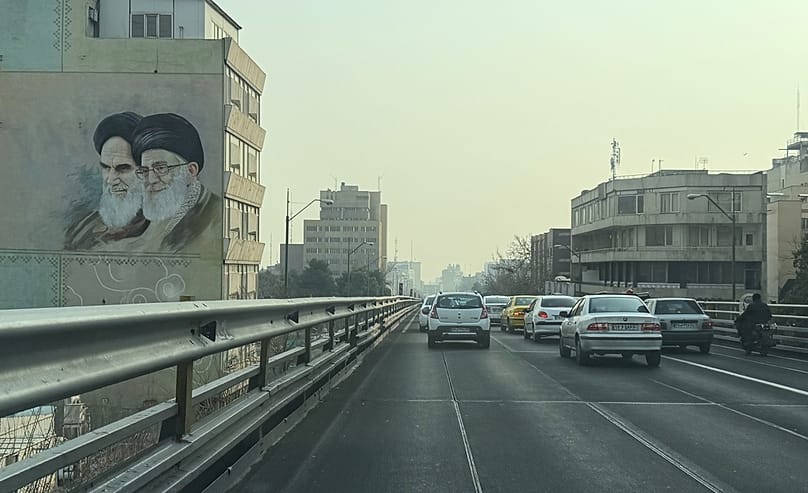
Protests began on 28 December 2025, sparked by a currency collapse and persistent hyperinflation, but quickly turned into nationwide anti-regime demonstrations, prompting Tehran's violent crackdown and a complete information blockade.
Human rights organisations and insiders in Iran have reported that anywhere from 6,000 to 30,000 are feared killed, although precise casualty figures remain difficult. Authorities have also detained tens of thousands across the country.
In mid-January, the US president urged Iranians to keep protesting, stating "help is on the way".
However, Trump has held off on an intervention following a restart in US-Iran talks and what Washington said was a pledge by Tehran to halt the crackdown, including any executions of arrested demonstrators.
Would the Islamic Republic strike back?
Meanwhile, Trump held talks with Israeli Prime Minister Benjamin Netanyahu on Wednesday and said he urged the Israeli leader to continue negotiations with Iran.
Netanyahu has urged the Trump administration to demand that Tehran scale back its ballistic missile programme and cease support for militant groups that act as its proxies, such as Hamas and Hezbollah, as components of any agreement.
Gulf Arab states have warned that military action could trigger another regional conflict in a Middle East still affected by the Israel-Hamas war in Gaza, the ongoing tensions in Lebanon, a fragile peace in Syria and the Israel-Iran conflict last summer.
Israeli airstrikes and covert ground operations significantly degraded Iran's air defences during the 12-day conflict in June, but did not completely neutralise its missile capabilities nor target its vast army.
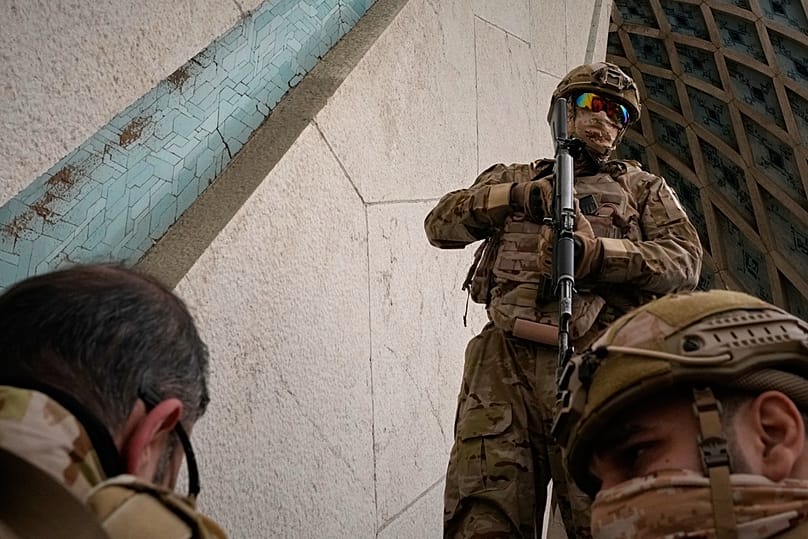
If hostilities resume, Iran would most likely use its remaining missile arsenal to target Israel and US bases in the region, but could also strike oil infrastructure and mine the Strait of Hormuz, through which about a fifth of global oil is transported.
Tehran's military includes approximately 600,000 regular troops and 200,000 in the paramilitary Islamic Revolutionary Guard Corps (IRGC).
However, proxy forces including Hamas, Hezbollah and Houthi rebels in Yemen have been weakened by recent fighting, raising questions about their ability or willingness to assist Tehran.
Tehran's air force is also seen as subpar, with Iran's older F-14 and MiG-29 fighters outmatched by fifth-generation American F-35 stealth fighters and Israeli aircraft.