




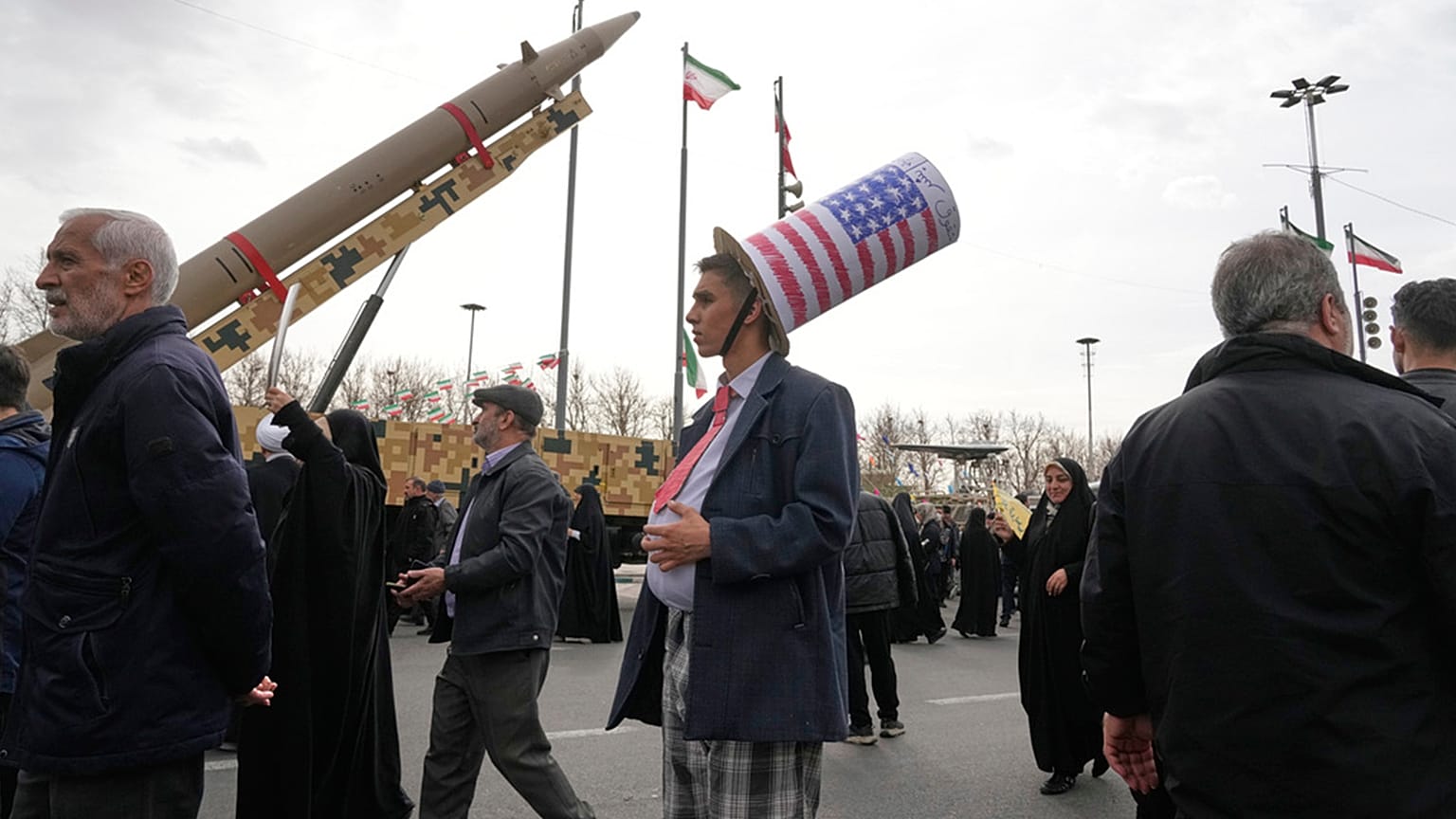













Iran’s President Masoud Pezeshkian said on Wednesday Tehran is ready for any verification of its nuclear programme, amid renewed talks with the US and raging internal unrest.
Iranian President Masoud Pezeshkian said on Wednesday his country is prepared for "any verification" of its nuclear programme, insisting Tehran is not seeking atomic weapons.
 ADVERTISEMENT
ADVERTISEMENT
ADVERTISEMENT
"We are not seeking to acquire nuclear weapons. We have stated this repeatedly and are ready for any verification," Pezeshkian said during a speech at Azadi Square in Tehran marking the 47th anniversary of Iran's Islamic Revolution.
"Our country, Iran, will not yield to their excessive demands," he added, after Tehran resumed indirect talks with Washington on its nuclear programme.
The anniversary comes as the country's ruling theocrats remain under pressure from US President Donald Trump, who suggested sending another aircraft carrier group to the Middle East.
Trump made the suggestion in an interview published Tuesday night, as Israeli Prime Minister Benjamin Netanyahu prepares to come to Washington to push the US toward the strictest possible terms in any agreement reached with Tehran in the fledgling nuclear talks.
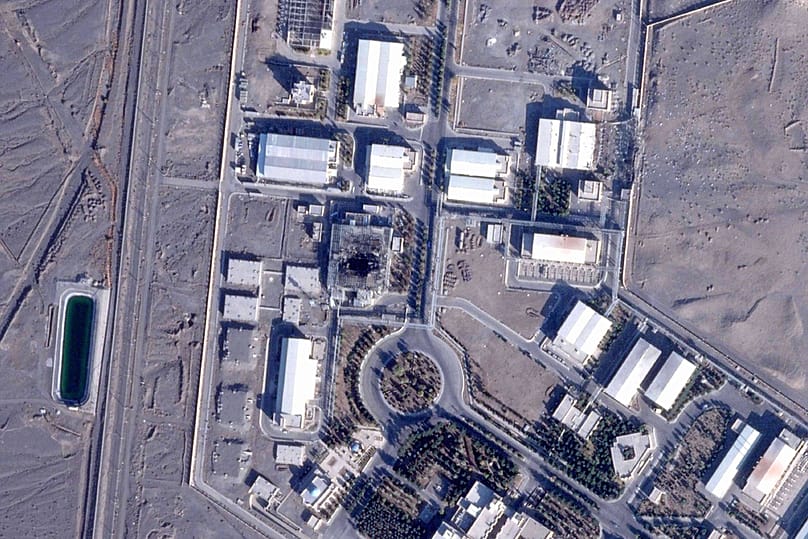
The US bombed Iranian nuclear sites last June during a 12-day Iran-Israel conflict.
IAEA access remains suspended
Meanwhile, the International Atomic Energy Agency (IAEA) has not been able to verify the status of Iran's near weapons-grade uranium stockpile since the 12-day conflict, when Tehran suspended its cooperation with the UN nuclear watchdog.
IAEA chief Rafael Grossi reached an agreement with Iranian Foreign Minister Abbas Araghchi in September 2025 to resume inspections, but the UN reimposed sanctions on Iran that same month, leading the country to halt implementation of the agreement.
A fresh round of indirect nuclear talks between Iran and the US concluded in Muscat on last Friday, mediated by the Sultanate of Oman.
Pezeshkian has described the talks as "a step forward," emphasising that Tehran's rationale concerning the issue is based on the rights enshrined in the Non-Proliferation Treaty.
Senior Iranian security official Ali Larijani travelled from Oman to Qatar on Wednesday, with Qatar hosting a major US military installation.
A country torn
The anniversary also comes as the public angrily denounced Tehran's bloody crackdown on nationwide protests that took place in late December and early January.
Protests began on 28 December 2025, sparked by a currency collapse and persistent hyperinflation, but quickly turned into nationwide anti-regime demonstrations, prompting Tehran's violent crackdown and a complete information blockade.
Human rights organisations and insiders in Iran have reported that anywhere from 6,000 to 30,000 are feared killed in the suppression, although precise casualty figures remain difficult. Authorities have also detained tens of thousands across the country.
In mid-January, the US president urged Iranians to keep protesting, stating "help is on the way".
However, Trump has held off on an intervention following a restart in US-Iran talks and what Washington said was a pledge by Tehran to halt the crackdown, including any executions of arrested demonstrators.
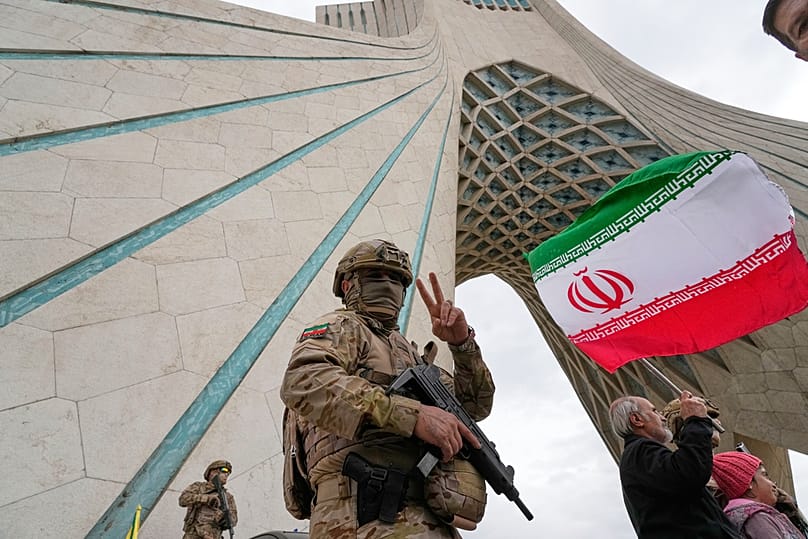
On Iranian state TV, authorities broadcast images of people taking to the streets across the country Wednesday to support the theocracy and its 86-year-old Ayatollah Ali Khamenei.
But on Tuesday night, as government-sponsored fireworks lit the darkened sky, witnesses heard shouts from people’s homes in the Iranian capital, Tehran, of “Death to the dictator."
In the streets Wednesday, people waved images of Khamenei and his predecessor Ayatollah Ruhollah Khomeini, the founder of the Islamic Republic, alongside Iranian and Palestinian flags. Some chanted “Death to America” and “Death to Israel.”
Others criticised Iran's exiled Crown Prince Reza Pahlavi, who had been calling for anti-government protests.